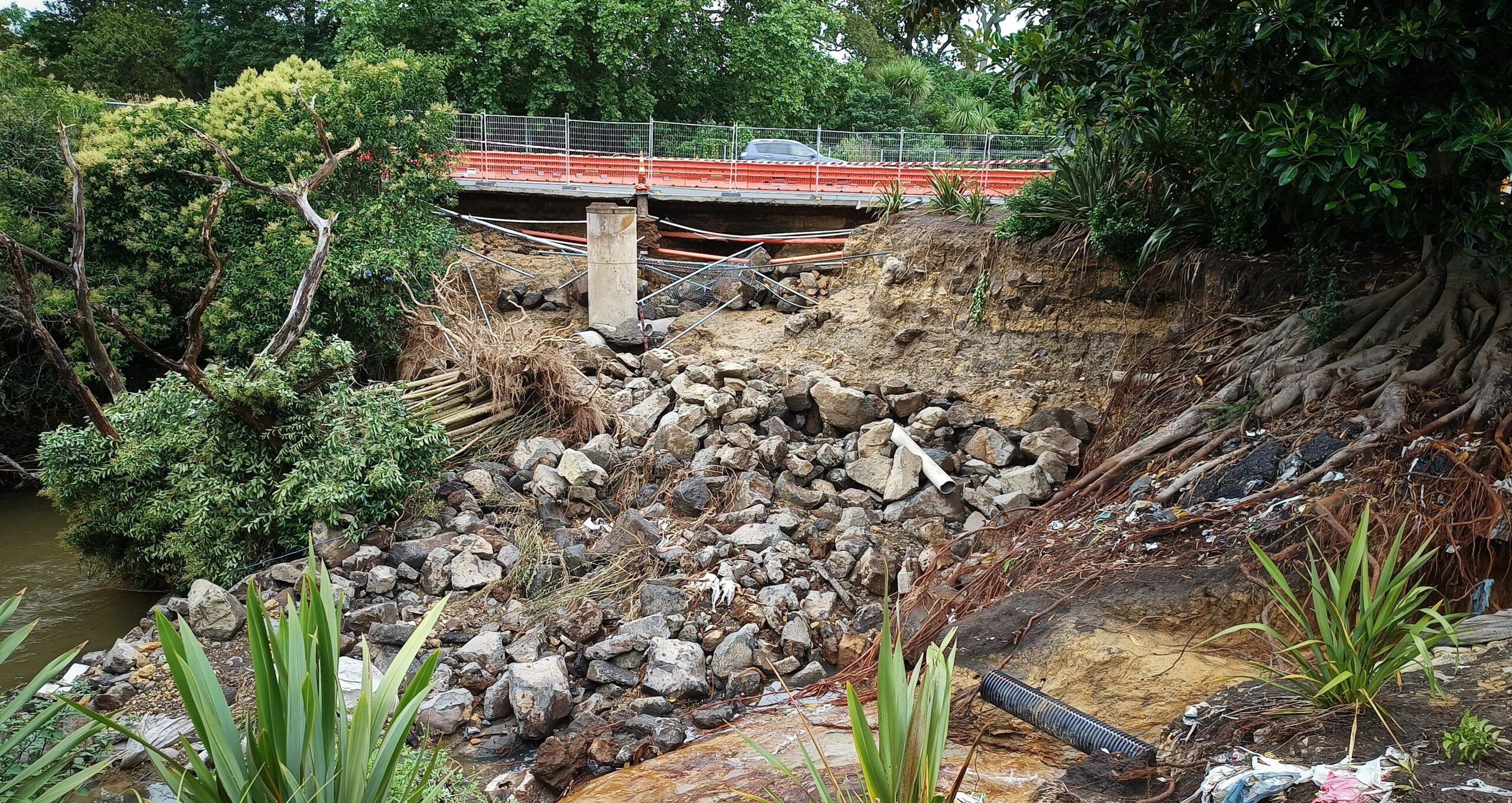
The latest national climate change risk assessment says the costs of repeated disasters will make it harder to pay for core needs like health and education.
The report points out 10 key areas on which our national adaptation plan should focus, like buildings that can cope with extreme weather and floods.
It advises higher spending on climate resilience now, so we aren’t stuck constantly paying more for disaster recovery.
A companion report looks specifically at risks to te ao Māori.
The SMC has gathered comments from experts on:
- Māori climate resilience
- cascading risks and resilience
- politics, social sciences & health
- climate science
- agriculture
Expert comments on the first national climate change risk assessment (2020) are available here.
Paora/Paul Tapsell, Professor & Director, Kāika Institute of Climate Resilience, Lincoln University, comments:
“The 2026 assessment highlights the very real and fast approaching social, economic, political and environmental/biodiversity dangers climate change represents to our fragile nation. 2026 has already demonstrated what is outlined in the report: our climate science is accurate. And yes, as outlined in my recent book, Kāinga: people, land, belonging (2023 BWB) our elders were right and the time to act was yesterday.
“Unlike the previous 2020 assessment this Report strongly identifies the previously hidden risk-severity climate change represents to Māori. Full marks to the Commission. For more than 150 years Māori have been pushed to the margins, literally, by an aggressive colonisation process. The Report joins the dots, identifying the role colonisation has played, not only in the denigration of whenua (biosphere: lands, forests and waterways) and associated taonga (resources, endemic species) but also the frontline impact on the social, health, housing and economic well-being of tangata (descendants of the 780 kāinga/marae communities of Aotearoa NZ).
“The Report accurately acknowledges that many kāinga, despite their relative impoverishment, are still willing first responders on the frontline of increasingly severe climate events. But it also identifies that these kāinga are themselves at risk as seen in the Napier region. Without committed relocation support from our on-the-ground Te Tiriti o Waitangi governance partners – local and regional councils – the outlook for hundreds of our most marginalised kāinga/marae looks bleak. Not unlike our Pasifika cousins, the fast-advancing reality of losing your marae community to the ocean, flash floods or landslides has arrived. Even if raised elsewhere on the planet, the impact of losing one’s ancestral home, rendering you a climate refugee – he tuporo teretere – will be devastating.
“Can our nation afford to lose what makes us culturally distinct from the rest of the world? The Crown has been gifted an unprecedented reality check: a climate risk assessment by which we can reset our Te Tiriti partner relationship and finally address together the long tail of colonisation that now haunts us all. All Māori will await the Crown’s response with keen interest. Our very future depends on it.”
Conflict of interest statement: “None.”
Dr Shaun Awatere (Ngāti Porou), Kaihautū Research Impact Leader, Bioeconomy Science Institute and lead author of companion report Ngā mea hirahira o te ao Māori: Climate Change Risks to the Māori Domain, comments:
“Aotearoa has just come through one of its most active severe weather seasons on record. By mid-February this year, declared states of emergency had already matched the total from the entire previous year, and the season delivered deadly landslides in the Bay of Plenty in January, severe flooding across both islands in February, Cyclone Vaianu in early April, and major flooding across Wellington in late April, with rainfall in parts of the capital exceeding 70 mm in a single hour.
“For Māori communities, the NCCRA findings confirm what hapū and iwi on the ground have been managing for years. Climate events do not arrive one at a time. A storm floods a road, damages a marae, erodes whenua, disrupts access to mahinga kai, and overwhelms health and welfare systems that were already stretched, all at once. Each of those harms compounds the next. That is the pattern the Ngā mea hirahira o te ao Māori: Climate Change Risks to the Māori Domain companion report was designed to document, and the findings are stark: across all seven risk domains assessed, current policy is not adequate. For five of the seven, the risk to Māori would remain extreme even if every policy currently in place were fully and consistently implemented.
“The finding that stands out most clearly from the companion work is the one about legal exclusion and governance failures. Of all seven risk domains, that is the one rated most likely to produce cascading effects across the others. When Māori communities lack formal authority in emergency management, adequate infrastructure funding, and influence in adaptation planning, the ability to protect health, cultural infrastructure, economic assets, and knowledge systems is weakened alongside it. Those responses depend on hapū and iwi having the standing to make binding decisions about their own land, communities, and resources. Without that standing, the other six risk domains cannot be adequately addressed, regardless of what else is in place. The Severe Weather Emergency Recovery Act 2023 is a concrete illustration. The NCCRA companion work finds that the Act enabled the rapid exercise of Crown power without guaranteed Māori participation, at a point when reviews document that iwi and hapū were playing central roles in community welfare and response delivery, without legal standing, resourcing, or formal recognition.
“That pattern cannot be sustained on community goodwill indefinitely, and the NCCRA findings make clear it will be tested again. NIWA is already signalling a potentially strong El Niño developing this winter, bringing drought conditions, dry soils, and a different but equally damaging set of pressures for farming, freshwater, and food systems.
“The NCCRA is the government’s own risk assessment process. The Climate Change Commission set the framework, the templates, the emissions scenarios, and the criteria. The companion work applied that same framework specifically to the te ao Māori domain. The shortfalls it identifies are not external criticism; they are findings produced within formal government processes, and they point in a consistent direction across every domain examined.
“Where Māori communities have held genuine decision-making authority, where tikanga has been embedded in planning, and where mātauranga Māori has informed how risk is understood and monitored, the outcomes are better. That finding is documented across peer-reviewed literature cited throughout the companion report. The question the NCCRA now puts to policymakers and adaptation planners is whether the next phase of work will be built on that evidence, or whether Māori communities will again absorb the costs of decisions made without them.”
Conflict of interest statement: Dr Awatere is lead author of the companion report Ngā mea hirahira o te ao Māori: Climate Change Risks to the Māori Domain (Awatere et al., 2025), which forms part of the 2026 NCCRA process.
*About the companion report: Ngā mea hirahira o te ao Māori: Climate Change Risks to the Māori Domain was commissioned through He Pou a Rangi, the Climate Change Commission, as a companion to the 2026 National Climate Change Risk Assessment. It was produced by the Bioeconomy Science Institute in partnership with Ngā Pae o te Māramatanga. The report assesses seven risk domains: loss of access to taonga species; damage to Māori infrastructure; economic losses in primary industries; disruption to tikanga and hapū/iwi identity; loss of Indigenous knowledge systems; legal exclusion and governance failures; and increased health vulnerabilities. The report covers risk severity assessment and policy shortfall analysis. Adaptation recommendations are the remit of the Climate Change Commission in subsequent processes, expected August 2026. Authors: Awatere S, Masters-Awatere B, Harcourt N, Kainamu A, Graham R, Forster M.
Professor Regan Potangaroa, School of Future Environments, AUT, comments:
“The report also reinforces the national scale of Marae vulnerability. With around 80% of Marae located near coastlines or flood-prone rivers, the issue is not isolated but structural. Historically these locations were essential for trade, food gathering and settlement patterns. Under accelerating climate pressures, they are increasingly becoming zones of exposure.
“Equally important is the NCCRA’s recognition that mainstream climate risk systems have often failed to account for Māori realities. Conventional approaches have tended to prioritise roads, buildings and utilities while overlooking impacts on mana, mauri, wāhi tapu, tikanga and connected ecosystems. This strongly supports the kaupapa Māori approach used in our own work, where adaptation was understood relationally rather than simply technically.
“The NCCRA also acknowledges that governance failure itself is becoming a climate risk for Māori. Fragmented decision-making, inconsistent resourcing and weak partnership arrangements continue to undermine effective adaptation. This mirrors concerns repeatedly raised during our Marae engagements where communities often felt they were managing climate risk largely on their own. However, as the old saying goes, the proof of the pudding is in the eating. Having a policy framework is one thing; operationalising it successfully is another. Historically, that is often where otherwise promising strategies begin to flounder, lose coherence and ultimately fail. The NCCRA now appears willing to acknowledge the importance of mātauranga Māori, Marae resilience and Māori-led adaptation, but the critical question remains whether these aspirations will be adequately resourced, institutionally supported and embedded within enduring governance arrangements.
“At the same time, the NCCRA represents an important opportunity. For perhaps the first time at a national level, there is clearer recognition that Māori knowledge systems, Marae networks and community-led adaptation approaches are not peripheral to climate resilience in Aotearoa New Zealand, but central to it. If properly supported, these approaches could significantly strengthen both local resilience and national adaptation capability.
Conflict of interest statement: “Professor Regan Potangaroa was part of the BRANZ-supported Build Back Better research on climate change impacts on Marae referenced in this commentary. The views expressed here are his own.”
Cascading risks and resilience
Dr Nick Cradock-Henry, Principal Scientist, Earth Sciences New Zealand, comments:
“Aotearoa New Zealand’s second National Climate Change Risk Assessment (NCCRA) arrives at a critical time in the national and international conversation. There is a growing gap between our risky reality, and our resilience. Since the first NCCRA in 2020, we have seen devastating storms, increased flooding, severe drought, and more extreme weather, with material effects across the motu. The evidence could not be clearer: climate change is here, now. The consequences of higher mean temperatures, more severe storms, and changing rainfall patterns represent a material risk across diverse communities and activities.
“Furthermore, as the Assessment makes clear, these risks are no longer linear; rather, they are interconnected, and the adverse effects compound across scales, between communities, and across places. Drought, which now has a more significant economic cost for the national economy than flooding, is a function of a complex interplay between existing land uses and changing rainfall patterns. Its effects range from mental, emotional, and material anxiety for primary producers to higher input costs, consequences for animal welfare and condition, and decreased productivity. These impacts don’t end when the rain returns. They leave behind a long tail of consequences that continue to damage our economy and our communities for years.
“Similarly, the disruption to critical infrastructure and lifelines — the arteries that help support economic growth and development, deliver and distribute resources, and enable social connectivity — are equally vulnerable. This physical disruption quickly scales into an economic one as freight delays drive up the cost of essential goods and leave regional producers unable to reach international markets. We are already seeing patterns emerge: the frequent disruption and damage to regional transport links, this does not stop at road closures; it triggers a domino effect that severs supply chains, disrupts local healthcare access, and creates immediate revenue loss for our primary exporters.
“These shocks are drawing unwelcome attention to our risk profile internationally. Already, we are seeing the consequences, including ‘insurance retreat’ in high-risk areas. By taking a systems perspective, the NCCRA has positioned itself at the leading edge of global climate strategy, and builds on and extends fundamental research on the dynamics of climate-related impacts and implications. By identifying a comprehensive suite of risks, the assessment proves that we can no longer treat climate adaptation as optional; it is fundamental. What is required now is a linked-up, systems approach that understands and recognises that today’s risk is tomorrow’s liability. We must unlock the inertia delaying adaptation, and endeavour to build climate-resilience, protecting the links between infrastructure, economy, community and cultural wellbeing, and the environment.”
Conflict of interest statement: “Dr. Cradock-Henry receives funding from the MBIE Endeavour Fund for the ‘Accelerating Adaptation to Climate Change’ programme (2025–2030). He is a Lead Author for Working Group II of the Intergovernmental Panel on Climate Change (IPCC) Seventh Assessment Report and participated in the science workshop on drought hosted by He Pou a Rangi Climate Change Commission as part of the National Climate Change Risk Assessment process.”
Politics, social sciences, and health
Professor of Political Science Bronwyn Hayward, University of Canterbury, comments:
“The release of this climate risk report highlights a serious disconnect between the threats that New Zealanders are already experiencing and our highly partisan responses by political leaders.
“The report highlights the far-reaching complex risks now faced by whole communities, business sectors, Iwi, cities and our natural environment, and yet to date our political responses to these risks are inadequate, focused on individual responsibility, and politically partisan restructuring of Ministries and local and regional government.
“Buried in the text of this report are lives now left in limbo while people wait for action: families in rental accommodation impacted by flooding, homeowners whose life savings were lost in landslips, Iwi losing more opportunities to determine their own futures and businesses, cities and the rural sector facing enormous costs to provide essential infrastructure or protect and deliver core services.
“At the very moment when we need cross party consensus to effectively plan, fund and deliver the protection that highly vulnerable New Zealanders, businesses and environments so badly need; we find our political leadership is divided both within the Coalition government and across party lines.
“In 2022 the IPCC Adaptation report highlighted how New Zealand as a country is at significant risk of governance failure. Like this risk report, they noted our local and central government agencies will struggle to coordinate action and find the funding needed to address the serious risks we now face as a nation.
“This risk report is a wake up call reminding us that we continue to tackle each disaster as an individual event, and when government has embarked on more far-reaching systematic reforms it does so without building a cross party consensus and without a spirit of transparency, and inclusion—core principles of good governance the IPCC continues to highlight as effective strategies for making lasting change.
“In many ways, unfortunately this risk report could not come at a worse time, as New Zealand heads into an election we need consensus not point scoring. The hazards highlighted in the report, like flooding, storms, droughts and illnesses that accompany our rapidly changing climate exacerbate other risks like the cost of living or secure food, energy and water supply. These hazards do not recognise a difference between voters – they will impact whole communities and businesses. We need cross party consensus to make effective long term change.
“As citizens we have a right to expect political cooperation and we can reward political leadership that seeks to build consensus to protect us and our country by building resilience through inclusive, lasting, integrated mitigation and adaptation action.”
Conflict of interest statement: “Review Editor for the IPCC forthcoming Special Report on Cities.”
Professor of Environmental Health Alex Macmillan , University of Otago, comments:
Note: Prof. Macmillan was an academic external reviewer for a section of this report.
“Because of inadequate action to curb our global climate pollution, we are already experiencing the human health effects of an increasingly unstable climate, adding further pressure to already stretched health systems.
“Effects on mental and emotional wellbeing through grief, stress, anxiety and uncertainty about the future are normal responses to the trauma and upheaval caused by repeated and more severe storms.
“Storms, flooding and sea level rise are also effecting physical health and social wellbeing because they are damaging our homes, communities and the services we rely on. We’re already seeing food prices rising, and effects on the availability of healthy fruit and vegetables because of climate change disruptions to growing, harvesting and transport of food.
“On the other hand, well-designed systemic approaches to climate change can protect and even improve health and fairness.
“Working with other countries to rapidly reduce our climate pollution remains our best adaptation strategy, and protects health from escalating climate change effects that become more difficult and unaffordable to respond to.
“Three urgent, just and healthy adaptation priorities are:
“Invest in, support and build on existing iwi, hapū and community-led support structures, while upskilling and resourcing community responses to grief and trauma, to support mental and social wellbeing.
“Improving governance, planning and building requirements for climate-smart homes can improve flood resilience while also making homes healthier, and create stable communities current and future generations.
“A future-focused national food system strategy is critical to ensure families are able to put healthy meals on the table in the face of increasing shocks to national and international food supplies.”
Conflict of interest statement: “I acted as one of the academic external reviewers for the NCCRA People, Health and Communities Risk Domain, and received an honorarium for my time.”
Research Professor Janet Stephenson, Centre for Sustainability Research, University of Otago, comments:
People, health and communities
“Endorse that communities are already doing much work locally – both in emergency response and planning for adaptation – and that this should be supported at a national level.
- This includes support for community and kainga scale planning and resilience actions (already occurring and much of this is locally initiated and led);
- Also support for councils which are bearing the brunt of the impacts and are at the forefront of emergency response and adaptation planning.
“Agree there are significant risks for people who will experience relocation
- But there are also significant risks for people who want to relocate but are unable to sell and recoup funds for buying elsewhere. We will see more of this with insurance retreat, houses possibly becoming unmortgageable, and drop in property value – the result being people being ‘stuck’ in their unsellable at-risk homes (in ‘property purgatory’).
“Agree that there are significant risks to social and community wellbeing including mental health and social cohesion,
- But also to physical health, e.g. if people end up renting houses that no one wants to invest in because they have lost their value. Damp, poorly insulated, dilapidated housing is known to have significant health impacts.
Governance
“Agree that there are significant risks if we keep making decisions under urgency and don’t take the long view, account for future generations and adapt ahead of time.
- This requires long-term political commitment (cross-party agreement) on acting consistently and early on key risks and reducing emissions in line with NZ’s climate commitments (net zero by 2050).
Infrastructure
“Agree that there are significant and increasing risks to water and transport networks
- But also risks to electricity and telecommunications. Electricity in particular will become increasingly important as an energy source as we decarbonise (move away from oil and gas) so that transport, cooking, home heating and cooling etc will increasingly be all electrified as we head to 2050. So power outages (from extreme weather events etc) will become much more impactful than they are at present. And we already know that regions where households have the most power outages from extreme weather events are the most economically deprived regions of NZ, so this is another issue for community health and wellbeing.
International context
“Report correctly acknowledges that climate impacts will become increasingly severe and frequent with significant consequences for NZ;
- however, it does not discuss the implications for NZ of climate impacts across the world including the severe impacts for many Pacific nations and likely high levels of climate-induced migration. New families will come to NZ already suffering the mental and social cohesion shocks mentioned in the CCC report.
“Also – as warming increases there will be international economic impacts with consequences for NZ, both for the NZ economy generally and for our ability to fund climate resilience:
- Although NZ is going to be relatively less impacted than many nations due to its geographic location, the state of the rest of the world will have a major implications for our markets, supply chains and geopolitical stability.
- The impacts of climate change could reduce global economic output by 1/3 by 2100, according to a risk assessment by a network of central banks. (NGFS Global Network of Central Banks, 2024)
- The global economy could face 50% loss in gross domestic product (GDP) between 2070 and 2090 from the shocks of climate change unless immediate action by political leaders is taken to decarbonise (Institute and Faculty of Actuaries + Exeter University 2025).
“Report does not discuss these risks.”
Conflict of interest statement: “No conflicts of interest.”
Dr Nathanael Melia, Adjunct Senior Research Fellow at Victoria University of Wellington and Founding Director of independent research organisation Climate Prescience, comments:
“The 2026 National Climate Change Risk Assessment is a substantial and serious piece of work. Its greatest strength is systems thinking: it does not simply list climate risks, but organises them into a national risk picture, considering severity, policy readiness, and cascading connections between risks. The unfortunate wealth of recent case studies also does useful work, showing that climate impacts are here and arrive as compound events: infrastructure failure, institutional stress, insurance pressure, mental health burden, cultural loss and strained local government capacity. As someone who spends his work life chewing through hundreds of terabytes of climate projections to calculate climate risk for New Zealand, the big nerd win for me is the specific high- and low-future scenarios chosen; they are finally the perfect choice.
“However, here my praise finishes. The assessment is almost entirely qualitative; rather than quantified estimates of probability, exposure, loss, threshold exceedance, duration, or frequency of compound events. There is also a serious evidence-access problem: the NCCRA was largely limited to public-domain evidence because the Commission did not have full access to academic databases, and paywalled evidence is considered only if submitted through the Call for Evidence. That is extraordinary for a statutory national climate risk assessment. TL;DR: planning for our entire future is kneecapped because the government hasn’t proliferated interdepartmental library cards.
“My largest technical concern is that the projections used are a multi-model mean of six climate models. A multi-model mean is guaranteed to be wrong, as it smooths away precisely the storms, droughts, heatwaves, sequencing, persistence, and compound events that create risk. Analysing just one of the six climate models would better represent future climate extremes; that’s how flawed a multi-model mean is.
“Let me provide an analogy. If you average a week’s commuting, you will get a ballpark commute time and a slow average speed of 15 kph. If you instead analysed each day separately, then averaged those numbers, you would resolve all the time spent stationary at red lights, diversions and rarer disruptions. Climate science works the same way; in NZ projections, you will find simulations that trend to drought in one model, while others show floods. The average of +400mm and -400mm of rain would show no dramas, when in fact there are very uncertain huge dramas to somehow prepare for.
“The global-warming-level framing utilised by the NCCRA, while in vogue for policy making, creates some awkwardness in this implementation. For example, the report assumes 2050 is scenario independent, no arguments here, but the report also recognises that current warming is already around 1.4°C and likely to be at around 2°C by 2050. So then why do the results show extreme risk category scores of one in 2050 (i.e. ~2°C) and 12 extreme risks at 2°C warming level at 2090 in the low pathway? Surely they should be the same, or similar, or not worth repeating? It’s this kind of discontinuity and inconsistency that can creep in when a risk assessment is driven by qualitative – groupthink – sticky-notes-on-the-whiteboard.
“The NCCRA is useful, but the main issue for me is that climate complexity has been reduced too early in the process, before being passed into the sector-based qualitative assessment groups. This has resulted in results and conclusions that are biased conservative. I think physical or statistical science should have had more of a feature in the NCCRA, but I would say that. I also think it’s important to give decision-makers the full picture when assigning investment priorities and actions in the National Adaptation Plan, which is renewed in 2028.”
Conflict of interest statement: “No COIs.”
James Renwick, Professor of Climate Science, Victoria University of Wellington – Te Herenga Waka, comments:
“The 2026 National Climate Change Risk Assessment is an excellent document, comprehensive, compelling, and easily readable. It covers all the key risks Aotearoa faces, from water infrastructure to mental health to failures of governance. The content is sobering as it is clear that we face some major issues and have not made good progress in recent years. Damages and costs from extreme events are piling up, and so far there is little sign of a coordinated national response. It is telling that since 2010, of government expenditure on natural hazards, 97% has gone into responding to and recovering from disasters, while only 3% has been directed to risk reduction and resilience. We have a fleet of ambulances lined up at the bottom of the cliff, while at the top there is no fence, maybe just a flimsy string.
“Such a situation cannot go on. As climate change makes extreme events ever more severe and costly, our ability to respond will be overwhelmed, unless we have proper planning around how we respond and unless we have adequate funding to build that response ability. The NCCRA from the Climate Change Commission lays out where the greatest risks are and where we as a country would get best “bang for our buck” investing for better preparedness. Our transport system is exposed, our homes and dwellings are exposed, our land uses are exposed, and our mental health is suffering. Emergency services are already stretched. As the report describes, many of the impacts of extremes associated with climate change take years to adjust to and get over, even if the events themselves play out in a few days.
“There is a clear need for a national plan on adaptation to climate change, and while some steps have been taken, we obviously need a lot more. Funding is a key issue and there have been discussions for many years over who should pay: central government, local government, householders? It is time for decisions to be made and for serious resources to be put into the sector. As something of an aside, the NCCRA mentions the need also to invest in mitigation, the reduction of emissions of greenhouse gases that are causing the problem. Absolutely, we need a focus there as well, if we are to manage our way into the future.”
Conflict of interest statement: “I have received government funding over many years for climate research. I was a Commissioner at the Climate Change Commission 2019-2024.”
Professor Tim Naish, Chair of the World Climate Research Programme and Professor of Antarctic Science at Victoria University of Wellington, comments:
“Given the dramatic increase in climate-related states of emergency across New Zealand this century, and especially since 2020, the timing and importance of the 2nd National Climate Change Risk Assessment cannot be overstated. By identifying 10 key risks across four risk areas – infrastructure, communities, nature and bioeconomy, decisions and funding – the assessment highlights the need for strong leadership, long-term thinking and system-scale approaches to governance and decision making (from local to national) to deliver proactive adaptation. Importantly, it identifies the need to get out of the disaster response and recovery cycle by moving the focus to long term risk reduction through effective adaptation decision making.
“As many places around the motu are already nearing the limits of adaptation, the assessment emphasises dual roles of delivering on our mitigation obligations, to reduce future impacts and provide more effective adaptation, especially to those impacts that are increasingly unavoidable.
“Underpinning any adaptation plan is knowledge of the risk and what we will need to adapt to. This requires decision-ready, robust scientific information on nature of the hazard, its impacts and consequences that is bespoke to the New Zealand context. While the assessment summarises the state of climate information to date, there are some glaring gaps in need of future investment and focus. These include improved prediction and attribution of extreme events (acute risks; e.g. drought, flood, wildfire, landslide), risks related to longer term and progressive changes (chronic risks e.g. sea-level rise, heat stress) and risks associated with changing variability of our climate (e.g. increased rainfall and temperature intensity). Aotearoa needs investment into transdisciplinary approaches that enable the physical risk information to be used more effectively and integrated into decision making and advice processes, through engagement with our communities, practitioners, and all stakeholders at risk.
“As said by the Chair of the Climate Commission, Dame Patsy Reddy’s comment in the forward of the assessment, “with clear, evidence-based advice, Aotearoa New Zealand can move from reacting to events to planning and adapting with confidence.””
Conflict of interest statement: “My affiliations are: Professor in the Antarctic Research Centre Te Herenga Waka – Victoria University of Wellington, Chair of the World Climate Programme, Co-Leader of the MBIE funded Our Changing Coast Programme, and Member of the Academy Executive Committee – Royal Society of NZ.”
Dr Robyn Dynes, Principal Scientist and Farmer Engagement Specialist, Bioeconomy Science Institute, comments:
“The report provides a clear summary of the risks climate change poses not only to farming, but to the entire primary sector supply chain. It reinforces the importance of taking a long-term, system-wide view, recognising that resilience depends not just on what happens on-farm, but also on factors like transport and infrastructure that connect production through to markets.
“From our perspective, it highlights the need for sustained investment in science and technology to support farmers over time. Encouragingly, it also shows we still have a runway to develop the tools, generate the insights, and provide the advice needed to respond effectively to these challenges.
“We welcome the report because it gives confidence that, as scientists, we are focused on the right priorities for New Zealand.
“That long-term view is critical. At the Bioeconomy Science Institute, we identified nearly two decades ago that methane would become a significant issue for New Zealand farmers. Since then, we’ve been applying genetics and breeding approaches to help mitigate emissions. But this kind of work takes 10 to 15 years to deliver real-world impact. It underlines why consistent investment is essential if we are to keep building resilience into our farming systems.
“Looking ahead, we know a warming climate will amplify existing challenges, such as facial eczema in sheep. We are already applying genetic solutions to address this, alongside our work on emissions. Together, these efforts show how science can help farmers adapt to a more complex and changing environment, while maintaining productivity and sustainability over the long term.”
Conflict of interest statement: “Dr Dynes has no conflict of interest to declare.”