Science Media Centre

Science Media Centre

In the News

Breast cancer and astronauts – Michelle Dickinson

John Kerr posted in on May 15th, 2013.

Dr Michelle Dickinson, a Senior Lecturer at Auckland University’s Department of Chemical and Materials Engineering, spoke to TV3′s Firstline this morning for their weekly ‘science news’ segment. She discussed the increased awareness of breast cancer genetics in the wake of actress Angelina Jolie’s revelation that she had a double mastectomy after learning she carried the BRAC1 [...]

Astronaut Neil Armstrong dies, 82

John Kerr posted in on August 27th, 2012.

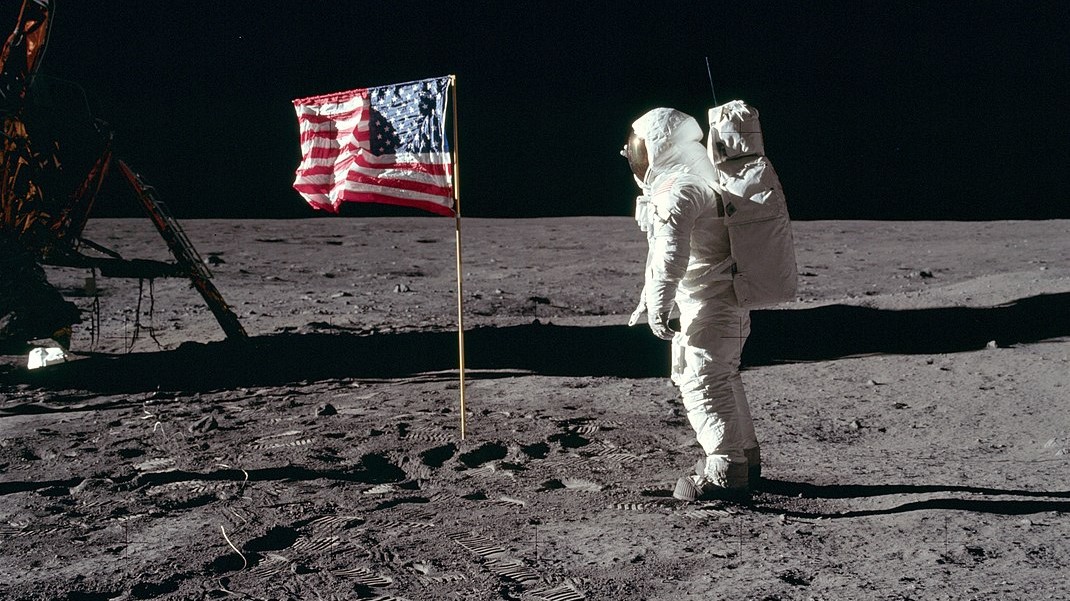
The First man to walk on the moon, Neil Armstrong, has died following complications from cardiovascular surgery. On July 20, 1969 Neil Armstrong became the first man to walk on the moon as part of the Apollo 11 lunar mission. He is perhaps best known for his iconic words as he stepped from the landing [...]

Continue reading “Astronaut Neil Armstrong dies, 82

Podcast: Curiosity landing, Tongariro eruption and more…

Peter Griffin posted in on August 10th, 2012.

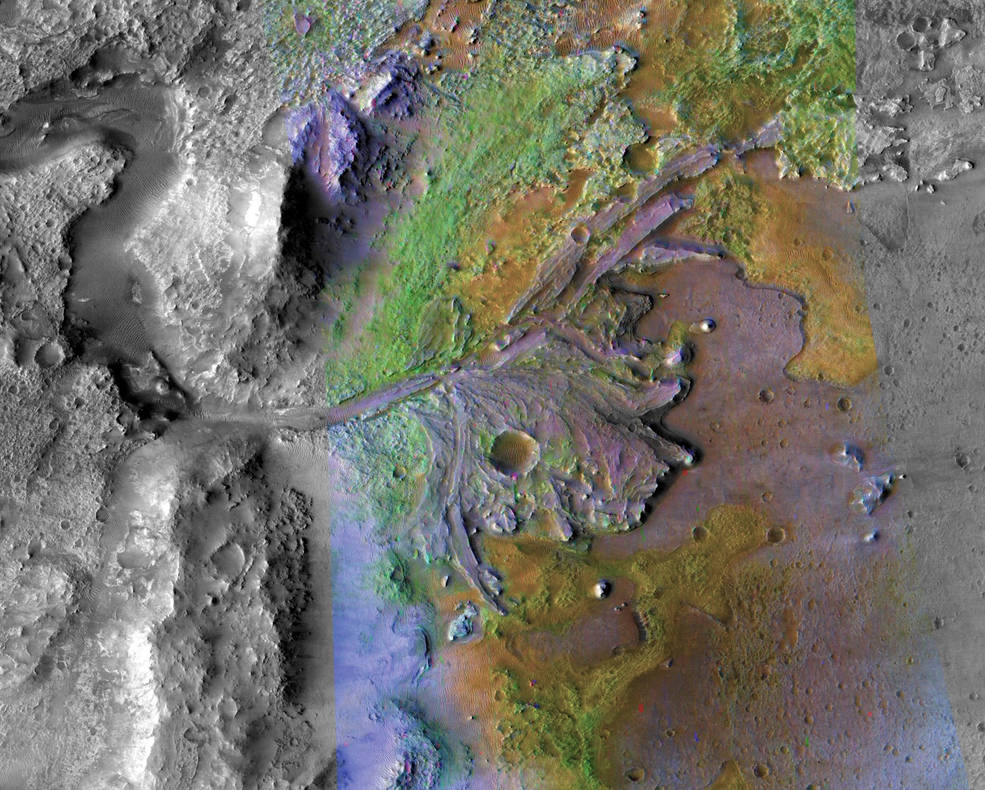
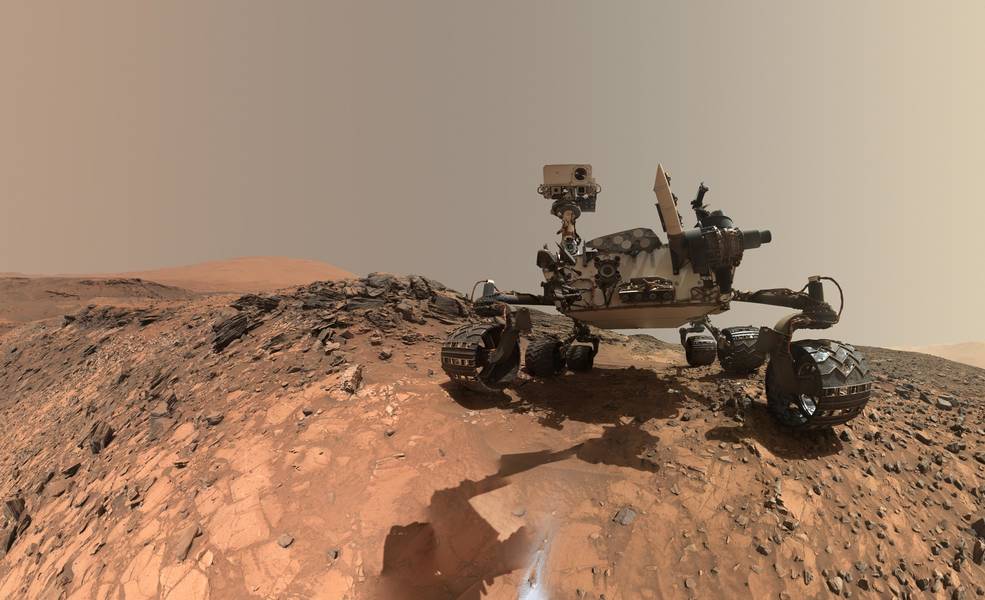
Science Media Centre manager and Sciblogs editor Peter Griffin hosts this week’s Sciblogs podcast, with a special on the Curiosity Mars Rover landing – the biggest science news event since, well the discover of the Higgs Boson. You’ll enjoy the insights New Zealand scientists provide in the podcast on the Curiosity mission. Professor Craig Cary, [...]

Solar storm – experts respond

John Kerr posted in on March 9th, 2012.

Two solar flares that occurred on the sun on 7 March have caused a large cloud of charged particles (a coronal mass ejection; CME) to hurtle towards Earth. A statement, video and images can be found on the NASA website, with the latest update noting that the CME has reached the edge of the Earth’s [...]

Continue reading “Solar storm – experts respond

James Hansen on climate communication

John Kerr posted in on October 13th, 2011.

An article published in the New Zealand Herald highlights the battle between scientists and sceptics, with NASA scientist James Hansen noting that increasing scientific evidence is competing with industry spin. Jim Hansen toured New Zealand earlier this year, singling out lignite mining as an industry New Zealand must abandon if it aims to reach it [...]

Continue reading “James Hansen on climate communication

All eyes on the sky for satellite re-entry

John Kerr posted in on September 23rd, 2011.

Our friends at the Australian Science Media Centre have collected useful background, resources and commentary ahead of the re-entry: NASA’s Upper Atmosphere Research Satellite (UARS) is expected to return to Earth tomorrow morning (Saturday 24 September) Australian time. Its exact re-entry time and location will be known with more certainty closer to its landing. The [...]

Arsenic-eating bacteria expand scope of what life could be

Peter Griffin posted in on December 3rd, 2010.

NASA researchers have discovered a strain of bacteria in a lake in California that uses arsenic as one of its nutrients, increasing the potential for finding new forms of life on Earth and beyond. The scientists, who today published their research in the journal Science, say the discovery shows the potential for life beyond the [...]

Newsletter Digest: Space capsule landing, oil drilling, and Fieldays

Peter Griffin posted in on June 11th, 2010.

Aussie-bound space capsule due Scientists in the desolate South Australian outback are preparing for the touch down of a Japanese space capsule, which is scheduled to arrive on Sunday night. The Hayabusa capsule is the first spacecraft to land on an asteroid, which it did in 2005, intercepting the Itokawa asteriod. But scientists won’t know [...]

TVNZ/One News: Ceramic may coat future NASA spacecrafts

Peter Griffin posted in on June 2nd, 2010.

New Zealand scientists are helping to develop the next generation of space-capable aircraft by working on the heatshields which will be necessary to prevent the aircraft melting. A different design from the space shuttles currently being retired, the new craft will make use of scramjets to power them into space – the immense speeds achieved [...]

3 News: Kiwi scientists aiding NASA’s new space shuttle design – Video

Peter Griffin posted in on May 31st, 2010.

University of Canterbury scientists are helping their NASA counterparts to design new types of scramjets – super-fast planes which could replace the  almost-retired NASA space shuttle fleet. The UoC researchers are helping to design the craft’s heatshield – at the Mach 10 (or faster) at which it will need to fly, heat will be a [...]

Copyright 2013 Science Media Centre (New Zealand)

Disclaimer | Privacy Policy