The latest emissions reduction monitoring report says we’re running out of time to meet our targets.
Farming, electricity, and transport are the biggest risks to emissions budgets, the Climate Change Commission’s report says.
It’s too late for planting more trees to help with our current budget, and Government decisions such as the new LNG terminal likely outweigh policies to cut emissions.
However, actions including adopting low-emissions tech could get us back on track if we move now, the report suggests.
The Science Media Centre asked experts to comment.
Dr Elizabeth Macpherson, Professor of Law & Rutherford Discovery Fellow, comments:
“This Monitoring Report confirms that Aotearoa New Zealand is not doing enough to respond to the growing environmental, social, and economic impacts of climate change.
“Agricultural emissions are still not captured, and existing budgets cannot be met through the planting of trees. In December 2025 the Government amended the Climate Change Response Act to reduce 2050 biogenic methane reduction target, delay the setting of future emissions budgets, and decouple ETS settings from international targets. There have been some positive climate policy signals, including around supporting the emissions removal and reduction benefits of restoring wetlands and blue carbon ecosystems. But this Report leaves no doubt that the Government’s current climate plans and policies are insufficient to meet its emissions budgets and the 2050 net-zero target.
“Climate change has a disproportionately negative impact on Māori although iwi and hapū are leading many climate initiatives which provide benefits to local communities and nationally. However, this Report specifically notes that the Māori Climate Platform and other avenues for supporting iwi-led climate action are inadequately supported, and the Government risks breaching its obligations to its Treaty partner.
“The Government has made clear its preference for the interests of large emitters across multiple extractive industries (including agriculture, mining, and petroleum) over environmental policy outcomes. This is also apparent too in the disestablishment of the Ministry for the Environment and resource management reform. The Government has even proposed retrospective legislation removing the right of New Zealanders to go to court to hold it accountable in tort for lack of action on climate change, with the Ombudsman drawing attention to direct lobbying of the Prime Minister’s office by large emitters.
“He Pou a Rangi’s Report emphasises that a short-sighted focus on economic outcomes ahead of timely climate action is only going to add to the increasing costs of climate change for businesses and households. Perhaps predictably, the Government has also moved to curtail the role of the Commission, which is no longer enabled to provide advice to the Government on emissions reduction plans and has reduced obligations to consult the public.”
Conflict of interest statement: “Elizabeth is also a barrister and has acted as lawyer and policy adviser for public and private sector and Indigenous peoples on matters related to environmental law and Indigenous rights and interests.”
Paora/Paul Tapsell, Professor & Director, Kāika Institute of Climate Resilience, Lincoln University, comments:
“This report again highlights our Nation’s continuing failure to reduce greenhouse gas emissions. Most alarming is how Māori communities are being rendered invisible in doing their part to build climate resilience while reducing emissions at the local catchment level. In addition, the Crown’s recent cancellation of Maori Climate Platform funding support for the many kāinga/marae communities who remain on the front line of climate change adds further worry.
“Combined with the recently announced advanced planning legislation (preventing local councils from activating iwi participation agreements) it appears Māori are being delivered a triple blow from participating in the development of our nation’s climate resilience. Without the requisite resources and support, kāinga efforts to responsibly implement climate adaptation plans to beneficially protect all peoples living in their region are compromised.
“Also in danger of being shelved is the current and future joint development of climate adaptation plans at local level. The goodwill and trust built between kāinga and council leaders in recent times is under threat. If local councils were required to ignore or step away from local knowledge held by their Māori communities, there is a very real future possibility of ongoing loss of property and perhaps more lives, which could be devastating.
“The recently piloted Kāinga-led Climate Adaptation Plans (MBIE Endeavour-funded Project Kainga) are being adopted/used in Bay of Plenty and Northland, demonstrating what on-the-ground Crown partnership could deliver nationwide. Local council leaders and their local Kāinga/marae rangatira combined can begin building region-wide resilience, tackle long-term emission reduction goals and reset local housing, health, education and employment.
“Mostly unrealised by wider New Zealand, Māori are at the forefront of introducing research-driven innovative step-change economic opportunities that are emission reductive while also seeding sustainable environmental outcomes. For our nation to survive and flourish beyond the current political cycle, we desperately need both central government and local councils to accept that Māori (Iwi, hapū, and their 780 kāinga/marae communities) are more than capable partners. Despite everything they have endured, they remain willing to roll up their sleeves and stand shoulder to shoulder with the Crown in tackling climate change, now that it is lapping at our doorstep. Dare we not include them?”
Conflict of interest statement: Professor Tapsell is part of the Project Kainga team.
Dr Basil Sharp, Emeritus Professor of Economics and former Director of the Energy Centre, University of Auckland, comments:
“New Zealand’s emission trading scheme was set up to create the incentives necessary to meet our emission targets. It is market based. Initially, the idea was to include all sectors and all gases. However, today about 50% of greenhouse gas emissions come from agriculture which remains outside the scheme. Not all gases are the same. Methane in particular has a shorter life than carbon dioxide. So far, science has been unable to assist with reducing biogenic methane and the only option is to reduce livestock numbers. It looks as though we will not meet the biogenic methane target.
“Carbon sequestration by forestry has made a major contribution to reducing gross emissions. Forestry is also a major source of NZ Units on the market. Government policy is now directed at limiting the conversion of land into forestry. It would seem that additional forestry sequestration is limited, at least in the short run.
“On the demand side, government policies over recent years have granted direct relief to major emitters and subsidised decarbonisation. Complementary policies – such as adjusting the government take on low emission vehicles – have had a limited shelf life. Flip flop government policy creates uncertainty, dampening the effectiveness of the ETS.
“The NZ ETS is the creation of parliament and remains open to government intervention. If market price is to remain a key incentive to decarbonise then greater attention should be given to the demand for NZ Units. Higher NZU prices will encourage transitioning to low carbon alternatives. This will not occur overnight. Higher energy costs will also contribute. But government subsidies and policy uncertainty both work to increase the risk of not meeting our targets.”
Conflict of interest statement: “No conflicts of interest.”
James Renwick, Professor of Climate Science & Physical Geography, Victoria University of Wellington, comments:
“This is a damning report from the Climate Change Commission. Emissions were reducing through 2023, then there was an election. Since 2024, emissions reductions have been weak at best. The current coalition government claims to be on target for our climate action, but their policy moves over the past two-three years have on balance gone in the wrong direction.
“The clear messages from the Commission lay bare the gap between rhetoric and reality. Policy changes can still be made to improve the situation, but as the Commission says, time is running out. As the toll of extreme events worsens here and internationally, time is of the essence everywhere. Acting on climate change through greenhouse gas emissions reductions is not a “nice to have”, it is fundamental to maintaining a liveable future for our children and grandchildren. Let’s see our government take it seriously.”
Conflict of interest statement: “No conflicts of interest to declare, but note I receive climate research funding from the government and was a Climate Change Commissioner 2019-2024.”
Dr Nathanael Melia, Founding Director of the independent research organisation Climate Prescience Limited and Adjunct Senior Research Fellow at Victoria University of Wellington, comments:
“Internationally, this report puts New Zealand in an uncomfortable middle: not uniquely failing, but behind the strongest performers.
“The UK and EU have cut emissions much further since 1990. Starting position matters. The UK’s power system was heavily coal-based, so closing coal plants and adding renewables delivered large early reductions. New Zealand’s electricity was already mostly renewable, while agriculture produces more than half our gross emissions. We therefore began with more hard-to-cut methane, transport and industrial heat.
“Ireland is a useful comparator. It now faces similar agriculture and transport problems, but started with dirtier electricity and has a demanding target: 51% below 2018 by 2030. It is also badly off track.
“Australia still has substantial coal-to-renewables gains available, and land-use change accounts for a significant share of its historical headline progress. Its post-2030 pathway is also insecure.
“This context makes New Zealand’s slow progress more understandable, but not acceptable. Clean power should help us electrify vehicles and industrial heat. Our targets also rely heavily on forestry and give biogenic methane a separate reduction pathway, so the difficult emissions mix is not a complete excuse.
“The fair conclusion is that many countries are struggling as they move beyond electricity into transport, buildings, industry and agriculture. But New Zealand is underperforming relative to its advantages. The next 12–24 months are critical for turning renewable electricity, efficiency and agricultural innovation into durable cuts, rather than depending mainly on forests or reduced economic output.”
Conflict of interest statement: “None.”
Professor Sebastian Leuzinger, plant ecologist, AUT, comments:
“The just-released 2026 Emissions Monitoring Report shows some encouraging details, but also stresses the urgency to do more to achieve the targets. ‘Doing more’ can mean reducing emissions OR increasing carbon sinks, and we have to keep in mind that this is not only about carbon, but also methane.
“In the short term, the latter is more harmful for the climate, and, in the New Zealand context, harder to tackle even if best farming practices are applied. This is firstly because farming, and in particular dairy/beef farming, inevitably releases considerable amounts of methane, accounting for half of our greenhouse gas emissions. Secondly, because the dairy/meat industry is a fundamental pillar of the New Zealand (export) economy that we very much rely on, particularly in the current difficult economic situation.
“With little wiggle room in the space of methane, we have to look to reduce carbon emissions and increase carbon sinks, and both are indeed much easier to achieve, and capable of securing our goals, as the report nicely shows: for example, decentralising energy for the private sector using solar and heat pumps has been the cheaper option for some time, and comes with the additional advantage of energy sovereignty and reducing the grid load. Similarly, it is shown nicely that EVs are now considerably cheaper to run than petrol cars, even without government incentives.
“Lastly, and we are tracking well on this, afforestation plays a big role, and there is still potential, particularly if we move away from a narrow dichotomous view of native vs. exotic forests, but move towards solutions on a case by case basis. This should include fast growing exotic nurse crops and mixed forests.
“Taken together, I believe it is possible to achieve our ambitious goals through smart solutions, and hopefully not just a shrinking economy, which would not serve anyone in the end, including our climate goals.”
Conflict of interest statement: “No COI.”
Distinguished Professor Robert McLachlan, School of Mathematical and Computational Sciences, Massey University, comments:
“This is a devastatingly hard-hitting report from the Climate Change Commission documenting failures and shortcomings in almost all areas of our climate change response. The situation has deteriorated considerably in the last year with 82% of needed reductions for 2026-2030 now at risk, and 99% for 2031-2035. A long list of anti-climate actions, policies, and signals from the Government are detailed and analysed. Three huge sectors, electricity, agriculture, and transport, are all now at significant risk.
“The report describes how the rate of emissions reduction has halved since 2023. This even understates the severity of the problem, for some of the reductions were due to deindustrialisation, while the recession and weak recovery have tended to suppress emissions – neither of which are either are preferred pathways.
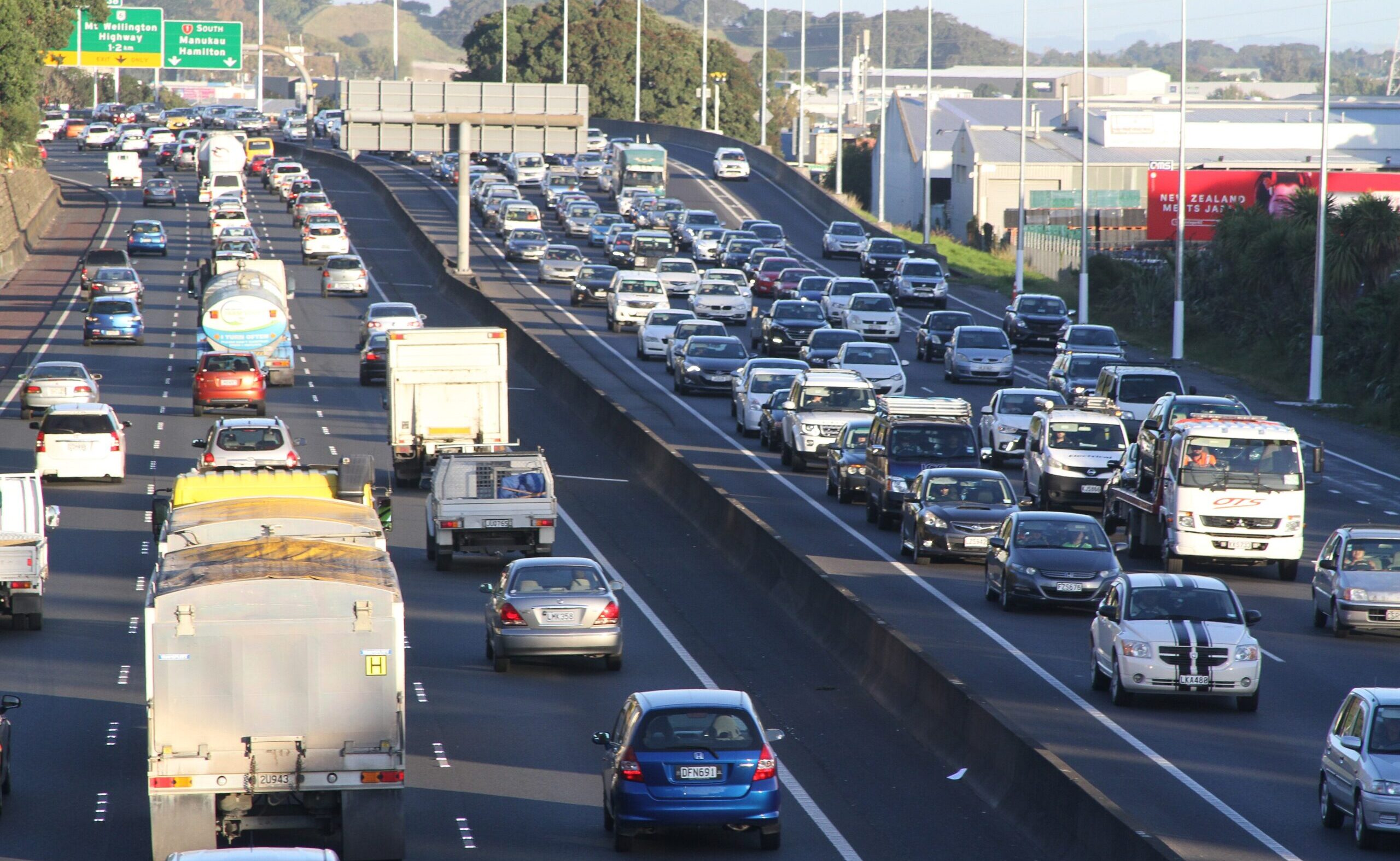
“Oil use for transport has now been rising for five years in a row, an understandable response to the almost complete removal of climate/transport policies, with further weakening signalled for the future. The current war and oil crisis highlights our vulnerability in this area. Instead, the Government is relying on the ETS as its main policy instrument, which the CCC say is “unlikely to effectively drive emissions reductions”.
“The whole situation is a scandal and yet the report will be little consolation to those affected by the recent string of climate-change-fuelled disasters, or to those who can no longer afford house insurance.”
Conflict of interest statement: “No conflict of interest.”
Professor of Political Science Bronwyn Hayward, University of Canterbury, comments:
“The Climate Commission’s determination that New Zealand needs to double our action in the near future or miss our climate targets sounds daunting, but surprisingly might not be quite as difficult as it sounds.
“New Zealand has two big areas of climate emissions it needs to face up to: transport and agriculture.
“But there are three new twists that make it easier for political parties to take action on these areas if they could just “get over themselves” and do it.
“First, when we look at transport, as a result of the fuel and cost of living crisis many political parties are now closer together on some key elements of transport; both the National and Labour Party, the Greens and Te Party Maori and The Opportunity Party all now agree on some basic practical actions to encourage faster take up of electric vehicles, public transport and active transport (walking and cycling) – these are policies that have been ready for some time and could be started again immediately, and would ease financial pressure on New Zealanders
“Second, internationally agriculture has been a strong lobby often resistant to imposing more serious reductions in methane. However, in France, new emissions targets from livestock are notably now set at 26% lower by 2030 and 53% lower by 2050 than 1990 levels – and while methane is difficult to cut for farmers, France is also signalling is that it is willing to support farmers to transition away from methane production and this is a policy approach New Zealand could seriously consider.
“Finally the rural and urban divide over climate policy is overstated. In reality, cities are the sites of up to 72% of emissions globally, and encouraging rather than preventing cities from measuring their emissions and taking action could create new employment and warmer homes, while also cutting costs and helping rural and urban communities feel we are all in this together, taking action.
“While there is some discussion in New Zealand that we’d be better focusing on just adaptation not mitigation, worldwide governments are generally shifting towards integrating these actions through “climate resilient development” which reduces reliance on fossil fuels, by cutting emissions while also taking action to also protect people, homes, agriculture and environment – we can do this too, we won’t achieve miracles, but we will make a big difference right now and reduce costs and risks for Kiwis, we just have to start.”