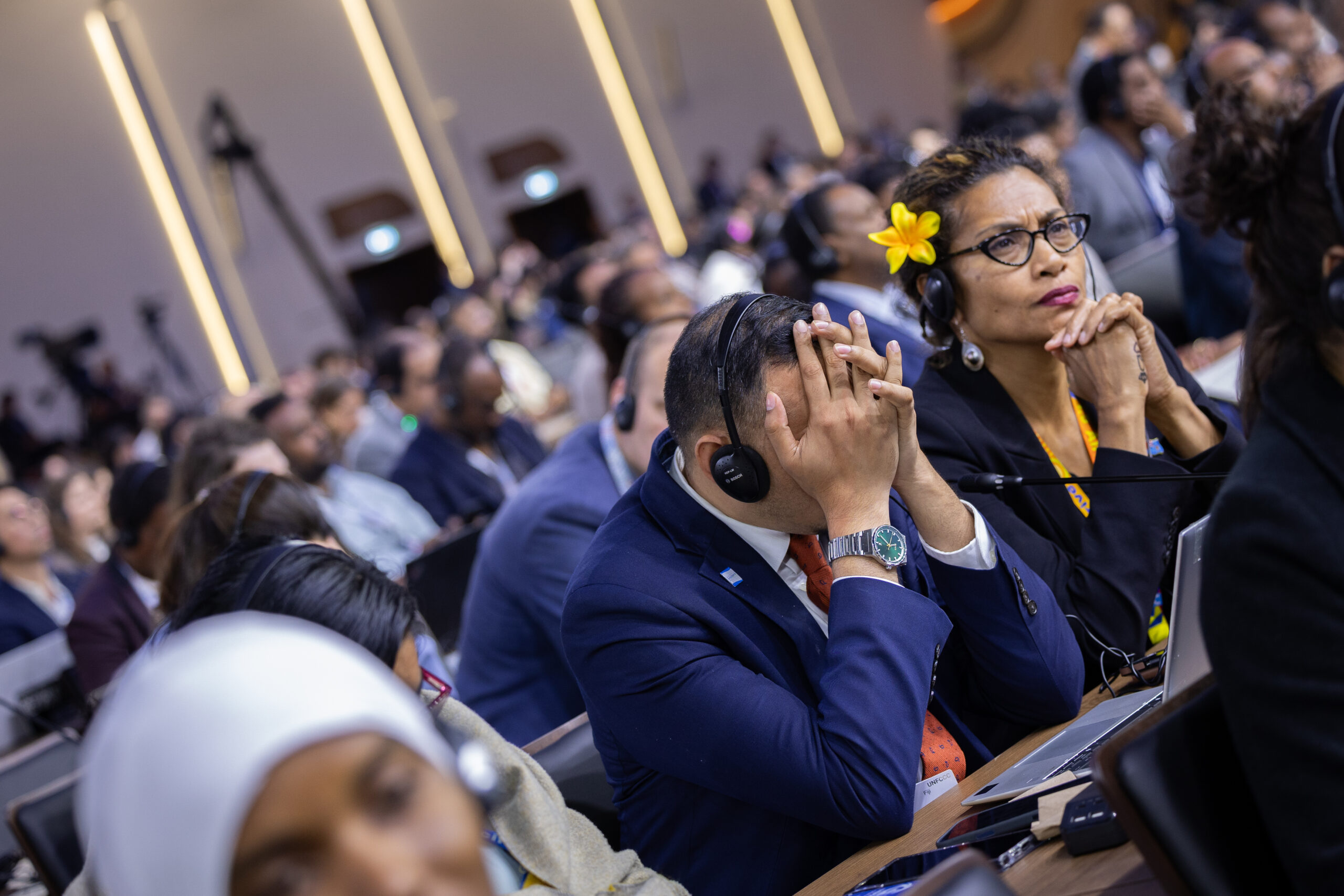
The UN climate conference ended without agreement overnight NZ time, after many countries refused to support a deal that didn’t mention fossil fuels.
The Science Media Centre asked experts to comment.
Professor of Political Science Bronwyn Hayward, University of Canterbury, comments:
Professor of Political Science Bronwyn Hayward, University of Canterbury, comments:
“By now the failure of the UN Climate Change Conference (COP 31) is well reported, but what is less well understood is what we might do next as a global community.
“This is only the third conference since the United Nations framework convention on climate change was introduced where the 196 countries or parties have failed to agree on a summary of actions. Now more than ever, small nations like New Zealand need collective solutions in a volatile world, which means regenerating the United Nations.
“The incoming New Zealand government faces a climate changed world. However, some argue that given New Zealand is a very small nation there’s no point in trying to pursue mitigation efforts under the Paris climate agreement, we hardly make a difference, rather we should be focusing our attention and limited funding on adaptation.
“This suggestion ignores two inconvenient truths. First, unless countries work together, no one can get any lasting change, not even large countries. And unless we address rising temperatures with collective mitigation action, we will soon hit hard limits to adaptation as more extreme weather events mean our efforts to protect ourselves will no longer be effective.
“Despite the collapse of the COP talks, one by one all nations reaffirmed their commitment to multilateralism last night, even though they can’t agree on what to do together! Even Argentina who had once toyed with leaving the Paris agreement has declared it “will stay in”.
“The challenge New Zealand’s next government faces is, will we stand firm with small nations of the Pacific and our traditional allies by moving away from fossil fuels and developing a clear road map of action, or will we back an increasingly isolated group of oil interests and expose our economy to more risk in a volatile oil and gas market?”
Conflict of interest statement: “Bronwyn Hayward has held several authorship roles in IPCC AR6 and is a Review Editor for the forth coming IPCC Cities and climate special report.”
Distinguished Professor Steven Ratuva, University of Canterbury, Foundation Chair of the International Political Science Association research committee on Climate Security and Planetary Politics, comments:
“The collapse of the COP discussions is not surprising given the unchecked and predatory power of fossil fuel lobbyists in collaboration with petrostates, which have captured the COP process.
“There has been a pattern where previous Presidents and hosts of COP were fossil fuel producing states and used COP as a greenwashing PR tool and as a result, COP has lost its mana and significance and it’s turning into a futile annual talkfest.
“As the worst COP ever, both Türkiye and Australia have a lot to answer for. Australia’s bid for COP hosting was overwhelmingly supported by Pacific Island States, hoping that their biggest neighbor will help promote their interests and shift the dial in their favour, especially after the success of Pre-COP in Fiji and Tuvalu, but now they are very disappointed.”
Conflict of interest statement: No statement received.
Professor Yvonne Buckley, Co-Director of the Co-Centre for Climate + Biodiversity + Water, Trinity College Dublin, Ireland, comments:
“It now appears that the COP31 talks have collapsed with the fourth draft formally rejected by the EU and others including Panama, who wrote an open letter setting out their red line issues earlier in the process. The COP31 draft text fails to mention the necessity of moving away from fossil fuels as the primary cause of human induced climate change.
“This COP has seen arguments around the use of the best available science; indeed, the scientific foundation of global climate agreements has been under attack. At the same time there has been acknowledgment that we have failed to meet the Paris agreement threshold of limiting warming to +1.5C. It has never been clearer that we need to act to stop the continued use of fossil fuels.
“While it is disappointing that global multilateralism has failed here, perhaps failure is needed to catalyse meaningful action in the future. Ireland and Tuvalu are jointly hosting the Transition Away from Fossil Fuels initiative in 2027, which was established at the Santa Marta COP last year to enable countries serious about the transition to make progress. This has taken on new significance given the failure of COP31.
“Panama’s intervention sought to strengthen the support of science and the need to jointly negotiate the three UN conventions on climate, biodiversity and land degradation. Panama recognises that nature is our first line of defence in combating climate change and its impacts.”
Declaration of interest: None received.