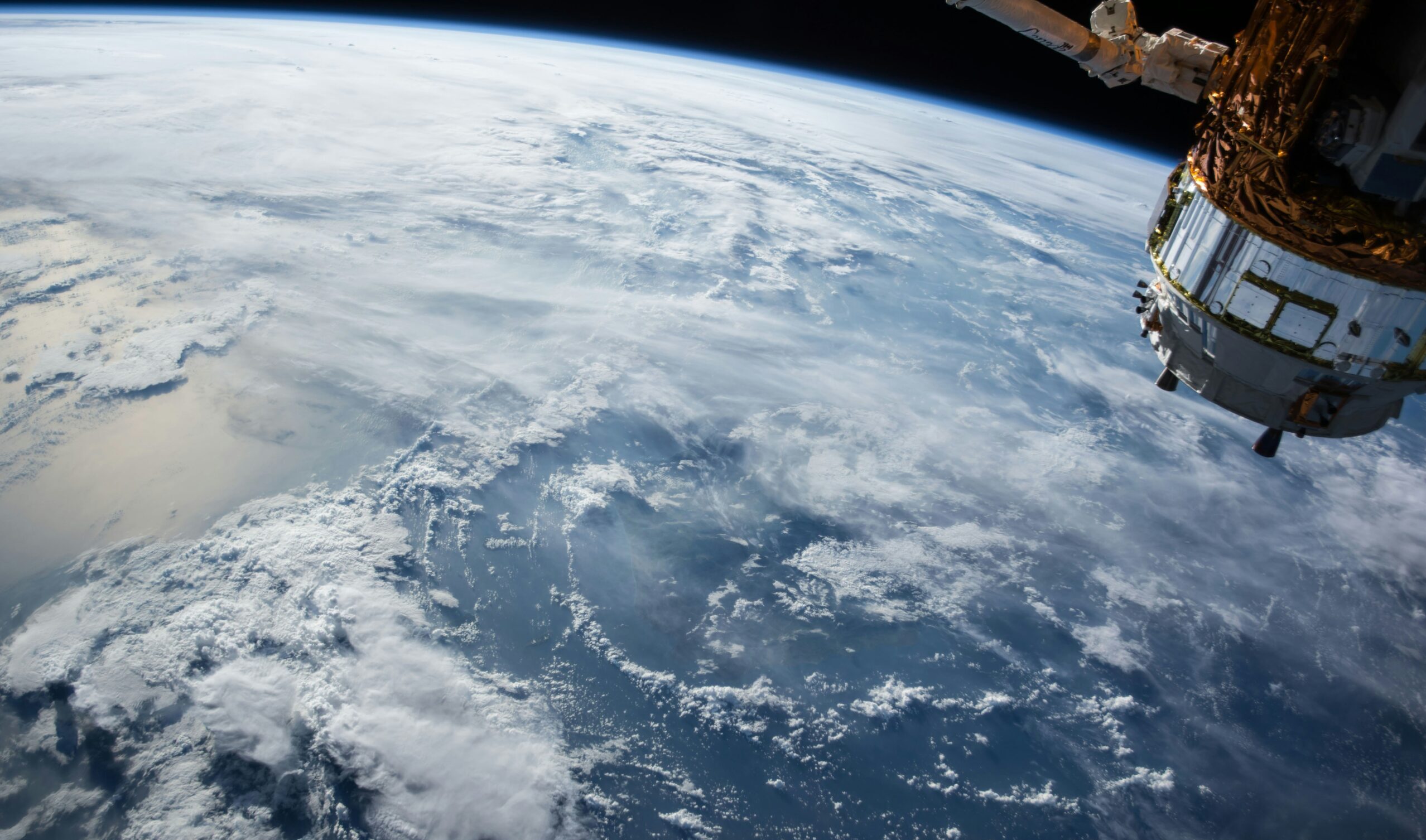
This week, Google is sending an experimental satellite into orbit to test whether AI data centres could resist the harsh conditions of space.
The solar-powered satellite is about the size of a refrigerator and it will carry computer chips with enough power to answer simple AI queries from space.
Google’s researchers estimate that if launches get cheaper, space-based data centres could become practical in a decade’s time – however several challenges remain, including keeping the computers cool, sending data between satellites, and dealing with space debris.
The SMC asked NZ experts to comment.
Dr Ulrich Speidel, School of Computer Science, The University of Auckland, comments:
“The topic of data centres in space has come up a few times, but there are a few problems which the paper glosses over (and, frankly, a lot of work even from top universities does, too). I’m a great fan of solar power (I run my house on in) and yes it’s true that from *certain* orbits, you can get way more solar power than from the same panel on Earth. Unfortunately Low Earth Orbit isn’t one of them (satellites in LEO are in the dark half of the time) – higher orbits are better for that. So that requires bit more battery capacity and panel area if one wants to data centre through the dark
“The other big issue is cooling: Chips that consume power produce an equivalent amount of heat, and the authors write “Cooling would be achieved through a thermal system of heat pipes and radiators, designed to maintain high-bandwidth memory (HBM) operating temperature below ∼90∘C, since this is the critical limiting factor for operation.” Radiative cooling in space is more efficient than on Earth because of the low background temperature of deep space, but the convective / evaporative cooling mechanisms available on Earth in addition to radiative cooling here aren’t available in space at all. A square metre of radiator in space can get rid of a few 100 W, which is in the same order of magnitude as what a solar panel of the same size can deliver. But this means they’d need about as much radiator surface as solar panel area.
“All that adds to weight that has to go to orbit – building more solar and battery storage on the ground might be the cheaper approach after all. The current pricing looks at consumables like rocket fuel based on current demand – if demand rises, that cost might go up, too.
“Last but not least, if they make it work in space … much of the querying and training will have to happen from the ground, and a lot of the AI results would also need to be communicated down. That’s then potentially a bandwidth problem, too, because usable radio spectrum is limited.”
Conflict of interest statement: “None.”
Dr Kerry McInerney, Lecturer in AI, School of Computer Science, University of Auckland, comments:
“Putting data centres in space isn’t a novel concept; the geographer Yung Au writes that “if data centres are defined as facilities that host servers and/or computer hard drives, many mini-data centres are already in space”. What differentiates these data centres is their size and scale.
“No one wants to live near an AI data centre. Sending data centres to space seems like an easy solution to our current AI data centre problem. This way, we get generative AI without the pollution, noise, and strain on our local energy grids and water supplies caused by AI data centres.
“However, outer space is not a silver bullet to the environmental costs of AI data centres. As the authors acknowledge, sending data centres into space doesn’t fully erase their environmental impact. For example, satellites have raised concerns over sound and light pollution, which interferes with astronomy and night-sky watching practices, as well as the pollution caused by satellite re-entry.
“Furthermore, outer space data centres may encourage countries and companies to colonize and conquer space. Writers like Karen Hao have called AI companies the new empires, and space may be these empires’ final frontier. Silicon Valley has long been obsessed with space: both Jeff Bezos and Elon Musk have founded private space exploration companies. Following earlier histories of colonial expansion, outer space is imagined as ‘terra nullius’, an unclaimed space ripe for discovery and occupation.
“The authors write that “space offers an environment for compute that scales beyond planetary surface constraints”. But do we want a universe full of ever-proliferating data centre infrastructure? AI in space may be feasible, but that does not mean it is desirable or necessary. Rather than asking if we can send data centres up into space, we should question what drives Big Tech’s unfettered expansion of environmentally costly AI infrastructure, and whether its growth model could ever be sustainable.”
Conflict of interest statement: “No conflicts of interest.”
Dr Priyanka Dhopade, Senior Lecturer in the Department of Mechanical Engineering, University of Auckland, comments:
“Google’s paper is an exciting and ambitious vision for moving energy-intensive AI computing into orbit, where it could be powered directly by solar energy.
“But from a mechanical engineering perspective, thermal management (cooling) remains a major challenge, which is even mentioned in the paper. Unlike terrestrial data centres, spacecraft need to reject waste heat through radiation, which requires substantial radiator surfaces.
“Google’s proposal is a fleet of smaller, interconnected computing satellites, allowing computing power and cooling requirements to be spread across multiple spacecraft. But the paper provides limited detail on the thermal design, likely due to proprietary reasons. They mention the obvious: heat pipes and radiators, which is pretty standard technology. But there’s no assessment of heat rejection capacity, radiator sizing or the associated mass requirements. This is really important to understand how the concept could scale, particularly given the need to minimise spacecraft mass and launch costs.
“There are also wider sustainability implications. Large constellations of orbital data centres would add to congestion in already busy orbits, creating challenges for space traffic management, debris mitigation and end-of-life disposal.
“Moving infrastructure off Earth doesn’t mean its environmental impacts disappear. We still need to account for launch emissions, manufacturing, resource extraction, satellite burn-up during re-entry and eventual refurbishments to the fleet.
“The key question is whether orbital data centres can deliver meaningful environmental benefits without creating new problems elsewhere.”
Conflict of interest statement: “No conflict of interest.”
Dr Tulasi Parashar, School of Chemical and Physical Sciences, Victoria University of Wellington, comments:
“AI as applied to edge-computing in space is being explored actively. A few months ago, JPL’s NAVI-Orbital system performed “multi-modal” inference on board of a satellite. It captured pictures, analysed them, and sent a plain-language summary of what was observed to ground without any human in the loop. Such efforts have led to proposals of large-scale data centres in space, hoping to maximize solar energy harvesting in space. Even though a “moonshot”, these could become a reality in the future. However, significant engineering challenges need to be solved to manage controlled cluster formation, the heat produced by the powerful computing units, and communication between satellites as well as with ground stations.
“Even if these engineering challenges are solved, these large space data centres will come with their pros and cons. Enhanced accessibility of AI compute anywhere in the world has its advantages, many of which are exemplified by Starlink already. However, three major issues concern active scientists.
“The first one is Kessler syndrome where the overcrowding of Earth’s orbit can lead to cascading crashes and destruction of satellites. Mitigation of such risks is one of the top priorities for international space agencies. Agencies such as ESA and NASA now require operators to dispose their satellites within five years at the end of mission. This, along with mega constellations such as Starlink and the proposed space data centres, poses the second risk.
“Frequent burning of thousands of satellites during re-entry at the end of their life is introducing large amounts of aerosols affecting the ozone layer. With large data centres requiring potentially many tens of thousands of satellites in orbit at any time, along with many tens of thousands of internet connectivity satellites, the pollution from re-entering these satellites will become significant very quickly.”
“Another very important concern is that the reflections from satellites and radio interference affect optical as well as radio astronomy significantly, making the lives of astronomers extremely difficult, including very important tasks such as asteroid detection.”
Conflict of interest statement: Dr Parashar has declared he has no conflicts of interest.