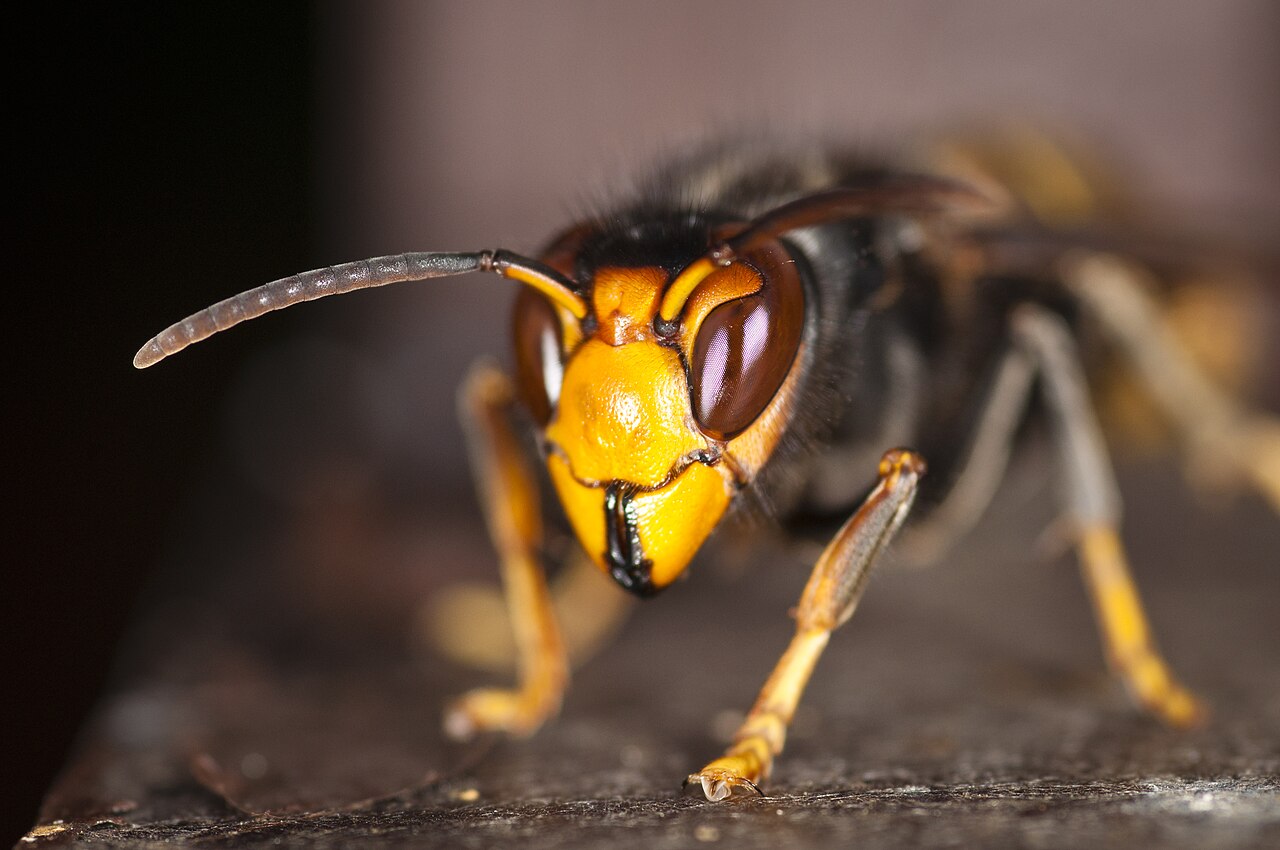
NZ will use environmental DNA in an insect biosecurity response for the first time, to check Auckland waterways for signs of yellow-legged hornets.
The hornets haven’t been detected since this April, but any queens that have mated could soon come out of winter hibernation.
While they don’t live in waterways, cells from their bodies can end up there, so the eDNA trial could help scientists find nests or decide where to put traps.
The Science Media Centre asked experts to comment.
Andrew Pugh, entomologist at Bioeconomy Science Institute and leader of the freshwater eDNA trial, comments:
“We are essentially leveraging waterways as natural collectors of genetic material. Even insects that aren’t aquatic shed cells, tissues, and biological material into the environment, which can be detected through eDNA testing.
“This technology has successfully detected pest wasps so we know it works, but what makes this research exciting is this will be the first time eDNA testing has been used in a New Zealand biosecurity insect incursion response.
“If successful, this work could help identify areas of hornet activity to quickly track down hard-to-find nests, and to optimise field deployment of surveillance traps.”
Conflict of interest statement: Andrew is leading this research.
Dr Angela (Ang) McGaughran, Principal Investigator of the Invasomics Lab, University of Waikato, comments:
“This research project represents the first time that environmental DNA (eDNA) tools will be used to help inform an ongoing insect invasion response and I am really glad to see it about to launch.
“Applying genomic tools to biosecurity in Aotearoa New Zealand is both appropriate and necessary if we are to try to keep ahead of invasive species’ threats.
“The fall armyworm was a missed opportunity in early detection and eradication that has gone on to incur several hundred thousand dollars of total national cost (including crop losses, control measures, and government response). Though not initially detected via eDNA, it was later retrospectively picked up in eDNA-derived data, showcasing the potential of this tool for the early detection of new pest incursions.
“With earlier detection comes the greater possibility of eradication potential, and things look more promising for the yellow-legged hornet response so far.
“Though the upcoming research project seems targeted primarily towards water-based eDNA detection of the hornet, the use of complementary testing, such as airDNA (environmental DNA sampling from air), could also be useful in the biomonitoring effort. For example, airDNA traps could be set up in areas where streams and waterways are unavailable to expand the biosurveillance network.
“It’s exciting to start seeing genomic tools being applied towards biosecurity responses – this undoubtedly gives us a better chance at stopping invasions at their incursion points, with better outcomes for our biodiversity and our livelihoods.”
Conflict of interest statement: “I have no conflicts to declare.”
Dr Benjamín Durán-Vinet, Postdoctoral Research Fellow in environmental biosurveillance and biosecurity deployments, University of Otago, comments:
“The detection of new biosecurity threats is a critical capability for Aotearoa New Zealand. Over many years, New Zealand researchers, together with international experts, have been developing and integrating new technologies for this, ranging from environmental DNA and molecular diagnostics to artificial intelligence, materials science and modelling.
“This trial targeting yellow-legged hornets is an excellent example of how the broad research and investment undertaken in New Zealand can be translated into practical tools for emerging biosecurity threats. It also reflects the wider effort to move from predominantly reactive biosecurity responses towards proactive platforms that are ready for both current and emerging threats.
“However, important bottlenecks remain. Three in particular stand out: 1) turning genetic information on an invasive species into something we can cheaply and regularly test for, giving us the versatility to respond to emerging threats; 2) operationalising valuable research – effectively moving science from the laboratory into the hands of end users; and 3) enabling on-site deployment, so detection can support biosecurity decisions where and when they matter.
“This last point could be game-changing. Most of today’s biosecurity gold-standard molecular tests are still done in a laboratory. Bringing them into the field could mean getting answers on the spot, directly where they are needed to support decision making – much like COVID-19 rapid tests allowed people to test themselves at home, but for biosecurity purposes.
“It is always encouraging to see years of research, development and integration being applied to real-world problems that have the potential to seriously affect New Zealand’s unique and fragile ecosystems.
“This is exactly the kind of research and development capability that Aotearoa New Zealand – and the international biosecurity community – will increasingly need to protect our ecosystems and productive sectors now and into the future.”
Conflict of interest statement: “No conflict of interest.”
Phil Lester, Professor of Ecology and Entomology, Victoria University of Wellington, comments:
“New Zealand’s goal for the yellow-legged hornet incursion is eradication. That is an ambitious objective, and one that has proven difficult to achieve elsewhere in the world. The greatest challenge in any eradication programme is detecting the last few remaining individuals when populations are at very low abundance. The final stages of eradication are often the most difficult because managers must have confidence that a population has truly been eliminated. Any new tool that can be proven to improve our ability to find hornets is therefore of considerable value.
“Environmental DNA (eDNA) is a promising approach that could help address this challenge. We do not yet know how effective freshwater eDNA sampling will be for detecting yellow-legged hornets, especially when populations are at very low abundance, but testing its potential overseas in invaded areas of Europe would be an important and logical step. Research in these areas, where hornets are already established, should help determine whether this technology can be used to guide surveillance efforts and support eradication in New Zealand.
“The complementary work on lures and traps is also welcome. This is another way of refining and improving our ability to find hornets and locate nests. Improving invasive species detection remains one of the most important challenges in any eradication programme, and any advances in our surveillance capability could increase the likelihood of success.
“More broadly, these projects will strengthen New Zealand’s preparedness for future hornet incursions and other invasive insect threats. As yellow-legged hornets continue to spread and expand their range across Asia, Europe, and the United States, they are likely to arrive again. Developing effective and highly sensitive detection tools now will provide long-term biosecurity benefits.”
Conflict of interest statement: “I’m a member of the Technical Advisory Group for MPI on the yellow-legged hornet incursion.”