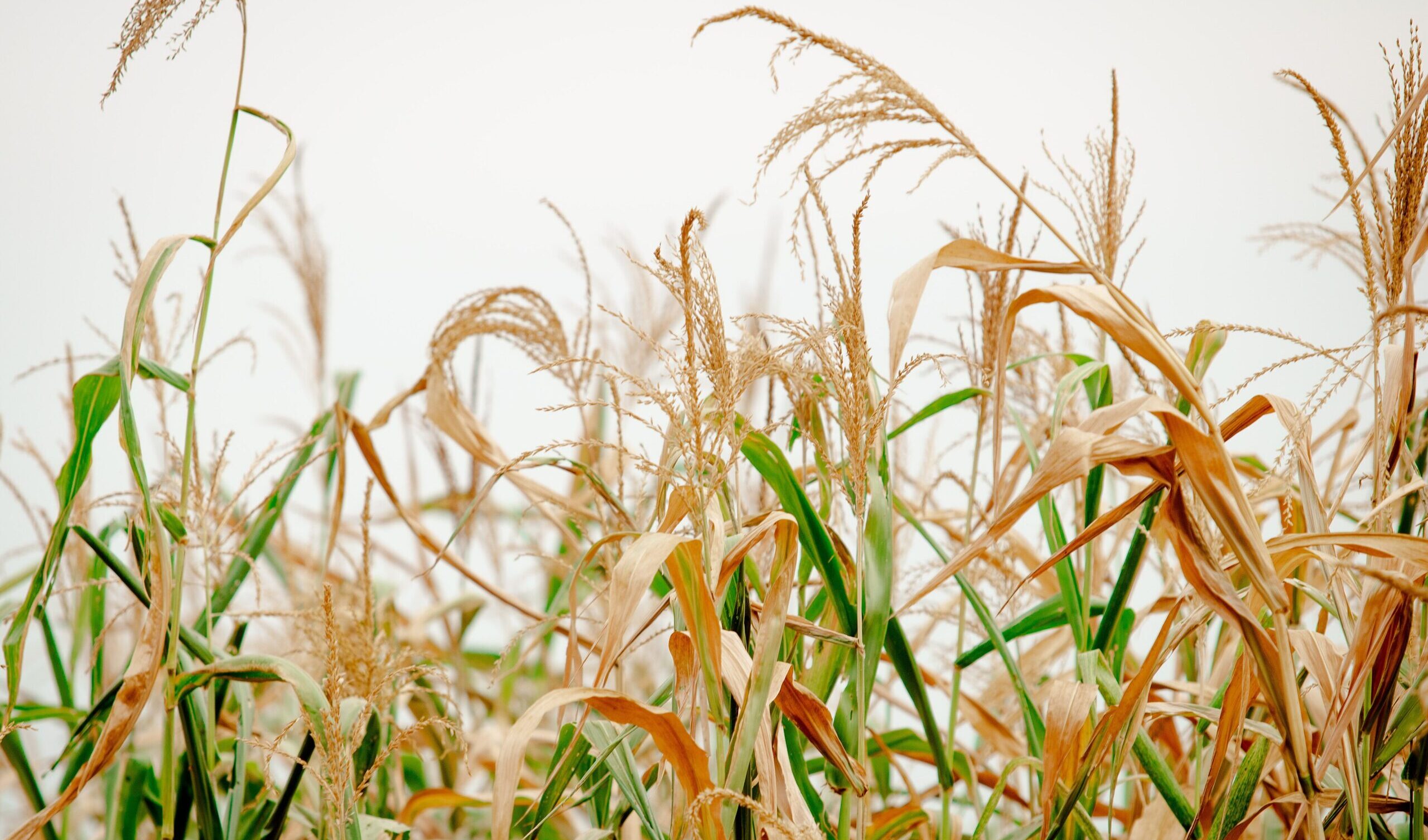
Regulation to permit gene-edited plants has just passed in European Parliament, allowing genetic changes that don’t introduce foreign DNA.
The new rules aim to improve the food system by allowing gene-edited crop varieties that are more climate and pest resistant, yield more produce, or need fewer chemicals to grow.
Plants with few changes—similar to those that could result from ordinary breeding or mutation—face fewer restrictions, while others remain controlled under current rules for Genetically Modified Organisms.
The Science Media Centre asked local experts to comment on the implications for trade and NZ’s Gene Tech Bill.
Melanie Mark-Shadbolt (Ngāti Kahungunu, Ngāti Porou, Te Arawa, Te Ātiawa, Rangitane, Ngāti Raukawa), Tumu Whakarae CE, Te Tira Whakamātaki, comments:
“The EU Parliament move to deregulate gene-edited crops matters to us because we tend to follow their path. In the past, Europe’s caution on synthetic biology has shaped our own caution, and if that shifts it’s likely we (or our policy makers) will want to follow.
“But our research at Te Tira Whakamātaki shows New Zealanders, including Māori, are far from united. Some see gene technologies as a potentially important tool for biodiversity and pest management, many remain uncertain. Māori respondents told us consistently that decisions on emerging technologies must be guided by Te Tiriti, by tikanga, and by meaningful iwi and hapū involvement at the table, not after the fact. The Gene Technology Bill submissions showed the same caution – of roughly 14,000, close to 80 percent opposed and barely half a percent supported the Bill.
“We are watching the cost of getting this wrong in real time. Colossal Biosciences’ moa “de-extinction” has generated real tension, across rūnanga, among other iwi, and within the science sector, because social licence was assumed, not earned.
“And these are not new tensions. We have been arguing over the role of Māori, Te Tiriti and mātauranga in our science system since the first ‘scientist’ arrived in Aotearoa, and we have not resolved them. Following the EU before we have done that work would be a mistake.
“So, the challenge for Aotearoa is not whether synthetic biology is adopted, but whether those decisions earn public trust, protect our market access, and reflect the values of the communities most affected – that includes Māori. Europe can set its own course, but we must set our own.”
Conflict of interest statement: “No conflicts.”
Chris Winefield, Associate Professor in Plant Genomics and Molecular Biology, Lincoln University, comments:
“It is pleasing to see that the EU, which holds a similar strict view of the risk assessment of GM technologies to New Zealand, are going to treat genome-edited plants that possess alterations indistinguishable from those generated by standard breeding approaches as equivalent to breeding-derived plant lines.
“I am hopeful that this will encourage Parliamentarians to adopt a similar view when considering the Gene Technology Bill. If one of the toughest regulatory regimes for GM outside of NZ has duly considered the risks and benefits of such approaches and, on balance, has come to the view that this technology produces plants that are of no greater risk than traditional breeding approaches, it is hard to see how Parliament can rationally justify the continued restriction of these technologies.
“There are potentially significant economic implications of this change in the EU stance on gene-edited plants.
“It is very likely that once these changes are enacted, the EU companies will rapidly deploy plants with a range of enhanced characteristics. The headline targets would be plants with higher yields, with greater nutritional value, with lower requirements for water, fertiliser, and chemical protection.
“This will mean we will struggle to compete economically in these markets as, without a similar change in stance in NZ, we will be forced to continue to use genetically and productively inferior plant lines.
“The increasing threat of non-tariff trade barriers based on chemical residue levels we cannot meet due to our continued reliance on chemical control of pests and diseases is something I feel we should not ignore.
“We have an opportunity to reset the regulatory framework, which would allow us to meet the dual challenges of climate change and the need for increased sustainability of our production systems. The EU is showing us a way forward, and I hope we take heed for the sake of the environment and the economic well-being of NZ.”
Conflict of interest statement: “The comments and views expressed here are entirely my own and do not represent the position or official stance of Lincoln University. I declare that I have no direct financial or personal conflicts of interest with this opinion. However, in the interest of full transparency, I note that I actively conduct academic and professional research involving GM technologies for plant improvement.”
Dr Revel Drummond, Molecular Biologist, Bioeconomy Science Institute, comments:
“The EU has passed a complex legislative framework to regulate the use of gene technology in plants for agriculture and food production. It will bring the EU in line with the many other systems for gene technology regulation around the globe.
“The new rules allow for three levels of regulation, NGT-1, NGT-2 and GMO. Each level will have different requirements before plants can be released into the field and onto the plate. NGT-1 plants are those made using simple gene editing techniques but also include cisgenic plants.
“NGT-2 plants have complex gene edits and GMO plants will contain transgenes. This system of regulatory tiers is very similar to what is proposed by the Gene Technology Bill that is being considered by the NZ government. Indeed the tiers even include the same types of gene editing with approximately the same level of control, although in NZ it seems cisgenic plants may be considered GMOs.
“This legislation will enable EU seed producers, farmers and consumers to benefit from enhanced plant varieties produced using these tools closing a competitive gap with jurisdictions that have moved earlier to embrace gene editing in agriculture.”
Conflict of interest statement: “I use gene technologies in the course of my work at the Bioeconomy Science Institute.”
Our colleagues at the Taiwan SMC have also gathered comments.
Yi-Yin Do (杜宜殷), Professor at Department of Horticulture and Landscape Architecture, National Taiwan University, comments:
Q1. What are the NGT1 and NGT2 referred to in the regulation, and how should we understand the difference between them?
“Category-1 New Genomic Technique plants (NGT1) are plants and their products obtained by targeted mutagenesis such as gene editing, cisgenesis, or intragenesis, whose gene-sequence changes can be achieved through natural mutation or conventional breeding methods; they are regarded as equivalent to the results of conventional breeding and are exempt from GMO regulation. Category-2 New Genomic Technique plants (NGT2) involve more complex or large-scale genetic changes and must still comply with existing GMO regulations.”
Q2. What impacts might the amendment of the regulation bring? How can the environmental impact and safety of gene-edited crops be assessed?
“The amendment of the regulation can drive the application of Category-1 new genomic techniques in crop breeding, in order to respond to the challenges of climate change and food security and to accelerate the development of disease-resistant, drought-tolerant, high-yielding, and other crops.”
Q3. Are there any aspects of the European rules that Taiwan could learn from?
“Taiwan could follow the European rules and open up the application of Category-1 new genomic techniques in crop breeding, which would help Taiwan’s R&D of new stress-tolerant varieties and maintain its global R&D competitiveness.”
Q4. Based on your research experience, what potential do gene-edited crops have? What are the prerequisites for their application? What are the limitations?
“Gene-editing technology can precisely modify the genes of crops and greatly shorten breeding time. Its application potential includes enhancing crops’ ability to withstand stress and adapt to climate change, reducing the use of chemical pesticides and fertilizers, increasing the yield of agricultural products and optimizing their quality, being environmentally friendly, and improving agricultural sustainability. Its limitations are that it is difficult to edit simultaneously multiple genes that control quantitative (polygenic) traits, and that tissue-culture regeneration or genetic transformation is rather difficult in some crops, which limits the application of gene editing in these types of crops.”
Q5. What gene-editing technologies are currently being developed in Taiwan? What practical difficulties are there in their application?
“The gene-editing technology currently being developed in Taiwan is mainly the CRISPR/Cas system. The practical difficulties in application include the fact that, for horticultural crops, tissue-culture regeneration is mostly difficult or the success rate of gene transformation is low, and that polyploidy, where present, reduces the effectiveness of gene editing.”
Q6. What is the difference between “gene editing” and “genetic modification” technologies? Is there any difference when applied to crops versus food? How can the safety of gene editing, genetic modification, and other biotechnologies be continuously tracked and assessed?
““Genetic modification” technology randomly inserts a foreign sequence into the genome of the target crop so that the crop acquires a new trait. This foreign sequence is easy to detect, but scientists cannot control where it is inserted, so a large amount of screening is needed to eliminate failed individuals, and breeding takes longer. “Gene editing” technology can avoid adding a foreign sequence, instead using gene scissors such as CRISPR-Cas9 to precisely fine-tune, delete, or switch off a particular gene and change its original function; breeding time is significantly shorter, and because natural mutation or conventional breeding can also produce the same result, its regulation is close to that of conventional breeding.”
Q7. If Taiwan wishes to properly regulate the use of gene editing and other biotechnologies in the future, what assessments and considerations need to be included? What fields of experts should be brought in to discuss this together?
“In order to properly regulate the use of gene editing and other biotechnologies, I suggest that at the technical and scientific level one should assess the precision and off-target effects of gene editing, mosaicism, and residual foreign DNA, and understand the mechanisms governing gene editing; at the ecological and food-safety level one should assess the possibility of gene flow and ecological contamination, the generation of novel allergens and toxicity, and the substantial equivalence of nutritional composition; and at the economic, regulatory, and farmers’-rights level one should assess patent-licensing models, intellectual property rights and patent monopolies, and alignment with international trade and regulation. The fields of experts who should discuss the regulations together should include molecular biologists and plant geneticists, crop and horticultural breeding experts, plant pathologists and insect ecologists, food science and toxicology experts, agricultural economics and intellectual property experts, science communication experts, and farmer representatives.”
Declared interests: No conflicts of interest.
Wei-Chun Chen (陳韋竣), Associate Researcher at Agricultural Technology Research Institute (ATRI), Tawian, comments:
Q1. What are the NGT-1 and NGT-2 referred to in the regulation, and how should we understand the difference between them?
“NGT is short for “New Genomic Techniques.” It is the umbrella term used officially by the EU for the many molecular-biology techniques developed after 2001, covering “targeted mutagenesis” within “genome editing techniques,” as well as “cisgenesis,” among others. These techniques have already been used by public-sector, academic, and research institutions and companies engaged in crop breeding around the world to develop new crop varieties and breeding lines, and in some countries seedlings are already on the market.
“In order to regulate, before and after they reach the market, the wide variety of new plant varieties bred using NGT and the agricultural products derived from them, the EU authorities drafted the NGT regulation. Taking into account the biological characteristics, gene sequences, and impact on farmers and the consumer market of these new plant varieties, they classified them into two major categories: “NGT-1 plants” and “NGT-2 plants.”
“According to the definition in the NGT regulation, plants classified as “NGT-1” can be understood as plants whose gene sequences can also be found in nature or in plant varieties bred by conventional techniques. There are, however, two exceptions: if the traits an NGT plant has been bred to possess are (1) herbicide tolerance or (2) the ability to produce a pesticidal substance, it will be classified as an “NGT-2 plant.” On the other hand, the definition of the “NGT-2” category is simply “NGT plants other than NGT-1 plants.” After classification, the NGT regulation sets out separately the rules that these two major categories of plants and their derived agricultural products must follow before and after they reach the market.”
Q2. What impacts might the legislation drafted by the EU bring? How can the environmental impact and safety of gene-edited crops be assessed?
“According to the assessments set out in the documents published by the Council of the European Union (composed of representatives of the governments of EU member states), the European Parliament (the legislative body), and the European Commission (the executive body), implementation of the latest negotiated version of the NGT regulation will help foster innovation in the EU’s agri-food industry, increase industrial competitiveness and enable sustainable operation, while maintaining the EU’s high standards of health and environmental protection. EU member states will also be able, on the basis of the regulation’s provisions, to choose management and development approaches that are beneficial and effective for their own agri-food industries.
“According to the NGT regulation, plants in the “NGT-1 plant” category will be deemed to have an environmental impact and product safety comparable to varieties that arise naturally or are bred by conventional techniques, and will not require additional environmental risk assessment or product safety assessment. Plants in the “NGT-2 plant” category will need to follow the regulatory provisions established by the EU in 2001 governing the release of genetically modified organisms (GMOs) into the environment or onto the market, undergoing Environmental Risk Assessment: through field trials, investigating their biological characteristics, their impact on non-target organisms, gene flow, the risk of becoming an invasive weed, and so on, with the authorities then determining whether they meet the regulatory requirements regarding environmental impact and level of safety.”
Q3. Based on your research experience, what potential do gene-edited crops have? What are the prerequisites for their application? What are the limitations?
“Gene-editing technology allows breeders to adjust the gene sequences of target crops more directly and precisely, and has greater potential to breed new crop varieties that simultaneously possess multiple desirable traits such as high and stable yield, pest and disease tolerance, and being safe and nutritious — which would benefit farmers, consumers, and industry alike. The prerequisite for its application is that, based on research methods in agriculture and biotechnology, one understands the function of a crop’s gene sequences and the traits they can express, and understands the possible impacts on the environment and on product safety, so as to carry out reasonable risk management. Limitations may arise in the reasonableness of regulatory management and in the degree of acceptance of new varieties and breeding lines in agricultural production and the consumer market; for the focal issues of public concern, providing pragmatic explanations or proposing responses should help reduce these limitations.”
Q4. What is the difference between “gene editing” and “genetic modification” technologies? Is there any difference when applied to crops versus food? How can the safety of gene editing, genetic modification, and other biotechnologies be continuously tracked and assessed?
““Gene editing” is a general term for a large group of techniques that can make changes to specific gene sequences, while “genetic modification” is a term for genes being artificially altered. In practice, the way they are defined differs according to academic or regulatory definitions, and they cannot be directly mapped onto each other as a comparison of differences between particular technologies. The EU NGT regulation provides clearer explanations of the definitions and scope of application of these terms, using 2001 as the dividing line: the molecular-biology techniques used to alter genes that were developed before then are classified as “genetic modification techniques,” and those developed afterwards are classified as “new genomic techniques” and cover “gene-editing techniques.”
“These technologies each have characteristics that differ in the degree to which they change gene sequences. Generally speaking, the characteristic of “gene-editing techniques” is that they make changes to specific gene sequences; the earlier-developed “genetic modification techniques” usually refer to combining a distantly related “foreign gene” into the genome of the target breeding organism. But related technologies are now evolving rapidly and can be used in many combinations, so it is no longer easy to distinguish them clearly from the technology’s name or the process used. The EU’s redrafting of the NGT regulation — updating the scope of the definitions of the relevant technologies and classifying them by the characteristics of the final product — is also intended to address the fact that the technology used in the process of crop breeding or food R&D cannot by itself indicate whether the resulting crop or food product is safe.
“If one wants to track and assess the safety of these technologies, it must be judged from the “organism” bred or the “derived product.” The method of judgement provided by the EU NGT regulation is: regardless of which technology is used, as long as the gene sequences of its genome can be found to be identical in nature or in lines bred by conventional techniques, it can be regarded as having a long safety record; if no identical sequences can be found, then its safety must be tracked and assessed using the “Environmental Risk Assessment” or “Food Safety Assessment” methods established by regulation.”
Q5. Are there any aspects of the legislation drafted by the EU that we could learn from?
“The aspects I would suggest are worth referring to are (1) its classification method and (2) the accompanying management measures that follow classification. The classification method more clearly defines “NGT-1 plants” and “NGT-2 plants,” which lets breeders or seedling companies be more certain about which rules their NGT plants must follow in order to be commercialized. As for the accompanying management measures, they take into account the gene-sequence characteristics of NGT plants that can be analysed by scientific methods, their external traits, environmental-impact risk, the practical needs of local farmers and the seedling industry, and the feasibility of management in practice — all of which are highly valuable for reference.”
References
- Council of the European Union (2026) Legislative acts and other instruments: Position of the Council at first reading with a view to the adoption of a REGULATION OF THE EUROPEAN PARLIAMENT AND OF THE COUNCIL on plants obtained by certain new genomic techniques and their products, and amending Regulation (EU) 2017/625.
- Council of the European Union (2026) Statement of the Council’s reasons: Position (EU) No 6/2026 of the Council at first reading with a view to the adoption of a Regulation of the European Parliament and of the Council on plants obtained by certain new genomic techniques and their products, and amending Regulation (EU) 2017/625.
- European Parliament (2026) Is the EU authorising new GMOs? Telling fact from fiction. (accessed 19 May 2026).
Declared interests: My research work covers risk analysis of gene-edited plants relevant to this issue, and other colleagues at my institution conduct gene-editing breeding research.