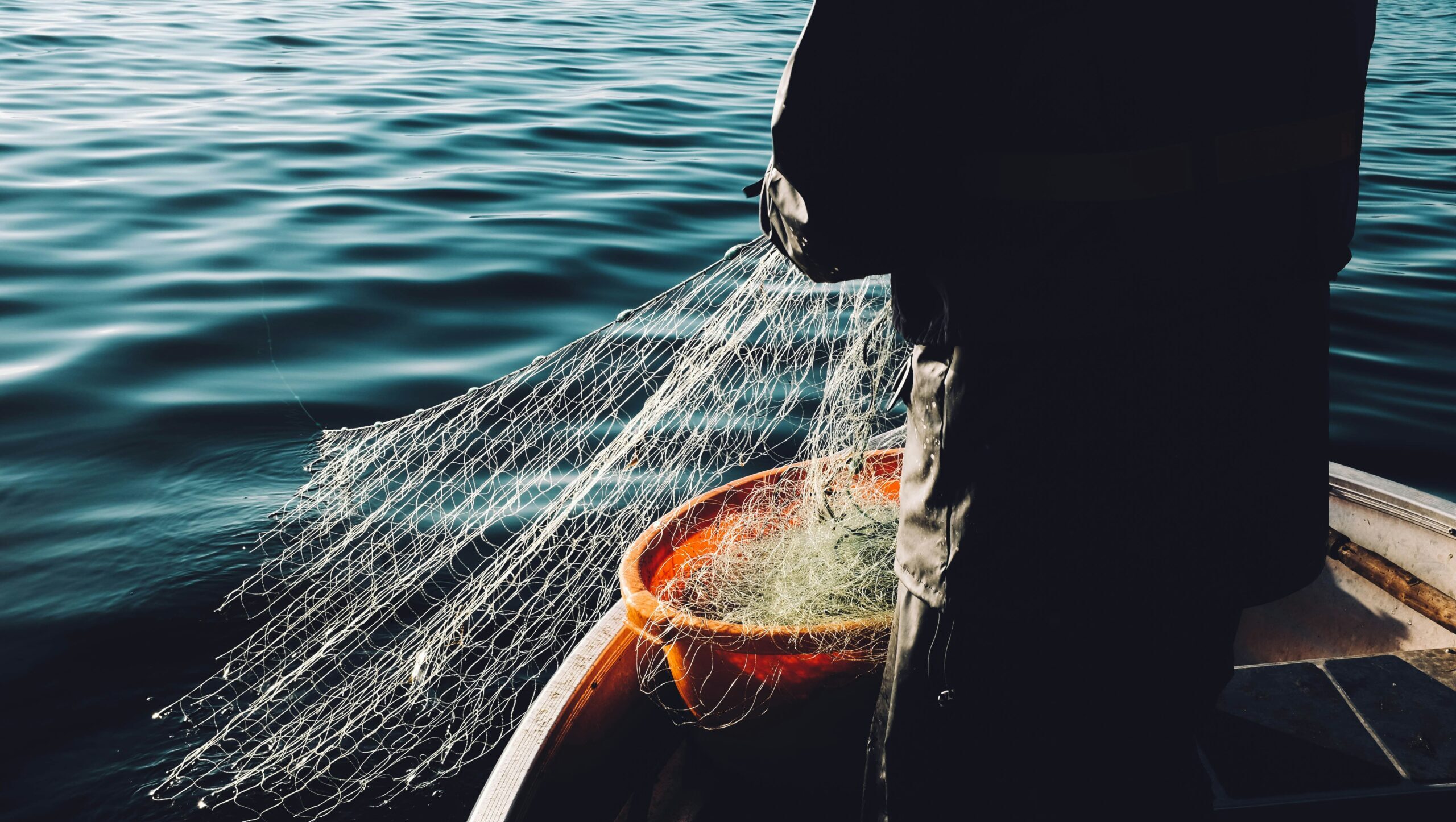
Bottom trawling—towing a net along the seafloor to catch fish—is one of the most contested areas of the just-stalled Fisheries Amendment Bill.
This week, the Prime Minister said that the economic and environmental effects of the practice needed to be balanced.
- the ecosystem impacts of bottom trawling
- how trawling affects seafloor carbon storage
- the role of bottom trawling in NZ fisheries
- the seabed impacts of bottom trawling
Simon Thrush, Professor of Marine Ecology, Institute of Marine Science, University of Auckland, comments:
What vital ecosystem functions are we losing when seafloors are scraped?
“Trawls or dredges moving over the seafloor kill, displace or disrupt resident animals; they resuspend sediment and disturb the sediment surface, changing the strong chemical gradients that naturally exist at the sediment water interface. These gradients make the seafloor critical for earth system processes such as the cycling of carbon and nitrogen.
“Collectively this disturbance reduces biodiversity and selects for small rapidly growing animals. Sediment resuspension and disturbance reduces the capacity of the seafloor to store carbon. The seafloor is the planet’s biggest carbon store.
“The loss of biodiversity effects how organic matter is processed, recycled and regenerates nutrients. Loss of biodiversity can limit sediment stability, affecting water clarity. Large and long-lived animals that burrow in the sediment play a crucial role in moving water and dissolving gases through the sediment and, as these animals disappear, basic ocean chemical cycling is locally diminished.
“In other locations many shellfish, sponges and other weird and wonderful creatures stick out of the sediment surface and provide important settlement and nursery sites for other species, such as juvenile fish and scallops. The loss of biodiversity also impacts the seafloor ecosystem’s capacity to recover and adapt to change.
“The degree to which changes in ecosystem functions occur will depend on basic environmental features such as depth, sediment type, the history of previous disturbance and the recovery potential of the resident ecological community.”
Could trawling push ecosystems past an irreversible tipping point?
“There is indirect evidence to support this, we have seen the removal of the mussel beds in the Hauraki Gulf in the 50-60s and no sign of recovery. We have seen the collapse of scallop fisheries around the country.
“In the deep sea, orange roughy fisheries are in decline and observations on the seamounts where this species is fished show the removal of the large structure forming species, such as deep sea corals and sponges.
“There is some evidence for some of these species that recolonisation has occurred but these deep-sea animals grow very slowly so recovery of their functional roles will be very slow.
“Recovery after crossing a tipping point is possible, but often the rapid collapse was associated with the loss of critical feedback processes – this means we may either have to wait for nature to take its course, or in some circumstances we can help with active restoration practices.
How should we incorporate the carbon-storing capacity of an undisturbed seafloor into climate change policies?
“First, we need our policy and practice to change to recognise the potential of a large ocean state like New Zealand to value marine nature-based solutions. If we can focus on areas where organic matter settles to the seafloor and it can be moved deep into the sediment by animal activity, this should enhance carbon stores.
“Ideally, we could have carbon storage farms on the seafloor where reduced disturbance enhances carbon storage. We should also look for win-win opportunities where we can positively address both the climate and biodiversity crisis.”
What are the primary risks of leaving ‘trawl corridors’ open right next to newly protected zones?
“From an ecological perspective, if we were to implement trawl corridors, they should be designed to benefit seafloor biodiversity and carbon storage potentials.
“Depending on the intensity of trawling or dredging in the corridor, resuspended sediments may be transported to a protection zone – impacting resident or re-establishing species. Recovery of the protected zone may also be limited as new colonists may have to travel large distances across disturbed areas to colonise the new protected zone.”
Conflict of interest statement: “Currently I lead a MBIE funded project on carbon footprint associated with trawl and dredge fisheries. In the pasted I have worked fishing impacts on seafloor biodiversity, seafloor biodiversity-recovery relationships, ecosystem services, and tipping points.”
Dr Geoffroy Lamarche, Chief Science Adviser to the Parliamentary Commissioner for the Environment, comments:
What happens when seabed sediments are disturbed by activities like bottom trawling?
“The seafloor is not uniform – it can be bare rock, hard compacted sediment or varying depths of soft sediment. Bottom trawling invariably physically impacts the seafloor as well as natural structures and habitats on it.
“The organisms affected live on the seafloor as well as in the sediment layers. These range from charismatic black corals and rare heart urchins to microscopic marine life. In addition to physical damage, clouds or ‘plumes’ of sediment can smother habitats such as seagrass spawning grounds.
“The environmental impact on the seafloor depends on the:
- geology
- intensity, speed and depth of activity
- density and type of organisms at the location
“An often-overlooked factor is how well organisms can avoid and recover from seafloor disturbance, as their resilience varies.”
How much do we know about the amount of carbon stored in NZ’s seabed?
“The Parliamentary Commissioner for the Environment (PCE) published a report into organic carbon stocks in marine sediment (2023) which estimated about 2,240 million tonnes of organic carbon is stored in marine sediments within New Zealand’s massive (4.1m km2) Exclusive Economic Zone – around 1% of the OC stored in seafloor sediments globally.
“We know that marine sediments represent one of the largest repositories of organic carbon on the planet. The topmost sediment layers play a vital role in regulating climate change by locking in carbon for thousands – to millions – of years if left undisturbed.
“Stored seabed carbon supports ecosystem functioning, nutrient cycling, and biodiversity, all of which are essential for maintaining productive and resilient marine environments. The PCE report identified the: ‘myriad of complex and interacting processes form the basis of the global marine carbon cycle.'”
What are the biggest scientific uncertainties around bottom trawling and seabed carbon?
“The most significant uncertainties in assessing the impact of bottom trawling arise from a lack of knowledge of:
- the characteristics of the sediment, their volume and how much organic carbon they store
- the fishing intensity and fishing frequency at a site
- the movement of carbon following seafloor disturbance – it may fall back to the sediment layer, or, move into the water column and therefore possibly contribute to ocean acidification.
“These uncertainties are significant because of the vastness of the ocean being considered and the very limited amount of data available.”
Conflict of interest statement: “No conflict of interest.”
Richard O’Driscoll, Earth Sciences, Chief Scientist – Wild Fisheries, comments:
How important is bottom trawling to NZ’s commercial fisheries?
“About 70% of New Zealand commercial fish catch is taken by bottom trawling. Seafood New Zealand have contracted a report from Business and Economic Research Ltd to estimate the economic value of fish taken by this method, and also to model the proportion of the catch that could be taken by alternate methods.”
Which fish species are most commonly caught using bottom trawling?
“Species commonly caught by bottom trawling include important commercial species like hoki, snapper, tarakihi, ling, red gurnard, trevally, hake, and orange roughy.”
If bottom trawling was reduced, what alternatives are available for catching those species?
“Alternative capture methods exist for some but not all species. For example, ling can be caught in pots and on longlines, snapper can be caught on longlines, hoki can be caught in some locations by midwater trawling. But the alternate methods may not be as effective at catching fish.
“The BERL research provided some estimates about level of effort transfer that could occur. And although different capture methods may reduce benthic impact, these other fishing methods all have other environmental impacts (e.g., capture of seabirds on longlines).”
What do we know about the impacts of bottom trawling on fish populations and marine ecosystems?
“Bottom trawling impacts the marine environment by disturbing the seafloor and by removing fish and other animals. Typically, there is a reduction in species diversity, biomass, and number of species in extensively trawled ecosystems.
“In New Zealand, fish removals are managed under the Quota Management System where catch limits are set for many species and catches are reported from every fishing event. Physical disturbance is quantified by estimating the ‘area swept’ by bottom trawls.
“In 2023, about 1.7% of the New Zealand Exclusive Economic Zone (EEZ out to 200 nautical miles), was impacted by bottom trawling. If we restrict the EEZ area to ‘fishable depths’ (defined as less than 1600 metres), the annual trawl footprint in 2023 was 5% of the fishable area. Summed across all years for which we have data, about 9% of the total EEZ and 26% of the fishable area has ever been trawled. See The extent and intensity of seabed contact by trawl gear using fisher-reported and geospatial position reporting data, 1990 to 2023.
“Impacts also will depend on bottom type. Most trawling occurs over soft sediment habitats which are likely to recover more quickly from trawling disturbance than hard substrate such as deepwater corals. Disturbance due to bottom trawling might also release stored carbon, but the magnitude of this impact was initially greatly overstated, and some early estimates have since been discredited.
“Some New Zealand fishers have made changes to their trawl gear to reduce impacts on the seafloor and to improve selection of their target species.”
Conflict of interest statement: “Richard O’Driscoll is Chief Scientist Wild Fisheries at Earth Sciences New Zealand (formerly NIWA). He has participated in a range of fisheries research projects funded by Fisheries New Zealand, Department of Conservation, Ministry for Business Innovation and Employment and Seafood New Zealand.”
Dr Marta Ribó, Head of Department, Earth & Life Sciences, Auckland University of Technology, comments:
What happens to the seabed when a bottom trawl passes over it?
“Seabed scouring and sediment remobilisation, resuspension and transport are direct impacts linked to the passage of bottom trawling fleets. Bottom trawling can induce sediment displacement and removal from fishing grounds, which gradually modifies the shape of the seafloor.
“The seabed becomes smoother over time, reducing the complexity of the seafloor structures. This has ecological impacts, such as reduced benthic community biodiversity (species richness) and density (abundance in number of individuals), among others.”
Are some parts of New Zealand’s seafloor more vulnerable to disturbance than others?
“The vulnerability of the seafloor is related to the resilience of the organisms living on the seabed (i.e., the benthic communities) to disturbances. This largely depends on the scale, frequency, intensity, severity of the activity producing such disturbances.
“All regions in New Zealand, and globally, are vulnerable to human activity disturbances. However, deep-sea ecosystems may be especially vulnerable to disturbance because many deep-sea species take years to grow and reproduce, and the lack of food means ecosystems recover very slowly from disturbance.
“As a result, damage to the seafloor can have serious impacts on these benthic communities and may take decades or even longer to recover.”
How do ocean currents and sediment movement influence the way the seafloor responds to disturbance?
“Ocean currents and sediment movement shapes the seafloor and influences how seabed communities are distributed. In shallower waters, human activities disturbance co-exist with high-energy natural processes, such as wind, waves, currents and tides constantly moving sediment around. Because these environments are naturally dynamic, they are often better adapted to regulate disturbance.
“In contrast, the dynamics in the deep ocean are in general less energetic than in the coastal and shallower areas. However, industrialisation of fishing fleets have allowed the bottom trawlers to be more powerful and expand to deeper parts of the ocean.
“With seabed disturbance in the deep ocean, sediment can remain displaced for longer periods, altering the shape of the seafloor, affecting the benthic communities that depend on it.”
How much do we know about New Zealand’s seafloor, and what are the biggest gaps in our understanding?
“Much of New Zealand’s seafloor remains poorly understood. Less than half has been mapped in high detail, and only a small number of areas have been directly surveyed using tools such as underwater cameras and seabed sampling.
“Without knowing what the seafloor looks like, what it is made of, or what plants and animals live there, it is difficult to understand the natural processes that shape these ecosystems or to assess the combined impacts of human activities (e.g., bottom
trawling, ship anchoring).
“This lack of information is one of the biggest gaps in our understanding of the marine environment and limits our ability to effectively manage and protect vulnerable habitats.
“Investing in seafloor mapping, monitoring, and research is essential to build the knowledge needed for informed decision-making and long-term ocean.”
Conflict of interest statement: “My responses are based on personal knowledge acquired through research I’ve collaborated on in the past on impacts of bottom trawling in the Mediterranean Sea, together with related ongoing research I’m conducting here in New Zealand on assessing seabed disturbance from ship anchoring.”