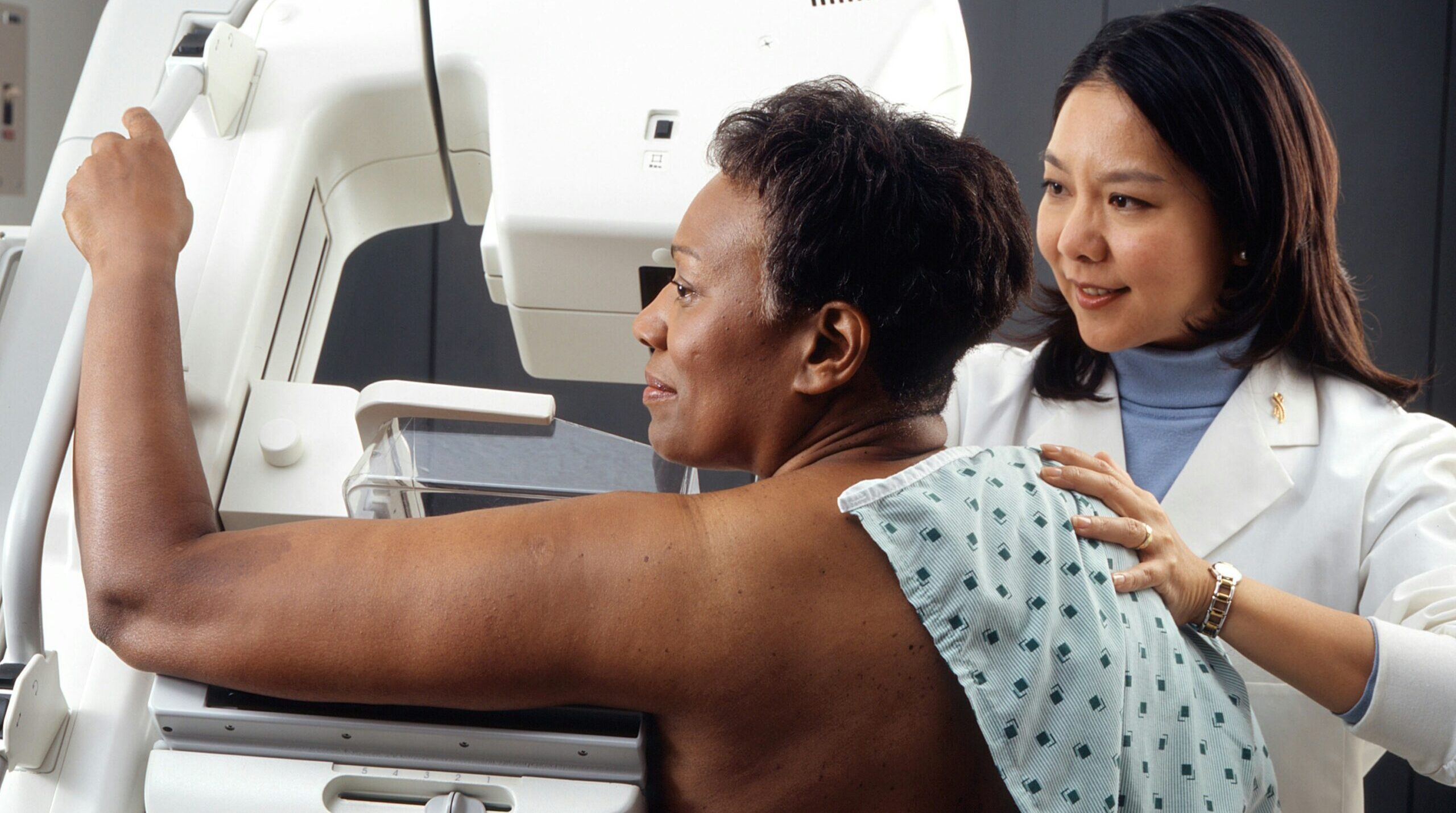
The government is choosing a mammogram-reading AI tool to test and validate, ahead of a planned roll out early next year.
The tool will ease clinician workloads by doing one of the two independent reads currently required during mammogram assessment, the government says. They emphasise that all diagnoses and follow-up decisions will continue to include qualified health professionals.
The Science Media Centre asked experts to comment.
Dr Mona Jeffreys, Associate Professor in Epidemiology, Te Herenga Waka – Victoria University of Wellington, comments:
“It is exciting to see that Breast Screening Aotearoa (BSA) is moving towards incorporating AI into the breast screening pathway. Internationally, AI has been used in various ways across the breast screening pathway. The way that BSA has chosen is the one with most international evidence. Screening mammograms are usually read by two radiologists; there is evidence that replacing one of the radiologists by an AI system, while keeping the other radiologist, resulted in similar or better outcomes. These include a similar breast cancer detection rate and fewer interval cancers (those that appear in-between screening rounds, and may have been missed at an earlier screening).
“There are caveats to my enthusiasm for this; the system procured must have demonstrated efficacy, and must be trained on the NZ population, to ensure that differences in breast density between ethnic groups do not obscure the benefit for all. From the publicly released information, it appears that a testing and validation period has been planned for, which is very important.
“Clear information for women will also be essential, before this being implemented as part of the normal screening pathway. There are already inequities by ethnicity in the proportion of women who take part in screening. If information is not clear, the inclusion of AI has the potential to reduce coverage overall, and increase inequities in coverage. Careful monitoring of this is essential.”
Associate Professor Catherine Shi, Head of the Department of Data Science & AI, AUT, comments:
“This is a very positive step for New Zealand and shows increasing maturity in translating AI research into real healthcare applications. Breast screening programmes generate extremely high workloads for radiologists, and AI tools like this have strong potential to improve screening efficiency and help detect subtle abnormalities that may otherwise be missed.
“It is particularly encouraging to see the project being developed alongside healthcare professionals and integrated into existing clinical workflows, because successful healthcare AI deployment depends not only on model accuracy, but also on how clinicians interpret, trust, and use the system safely in everyday practice.”
Conflict of interest statement: “I declare no real or potential conflict of interest with this project.”
Dr Nicholas Knowlton, Senior Lecturer in Statistics, Massey University, comments:
“The use of AI as a second reader in mammography is timely and, in my view, relatively low risk when implemented properly. The key point is that this is not AI replacing radiologists or making treatment decisions. It is a decision-support tool. Like spell check, it can flag what it thinks it sees, but a human still must use clinical judgement.
“Radiologists already use software tools to manipulate images, improve contrast, and help visualise structures in the breast. AI adds another layer by indicating which image features may be suspicious or worth closer attention. The final interpretation still sits with the radiologist. Patients are still being assessed by a doctor.
“The more important risk is not the tool itself, but the governance of the data behind it. New Zealand has high-value public mammography data. If that data are allowed to leave the country and contribute to the development or improvement of commercial AI systems overseas, while New Zealand researchers cannot access comparable data to build local capability, then we are effectively exporting public value.
“These datasets are not just technical assets. In Aotearoa, they include information from our communities and should be treated as taonga. There needs to be a fairer national approach that enables safe, privacy-preserving access for New Zealand researchers, so the benefits of AI in breast screening are not captured mainly offshore.
“The clinical implementation may be sensible. The data governance question is the one we should not ignore.”
Conflict of interest statement: “I work commercially in the reproductive space in addition to my academic work, so shouldn’t have any conflicts with this statement.”
Ross Lawrenson, Professor of Population Health, University of Waikato, comments:
“It is good to see the Minister announce investment in the use of AI to improve the efficiency and effectiveness of our breast screening programme. New Zealand has had a national mammography screening programme since 1998, and there has always been a challenge in balancing the sensitivity and specificity of screening. In other words, we do not want to miss cases of breast cancer, while at the same time we want to avoid incorrectly labelling women as having cancer when they do not. No screening system is 100% sensitive and specific.
“When screening relies on individual clinicians interpreting mammography images, we know there is considerable variability in identifying suspicious breast lumps that require biopsy. False-positive rates, for example, can range from roughly 3% to more than 15%. To reduce this variability, BreastScreen Aotearoa mandates double reporting of all mammograms. While this improves consistency and diagnostic accuracy, it also increases workforce demands and costs.
“Computer-assisted diagnosis (CAD) has been used to support mammogram interpretation for several decades. More recently, the rapid expansion of AI technologies in mammography has generated interest in their potential to improve both the sensitivity and specificity of the current double-reading system used by expert radiologists.
“AI tools can assign risk scores to breast lumps identified on mammography, categorising them as higher or lower risk. These scores can assist radiologists in clinical decision-making, including determining whether follow-up imaging or biopsy is required. Current evidence suggests that the improvements achieved with AI are modest but meaningful. For example, one large study found that implementing AI-assisted additional reading could detect an additional 0.7–1.6 cancers per 1000 women screened.
“However, AI systems are less accurate in women with dense breast tissue. This highlights the continuing importance of routinely recording breast density and ensuring additional support and surveillance for higher-risk women with dense breasts — an area that remains a challenge for our screening system. There is growing agreement that, particularly for lower-risk women, AI-assisted diagnostics may safely replace the need for double reading, helping to reduce pressure on radiology services while maintaining screening quality.”
Conflict of interest statement: “No conflicts of interest.”