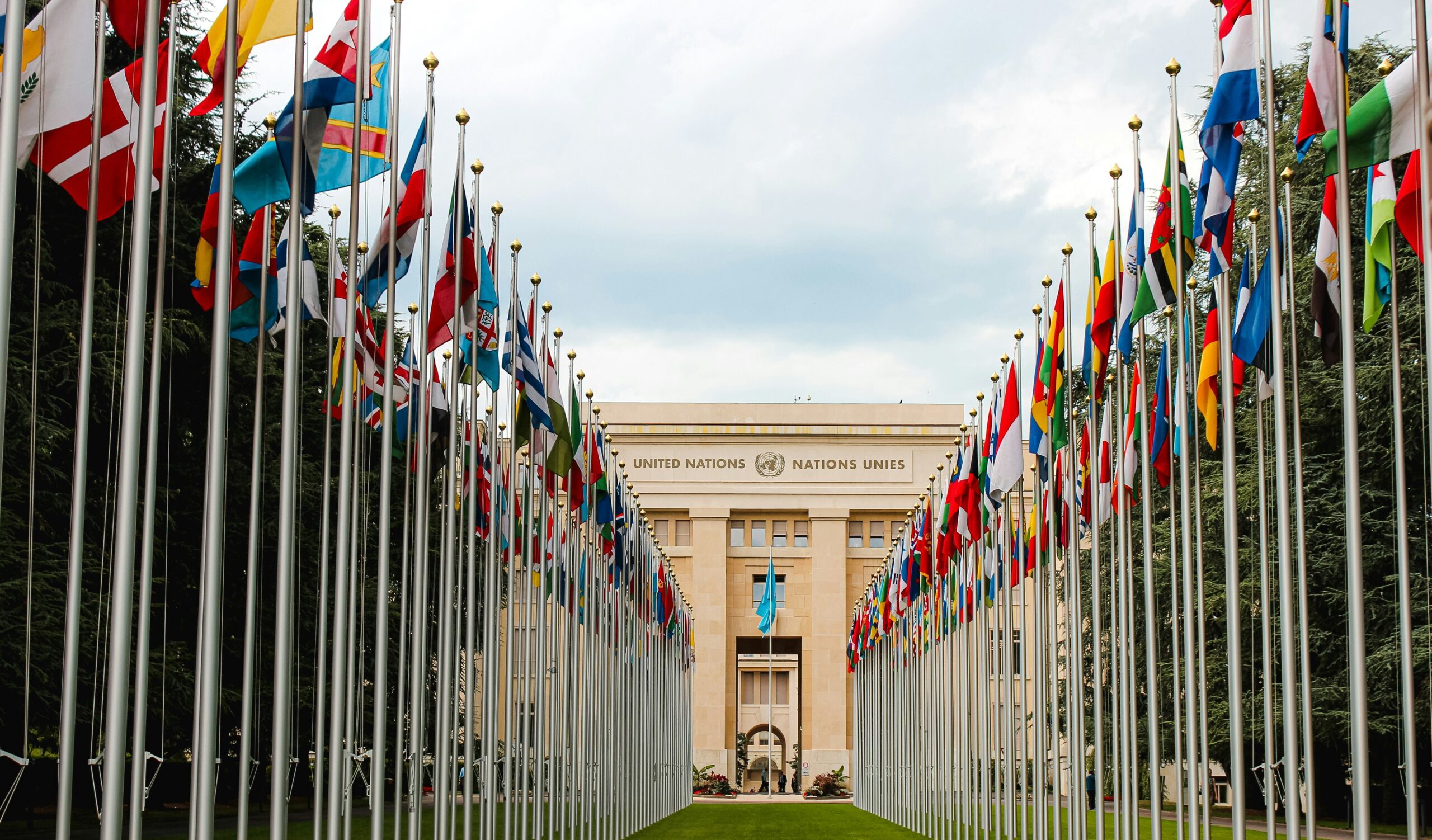
The UN General Assembly has adopted last year’s International Court of Justice ruling that countries – including Aotearoa – have an obligation to protect the environment from greenhouse gases.
The resolution was originally proposed by Vanuatu and co-sponsored by New Zealand in 2023. Although NZ did not co-sponsor the resolution this time, early reports suggest that NZ did vote in favour.
The Science Media Centre asked experts to comment.
James Renwick, Professor of Climate Science & Physical Geography, Victoria University of Wellington, comments:
“The latest vote in the UN General Assembly means countries have an obligation to follow through on their Paris Agreement pledges to do what it takes to limit climate change to well below 2 degrees of warming. Great, and thanks to Vanuatu for leading the charge on this!
“But it’s incredible that it takes a ruling from the International Court of Justice and a vote in the UN to push countries towards what they willingly signed up to 10 years ago under the Paris Agreement. There is such a gulf between the policy ‘victories’ like the Paris Agreement and the actual action required to live up to it.
“That action is completely absent so far, emissions of greenhouse gases continue to rise, 10 years after Paris, nearly 20 years after Kyoto. Fossil fuel companies still hold sway and we are all paying the price with increasing extreme weather events. Please governments, do what you said you would!”
Conflict of interest statement: “I have received government funding for climate research for many years. I was a Lead Author on the 4th, 5th and 6th IPCC Assessments.”
Dr Nathan Cooper, Associate Professor of Law, University of Waikato, comments:
“Despite earlier reticence to confirm its support, New Zealand’s vote to endorse the International Court of Justice’s (ICJ’s) Advisory Opinion on State obligations to climate change is welcome. But by deciding not to co-sponsor the United Nations General Assembly (UNGA) Resolution endorsing Advisory Opinion, the government has abandoned the country’s role as a regional leader and global inspiration for climate action.
“The ICJ’s Advisory Opinion makes clear what states are legally obliged to do in relation to climate change. Yesterday’s endorsement by the UNGA of the Advisory Opinion is a political recognition of the legal authority of this Opinion, and its relevance to every Member State.
“Now, with the Resolution adopted, it is time for our government to revisit recent climate-related decisions – including reversing the ban on off-shore oil and gas exploration – that the Advisory Opinion identifies as a breach of State obligations and an ‘internationally wrongful act’.
“Aotearoa, along with its Pacific neighbours, is already feeling the disruptive and expensive consequences of climate change. Redoubling efforts to combat this present threat makes sense for our economy and for the stability of our region.
“With a general election looming, voters will have a chance to judge this government on what concrete actions it takes to change direction and return towards taking international obligations, and the climate crisis seriously.”
Conflict of interest statement: “I don’t have any conflict of interest to note.”
Professor of Political Science Bronwyn Hayward, University of Canterbury, comments:
“The fact that a very reluctant New Zealand coalition government has signed the UN resolution shows that this ICJ judgement is starting to shape national and international obligations and it also shows the power of domestic voters and of Small Island negotiators
“First, the ICJ is shaping judgement – increasingly governments are recognising that the language of climate obligations and the rights of future generations is entering legal challenges and governments are scrambling in many cases (including here at home) to try and limit their liability under their own constitutional arrangement. This was accepted in the UN resolution which refers to government obligations specifically under the Paris climate agreement rather than broader obligations.
“Second, despite the cost of living and wide ranging new global risks, over 64% of New Zealanders still think the government should be doing more on climate change. In an election year this support matters. Even if political parties and key donors are not wanting to support climate commitments, New Zealanders retain a sense of fairness and concern about climate impacts that matters for governments, particularly in election years.
“Thirdly, the decision shows the remarkable vision of Vanuatu and other small nations in international negotiations – the Prime Minister of Vanuatu has said he was determined that the ICJ judgement would not just sit on a law shelf but would be ratified by as many nations as possible even if this meant modifications to the strong language of the original judgement. The final vote of 141 nations in favour and 8 oil state objections underscores the power of small island leadership in an increasingly fractured world
“Finally, while it is shaming that New Zealand did not continue to stand by Vanuatu after we had initially supported that small nation’s Herculean effort to bring the climate to the ICJ to be considered at all, in reality the New Zealand coalition government really had very little choice. Not only do New Zealand voters want to see their country being responsible on climate, China has supported the Pacific initiative and this presses New Zealand to make a choice – will we abandon our Pacific allies and leave a vacuum of support to be filled by the rising influence of China in Pacific politics or will we support small islands. In the end New Zealand thankfully supported the Pacific diplomatic leadership.”
Conflict of interest statement: “No conflict of interest- I am an editorial reviewer for the IPCC special report on cities and a professor of Political science in the Political Science and international Relations programme at UC.”
Distinguished Professor Steven Ratuva, University of Canterbury, comments:
“This is welcome news and a defining moment for the planet and humanity as the resolution endorses the International Court of Justice (ICJ) opinion on making states accountable for their policies, which are harmful to the environment, planet and people. For small Pacific island communities, who are most vulnerable to the climate crisis, and contribute very little to carbon emission, the decision provides them with a political and legal lever to make large emitting states accountable.”
Conflict of interest statement: “I am a member of the Climate Change Commission, but I am speaking as an independent academic and not on their behalf.”