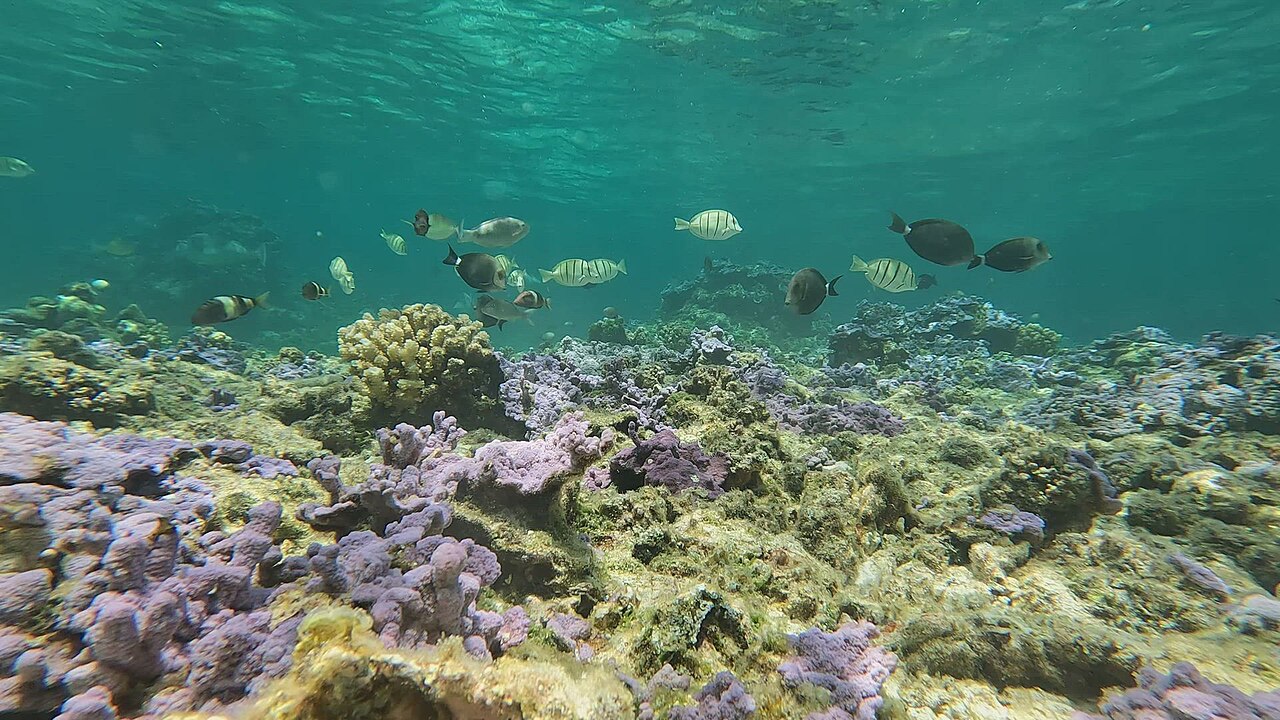
Pacific reefs lost nearly a fifth of their living coral in the last four decades, mostly from warmer oceans causing ‘coral bleaching’.
Overall, coral cover declined in the north of the region and stayed stable or grew in the southern Pacific, finds Status of Coral Reefs of the World: 2025.
Coral reefs are getting less time to recover between global bleaching events and, while climate action is crucial, reducing local pressures like pollution and unsustainable fishing will help them cope better.
The SMC asked experts on Pacific coral reefs to comment.
Dr Shubha Singh. Pacific Coral Reef Officer in the Secretariat of the Pacific Regional Environmental programme, comments:
“The Pacific chapter of the 2025 Global Coral Reef Monitoring Network report captures important insights into the current trends in coral cover across the region. Collating datasets across 23 Pacific Island countries and territories, that represent 26.2% of the world’s coral reef extent, the report also highlights the threats and disturbances faced by Pacific reefs along with well monitored reefs and areas where survey coverage remains limited.
“With the most pronounced coral cover declines aligning with successive global bleaching events driven by periods of intense heat stress between 2007 and 2017, and as 2026 may see one of the most severe El-Nino events on record, these impacts pose urgent and significant risks to coral reefs in the region.
“This report offers valuable information regarding coral cover declines versus recovery and reef resilience to guide future planning, management and conservation efforts. Addressing these challenges requires strong regional collaboration. The Secretariat of the Pacific Regional Environment Programme (SPREP) is helping to coordinate this effort through the Pacific Coral Reef Action Plan 2021-2030, which provides a framework for countries and partners to work together, make informed decisions, and take collective actions to protect and restore coral reef ecosystems for future generations.”
Conflict of interest statement: Dr Singh works closely with the report authors and their organisations to translate this into regional management goals.
Associate Professor Armagan Sabetian, marine biologist at AUT, comments:
“The latest Status of Coral Reefs of the World: 2025 report is a stark warning, but not an obituary: reefs can still recover, yet climate-driven marine heatwaves are arriving so frequently that many are no longer being given the time to do so.
“The report finds global hard-coral cover fell 9.5% compared with the 1980–2009 baseline, including a record 8.9% drop in 2023–24, leaving average cover at 25.8% in 2024; importantly, the full impact of the fourth global bleaching event is not yet captured.
“The evidence suggests that local protections, pollution control and better reef management can improve resilience, but they cannot substitute for rapid cuts to global emissions. In short, the report’s message is that coral reefs are not beyond saving, but treating their decline as merely a local conservation problem, rather than a climate emergency, would guarantee that their brief opportunities for recovery keep disappearing.”
Conflict of interest statement: Dr Sabetian was an author of the Status of Coral Reefs of the World: 2004, for the chapter on the South West Pacific.