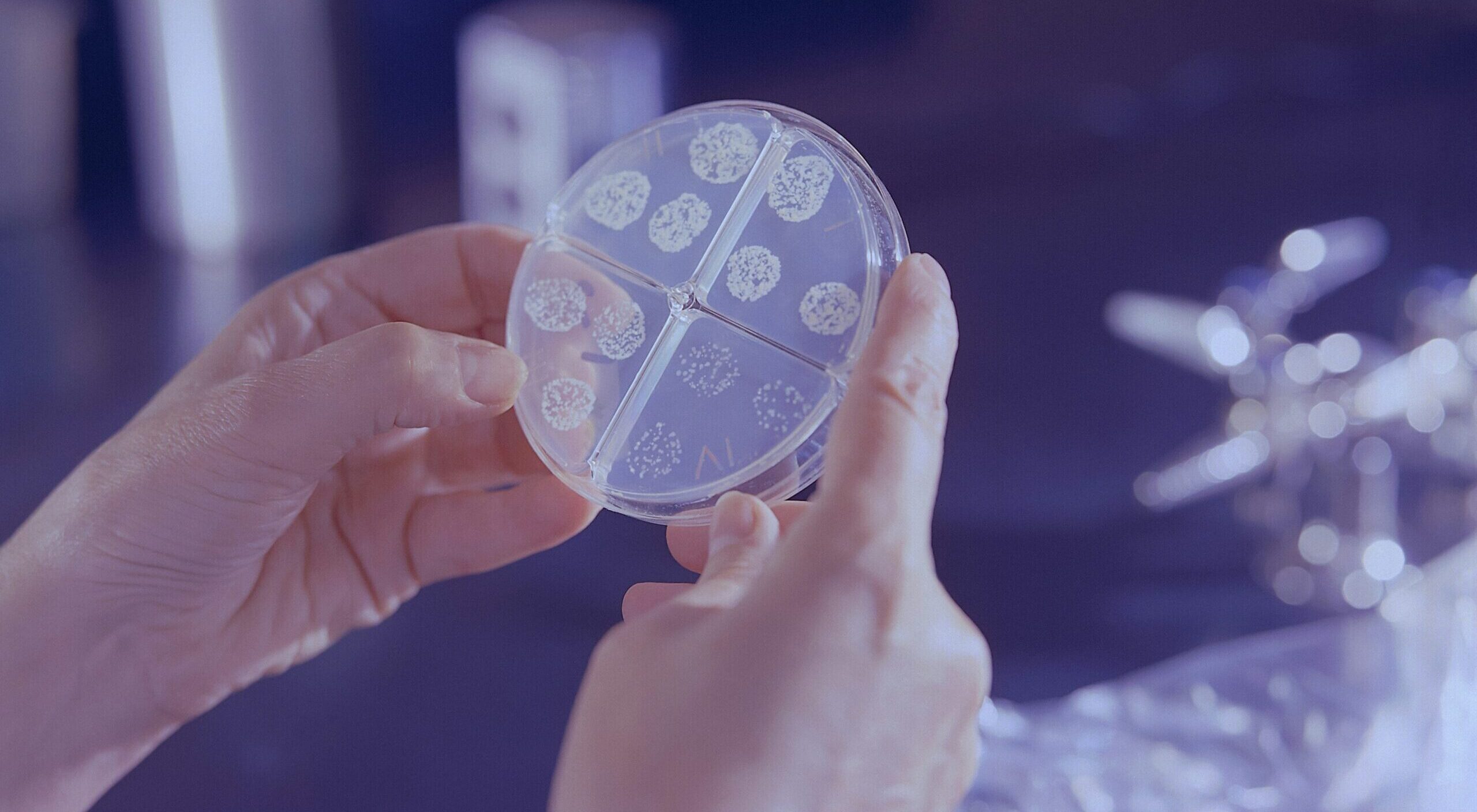
Researchers have used AI to create a new phage (a virus that exclusively kills bacteria) that can kill resistant strains of E. coli bacteria.
The research team, including one NZer, created the microbe’s whole genome from scratch – a task that’s described as “extraordinarily difficult” by the journal, Science.
The SMC asked NZ experts to comment.
Dr Simon Jackson, Phage Therapy Research Group lead, Waikato University, comments:
“The generative AI boom already impacting many aspects of our lives and could one day be used to design viruses that help save lives. Generative AI excels at tackling complex problems that are difficult for humans or conventional computational methods to solve. Biology is full of such challenges and AI is already helping facilitate remarkable progress. A well-known example is the 2024 Nobel prize in Chemistry, which recognised transformational advances in computational protein design and structure prediction.
“The study here goes beyond proteins and asks whether generative AI can design entire functional genomes—the blueprints for life. The focus is a special group of viruses called bacteriophages, or phages, that infect bacteria but are considered harmless to humans. The topic is of particular interest to me, as my group at the University of Waikato is exploring how natural, engineered and synthetic phages might contribute to future treatments for difficult bacterial infections, including antibiotic-resistant superbugs.
“The work is an impressive proof of principle. It combines emerging AI-based genome design ‘software’ with laboratory hardware for synthesising DNA and ‘rebooting’ it into functional phages. Predicting the required combination of thousands of A, C, G, and T DNA bases needed to produce a viable phage is a challenge ideally suited to AI. Even so, only around 5% of the designs worked and half of the functional phages had acquired mutations, suggesting that natural evolution assisted in polishing those AI-generated designs.
“The potential implications for phage therapy are exciting. Most phage therapy development begins by searching nature for suitable phages, and in many cases improving them through laboratory evolution or genetic engineering. Suitable phages can sometimes be exceedingly difficult to find in nature. Generative AI could reduce this dependence on natural discovery and generate useful properties that might be rare or absent in nature.
“Overall, this is an exciting, yet early proof of concept. For practical reasons, the study used a small, well-studied phage and non-pathogenic laboratory bacteria. Designing larger phages, reliably controlling which bacteria they will infect, and proving safety and effectiveness in patients are still to come. There are also important questions around biosafety, public acceptance, and equitable access. Aotearoa New Zealand has traditionally taken a cautious approach to genetic modification, but the Gene Technology Bill currently in progress will introduce a new regulatory system. AI-designed phages are exactly the kind of emerging technology that will test whether reform can support innovation while maintaining public confidence and environmental safeguards.”
Conflict of interest statement: “No conflicts of interest to declare.”
Professor Jasna Rakonjac, School of Food Technology and Natural Sciences, Massey University, comments:
“Increasing resistance to antibiotics could lead us to a potential dark scenario of untreatable infectious diseases by 2050. Phage therapy is an alternative approach to treating infectious diseases caused by bacteria.
“Bacteriophages or phages are viruses that exclusively attack and kill bacteria, but are completely harmless to higher organisms, from yeast to humans.
“One issue with phage therapy is that bacteria also develop resistance to bacteriophages. This can be overcome by various strategies, including applying “cocktails” of multiple phages with the end-purpose to eliminate the bacterium causing the disease. These strategies, however, are often not very effective, leading to inability to treat the infection successfully.
“The authors of the Science paper used generative AI to design thousands of variants of a specific bacteriophage species, and tested if some of them will effectively kill a specific strain of E. coli. Among those that were created, a dozen or so indeed were able to kill the intended E. coli strain. Moreover, the authors identified E. coli that became resistant to the new phages and used generative AI to “upgrade” these bacteriophages to overcome bacterial resistance. The AI approach appeared to be much more effective than the usual “cocktail” approach.
“Overall this work shows that generative AI is a very powerful tool for creating new variants of bacteriophages as antibacterial therapeutics. Each bacteriophage “species” exists in nature in a myriad of variants, which were sourced here and combined with additional variation using “generative genomics”, an AI-based strategy. Generative AI provides the advantage of sourcing the biological solutions much more effectively than it would be possible under the normal circumstances where potential useful variants of the phages and their genes are geographically or historically too distant to allow natural recombination and evolution to improve their therapeutic potential.”
Conflict of interest statement: “No conflicts of interest; I do not work on phage therapy and do not know the authors.”
Associate Professor Heather Hendrickson, microbiologist, University of Canterbury, comments:
“What are phages: I was excited to read about the generative design of novel bacteriophages. Bacteriophages, or phages, are the viruses of bacteria and they are not just interesting, they are the most numerous entities on the planet. They are the natural parasites of bacteria and as such they are all around us and completely benign and they can be deployed in ways that are incredibly powerful and potent. They are also still pretty mysterious. We don’t know the functions of roughly half of the genes of a typical phage genome. In this project, they therefore chose the simplest phage possible as the starting point; ΦX174 is a single-stranded DNA phage with a genome between 4-6 Kilobases. This is extremely small, you could read out the whole genome in about 4 minutes.
“What did they do: With this starting point the researchers built an artificial intelligence (AI) that could learn what DNA ‘looks like’ in the abstract way that ChatGPT knows what sentences sound like in language. The researchers added a set of constraints to shape the outputs to be a bit like ΦX174, 300 versions of these genomes were created, and the DNA was synthesised (in a different kind of machine) and then put into bacterial cells that should be infected by normal ΦX174 phages. Cells that were observed to have died in the next few days had successfully been infected by the new phages, and these phages were studied further.
“What comes next: When I was in graduate school, we regularly produced random genomes (in computers) to explore how evolution had acted upon real evolved genomes. Comparing the features of these random genomes with the real ones allowed us to identify patterns that evolution had created but we were not able to test their functions. In the future we will be able to turn on and off features in synthesised genomes to learn more about why these constraints exist. In the future, experiments that incorporate these synthesised phages will be able to test hypotheses that we can’t dream up from here.
“More to explore: The authors demonstrated that from 300 novel phages they could easily screen through and find the 16 phages that seemed to work. Strangely, we are still a long way from understanding even these very simple entities. An AI can make a genome that makes a passable version of a phage but that machine does a poor job of telling us what it ‘learned’ along the way. There is still a huge amount to learn as we bravely move into the synthetically made phage space.
“Cautionary notes: On that note, the authors have suggested that these methods can be used to create new phage therapeutics in the future. That might sound scary but consider that evolution is constantly creating new “hopeful monsters” and, like the synthetic genomes made in this work, most of these variants ultimately do not survive long term. Most new mutant phages, like most of the novel phages created here, do not improve survival, and are simply never successfully replicated. Those that are replicated are sensitive to the ravages of UV light and the destructive forces of temperature and pH. The world is full of organisms that eat phages and they are not generally long-lasting entities in nature. This is a good thing.”
Conflict of interest statement: “Potential COI: I am the co-science lead of an MBIE Programme that is developing a platform for developing bacteriophage biocontrols for the primary industries. My laboratory at the University of Canterbury discovers native bacteriophages and uses adaptive laboratory evolution to improve them.”