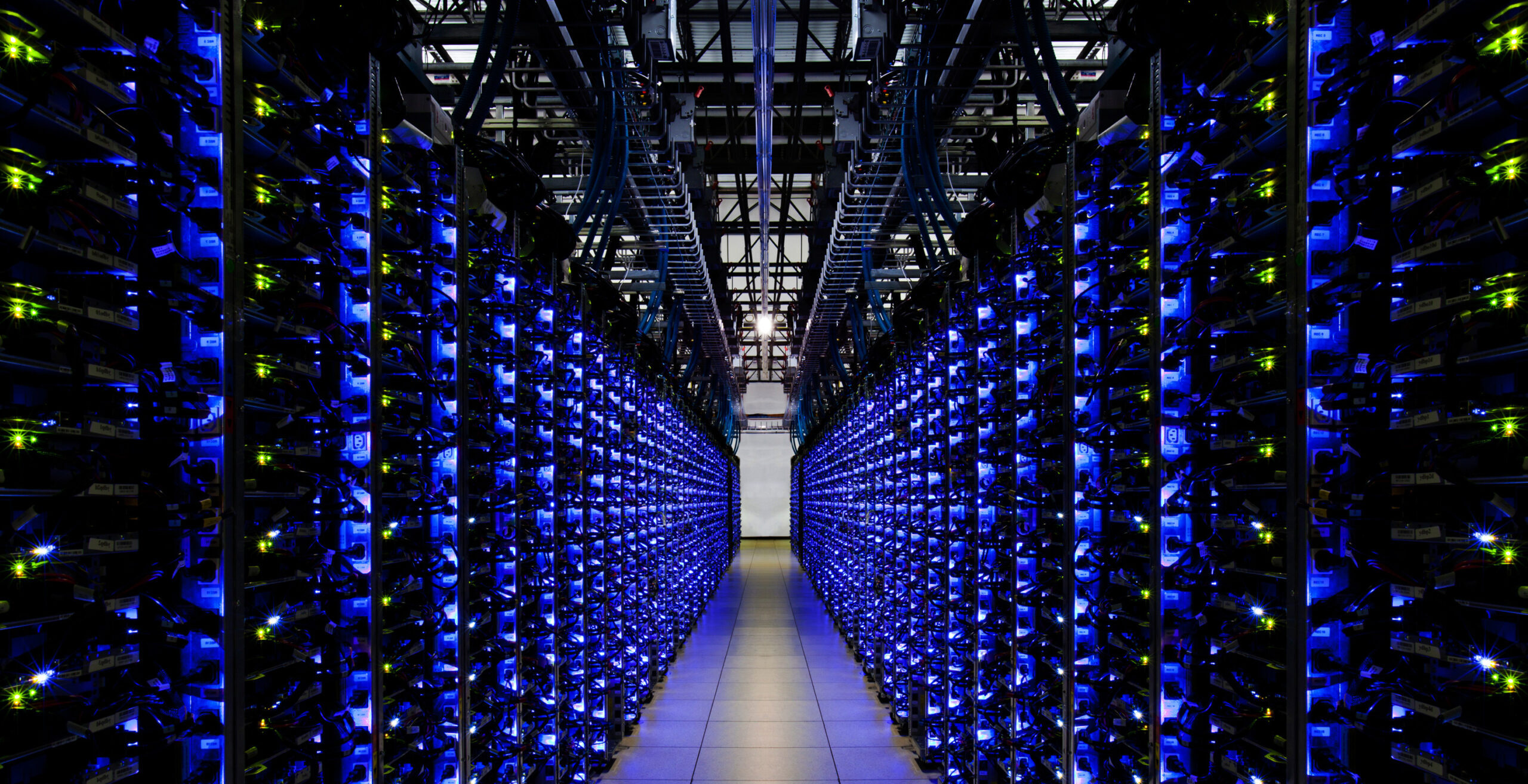
A new UN University report warns AI has an environmental toll far beyond carbon emissions, with its energy demands projected to strain water and land resources around the globe.
By 2030, AI could be consuming 3% of the world’s electricity, the report says. Generating that power would use enough land to cover the entire Hawke’s Bay region, and its carbon emissions could be roughly equal to what the entire UK put out last year.
Meanwhile, the water used to cool AI data centers would meet the drinking water needs of Earth’s entire population for about 1.6 years, and the e-waste generated would be like throwing out 250 Eiffel Towers annually.
The Science Media Centre asked experts to comment.
Professor (Ahorangi) Nirmal Nair, Department of Electrical, Computer, and Software Engineering, Waipapa Taumata Rau – University of Auckland, comments:
“I had commented regarding concerns around electricity demand in New Zealand in 2024 when ChatGPT first appeared, and I expressed similar views again in March 2026 when a Southland data-centre plan was announced.
“This new report speculates on potential secondary and tertiary impacts across countries leading AI data-centre infrastructure build-out, and it is not surprising to me that New Zealand is not in that list since we have not yet had an honest national discussion around the role of AI infrastructure build-up and the value it could bring to our communities.
“Instead, much of the discussion in New Zealand has focused on the electricity grid and supply concerns – which has been secure, reliable and resilient to-date.
“Comparable advanced OECD economies with highly renewable electricity systems, such as Canada, France, Sweden and Switzerland, are included in this report. Even our carbon-energy intensive brethren Australia are in this list.
“Since New Zealand is not cited in this report, it suggests we currently have limited visibility in global AI infrastructure development, and many of the secondary or tertiary risks identified may not yet be directly relevant to New Zealand’s current situation.
“Instead, these days we ‘Kiwis’ are discussing uncertainty around in-effectiveness of our loose industry-led NZ Electricity Policy and literally non-existent NZ Energy Policy, and relying entirely on the 2019 Carbon Act which outlines long-term aspirations around emission mitigation/adaptation.
“Ground facts are that our electricity costs and energy (carbon-based fuels) are expensive compared to our relative cost-of-living. Security of both energy and electricity have become topics of upcoming elections.
“Personally, I feel that we should be confident to proceed with AI-data centre infrastructure to ensure not getting isolated with our Northern Hemisphere Tangata and support delivery of AI services and capability building to Pacific countries in our part of Planet Earth.
“Globally, we are increasingly connected through internet-based technologies and devices, and AI-enabled engagement is likely to continue expanding across new digital platforms and services that will ensure the current digital-waste we have proliferated will be replaced.
“Just like the progression of memory devices from floppies to USBs to the cloud, for example.”
Conflict of interest statement: “No direct conflicts of interest. Current research funding regarding electricity innovation and resilience of energy infrastructure comes from Future Architecture Network, MBIE SSIF and QuakeCore (Te Hiranga Ru – NZ Centre of Earthquake Resilience– TEC Funded CoRE) respectively. Have made independent submissions on electricity infrastructure and markets in the past. Disclosure: Recently supporting as Technical Advisor a Power system AI start-up GRID GPT.”
Professor Te Taka Keegan, AI Institute, Computer Science Department, University of Waikato, comments:
“This UN report confirms what many in Aotearoa already suspected: AI is not weightless. Behind every query and generated image lies a web of real-world impacts, from carbon emissions, freshwater consumption, land use, and critical mineral extraction, to growing mountains of e-waste.
“And while building AI models is energy hungry, the report makes clear it is now the billions of daily interactions with those models that drives the majority of the environmental footprint. As AI is embedded into everyday platforms and, in many cases, switched on by default whether users choose it or not, that footprint compounds at scale.
“These costs are not evenly distributed. The environmental burden falls hardest on communities least likely to capture the benefits.
“Aotearoa does not feature in this report, and that absence is worth noting. With around 60 data centres and only three hyperscale facilities, our current AI footprint is low. But hyperscale is where the concern lies: these facilities can have environmental impacts a thousand times greater than conventional centres, and more are planned for Aotearoa.
“Ngāi Tahu ki Murihiku have been clear in their Cultural Impact Assessment. Freshwater is a precious taonga, finite and fundamental to all life. But water is not the only concern. Air pollution, noise, the removal of wetlands that Mana Whenua regard as the kidneys of the Taiao, and the disturbance of wāhi tapu are all identified as real and significant impacts of hyperscale development.
“The report calls on governments and developers to engage meaningfully with affected communities and to adopt clear environmental governance frameworks. Māori data governance principles offer one such framework, locally grounded, relationally oriented, and designed for intergenerational accountability.
“What is missing is not the framework. It is the collective willingness of developers and Crown agencies to genuinely engage with it.”
Conflict of interest statement: “No conflicts of interest.”
Dr Ulrich Speidel, School of Computer Science, The University of Auckland, comments:
“AI is power-hungry! Conventional data centres were mostly used for web and database server hosting, which don’t require an enormous amount of number crunching. The type of chip used for AI is an import from graphics processing – the sort of chip used for high-end video gaming or movie making.
“A Graphics Processing Unit (GPU) suitable for serious AI model training and inference will typically consume several kilowatt of power. That’s roughly the same as a domestic oven or a big hot water cylinder – the biggest ticket power users in most households.
“Training requires thousands of these chips, and unlike your oven or hot water cylinder, they run continuously. All of this power eventually exits the chip as heat, which needs to go somewhere or the chip will melt.
“But the figures in the report need to be put into perspective. If ChatGPT use requires 383 GWh per year, that’s less than 1/10th of the annual output of either Huntly or Manapouri. Remember ChatGPT is a system with global reach, not just for NZ, and our power stations aren’t that grunty by international standards.
“According to the report, in 2025, AI workloads alone accounted for around 20% of total data center electricity use – a share expected to double by 2030 – pushing electricity demand to roughly 374 TWh.
“Once we get to the 374 TWh, we’re in more serious territory. At that point, the world would need around another 45,000 MW in installed generating capacity – that’s around 40 Huntlys, or about 15% of the solar generating capacity that China installed last year.
“The energy cost involved here will also be a driver for the development of more energy-efficient AI processor technology, and energy recovery from the waste heat. Remember also that waste heat can in some places be a desirable by-product, e.g., for heating.
“AI technology may also be able to accelerate the development of more energy-efficient renewable energy technology, such as solar cells that can convert more than the current around 25% average of incoming solar power into electricity, better batteries with more capacity that are safer and faster to charge, and more efficient wind turbines, and even combustion engines that deliver more power for less fuel use, and so on. This could compensate for the extra emissions from AI use.”
Conflict of interest statement: “No conflicts of interest.”
Dr Amanda Turnbull-McRae, Te Piringa Faculty of Law, University of Waikato, comments:
“The new UN report recognises not only the forward march of awareness in respect of the environmental costs of Artificial Intelligence (AI) but also the spectrum of connected social, material and justice-related challenges it poses.
“When it comes to AI’s substantial energy draw along with its correlated carbon, water and land impacts, the report highlights that we need to think both about how much energy we are using and also how we are using AI.
“The report also draws attention to the ‘Jevons Paradox’— or the rebound effect. As AI models become more efficient, these gains ironically increase AI’s total environmental footprint rather than decrease it.
“So even when AI architecture and hardware advance and become more efficient, these efficiencies lower the cost of computation, which in turn drives up higher volumes of use.
“This trap tell us that more needs to be done than simply improving hardware. We need to think about limiting energy use.
“Further, the UN report goes beyond documenting data and measurement: it offers action. Specifically, the report provides six guiding principles for a responsible AI ecosystem including, transparency, efficiency by design, equity and justice, lifecycle responsibility, global cooperation and sustainable use. These principles form a roadmap for a responsible AI ecosystem.
“Of particular relevance to Aotearoa New Zealand is the report’s final counsel: responsible AI is about the twinning of capability with stewardship. This involves making environmental disclosure in respect of AI routine, both at the model level and at the task level.
“It means incorporating projected AI demand in both climate and energy planning. This is crucial as the NZ government is actively adopting AI to modernize public services and boost economic productivity.”
Conflict of interest statement: “No conflicts of interest.”
Dr Helen Rutter, Senior Hydrogeologist, Lincoln Agritech, comments:
“The report notes that data centres can place additional burden onto places already facing water stress and that large-scale withdrawals can strain aquifers and river systems.
“The article states that ‘the related annual water footprint [of ChatGPT] would be equal to the minimum annual domestic water needs of some 500,000 people in Sub-Saharan Africa’. Comparisons like this provide context for the size of the water take required.
“However, they don’t highlight the local impact of water use for specific data centres which will need to be evaluated at a local level for each individual project. There is the potential for water use for data centres to lead to competition for water with other users, an example stated being in the Netherlands where a large data centre using water in a drought year led to opposition from farmers in the area.
“This has the potential to eventuate in New Zealand if data centres are located in areas where aquifers and surface waters are already considered to be close to being fully allocated.”
Conflict of interest statement: “No conflicts of interest.”
Professor Alistair Knott, Centre for Data Science and AI, Victoria University of Wellington, comments:
“As the report makes clear, use of Gen AI technologies is increasing enormously worldwide, and the energy requirements of Gen AI are increasing accordingly. The projections are for further massive growth. The UN report recommends several useful ways forward: increased transparency from companies, better government leadership.
“The biggest shortcoming of the report, to me, is in overlooking how strongly AI companies depend on increased growth of the AI market. The report notes the vast investments being received by the big AI companies. But it fails to point out that the only way companies can recoup these investments is to grow the market for AI products at an ever-increasing pace.
“That’s the only way companies can survive – but it’s not necessarily what the world needs. Governments, elected by citizens, are better placed to make the right decisions about how much AI we need, and to trade this need off against environmental impacts.
“I think the economic and technical power of AI companies should be devolved towards local providers across the world – especially towards democratically elected governments.
“Calls for ‘sovereign Large Language Models (LLMs), or ‘public LLMs’ are growing louder in many countries. Here in New Zealand, we need a good national conversation about what types of AI we can build and deploy (and govern) ourselves. Collectively, these national conversations will help us make the right decisions about how much AI we need, and to trade this need off against environmental impacts.
“To me, AI’s largest impact on the environment may not be in datacentres for Gen AI: it may be on political processes. Political opinions are increasingly shaped by social media. And social media is powered by AI – in particular, recommender algorithms (which use machine learning methods that long predate Gen AI).
“Recommender algorithms optimised for ‘user engagement’ may lead voters towards populist politicians with policies sidelining environmental concerns.
“If AI helped elect Donald Trump, that’s its biggest environmental impact, without question. To properly study social media’s impacts on the information ecosystem, we need more transparency from companies: in this area, the report’s calls for AI transparency resonate very strongly.”
Conflict of interest statement: “No conflicts of interest.”
Albert Bifet, Professor of AI and Director of Te Ipu o te Mahara — The AI Institute at the University of Waikato, comments:
“The report shows that Large Language Models (LLMs) use a huge amount of environmental resources, especially water. This is an important problem that needs to be taken into account when making decisions about the use of AI.
“It is interesting to see that 90% of AI-specialised cloud computing is concentrated in just the United States and China. A solution to this environmental problem is to move to local computing: everything that can be computed locally should be computed locally and not in the cloud.
“Since it’s already possible to run LLMs on our mobiles, we need to use the cloud only for what can’t be done locally. This is something similar to what happened in the 20th century, when we moved from mainframe computers to personal computers.
“The report does not mention agentic AI at all, and that is a very important hot topic right now. Agentic AI can multiply token usage in data centers or solve this environmental problem if computation is performed locally by the agents. This could be an opportunity to address this problem.”
Conflict of interest statement: “No conflicts of interest.”