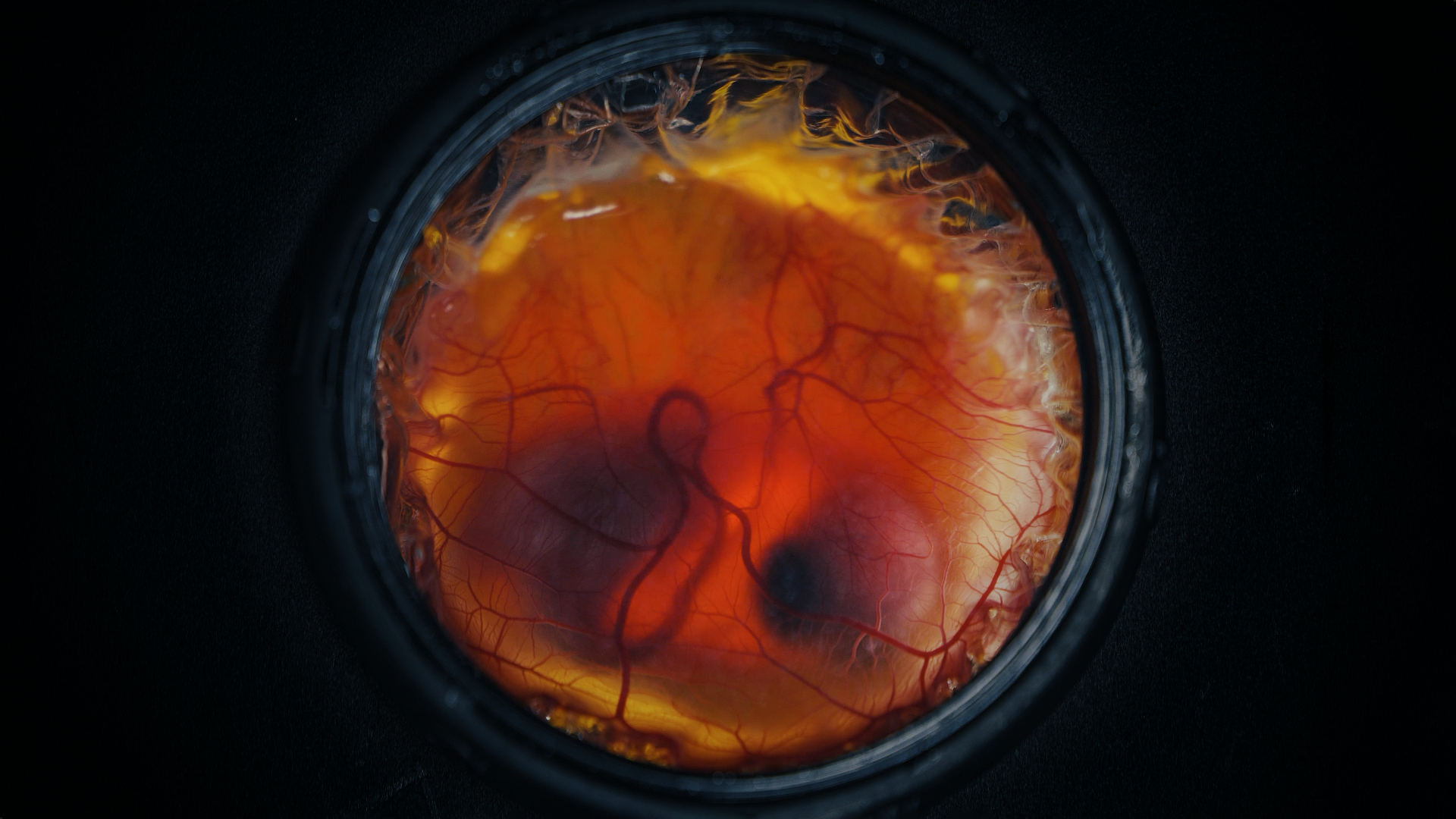
Colossal Biosciences have successfully hatched healthy chicks from an artificial egg, which they claim is a key step in their efforts to ‘de-extinct’ the moa.
The company says the technology can be scaled up to allow birds to hatch from larger artificial eggs, and also opens up possible conservation or industrial uses.
The Science Media Centre asked experts to comment.
Professor Peter Dearden, Director of Genomics Aotearoa, University of Otago, comments:
“The news that Colossal Biosciences has developed an artificial egg is interesting news. Their press release spends most of its copious length stating how useful this will be for de-extincting the moa. So before we get to the egg itself, let’s be clear that this is, in my opinion, impossible. The lineage that led to moa descends over 4.3 billion years to the last common ancestor of all life on earth. That lineage is extinct. No amount of fancy molecular biology can bring it back as it was. So, if anything can be brought back, it will be a poor replica of what a moa might have looked, sounded and acted like – a man-made, and human-dependent ghost. I’ll leave my value judgement as to whether this is worth spending money on there.
“The development of an artificial egg is a step forward. What has been created is an artificial chicken egg, and chickens can hatch from it. Importantly, as far as I can see from the press release, what they have developed is artificial egg membranes and egg shells. What is put in that is a chicken egg (shell-less), which is left to develop. Shell-less culturing of chickens has been going on in research labs for some years (for example, see here), so this is not novel. What is novel is a shell that the company believes they will be able to expand to make bigger eggs. Sounds good. To be clear, the cheapest way to make eggs is with a chicken, so this does nothing for the egg industry.
“Colossal has developed a neat technology to replace the egg shell, and can make it any size they like, and has shown it can support the growth of chicks. Well done.
“What they neglect to say is that the eggshell is an important component of the egg, but so is everything else. Eggs are evolved structures that contain not only the nutrients that you like to eat with bacon, but also information. That information helps the embryo form and become structured. That information appears to evolve quite rapidly, so that the information directing growth in a chick is not necessarily anything like that directing growth in a Moa. Do we know about that information in a moa? No. That information was lost when the moa went extinct. So can Colossal make a moa egg shell? Yes, good job. Can they make a moa egg? No.
“Colossal does make great leaps forward in technology, but I just wish they weren’t overhyped and overegged.”
Conflict of interest statement: “No conflicts.”
Professor Amanda Black, (Tūhoe, Whakatōhea, Te Whānau a Āpanui), Director of Bioprotection Aotearoa, Lincoln University, comments:
“Clearly Colossal Bioscience is making strides in technological breakthroughs, which is always fascinating to read, it’s just unfortunate that it seems to want to continue cosplaying conservationists.
“Many of my geneticist colleagues have already commented there’s more to moa (and other extinct animals) than DNA, indeed eggs and ovaries contribute to embryonic development, and this is a widely known fact among many scientists, a fact that is always omitted from these press releases.
“Biology is vastly more complex than what engineering can currently offer and the suggestion we can simply engineer our way out of conservation problems of our own making is an eggsaggeration (sorry couldn’t resist the pun).
“As the press release alludes to, I suspect the benefits of this artificial egg technology will only be realised in the food and therapeutics industry.
“It would be great if the technology breakthroughs were communicated without needing a fantastical story to launch it.”
Conflict of interest statement: “I have no conflicts here.”
Associate Professor Nic Rawlence, Director of the Ancient Ecology Lab, University of Otago, comments:
“Credit where credit is due, this is really impressive work that could result in a new tool in the conservation toolbox in the future. However, it must be noted that there is no data or peer-reviewed publication associated with this announcement, just a press release and glossy video.
“This technology requires a lot of funding to develop. Colossal has mobilised this funding that would not have been available for conservation research, and says something about the ability to get this funding from the public sector.
“These impressive achievements show that Colossal does not have to exaggerate or mis-present their work with talk of de-extinct dire wolves or genetically engineering emu and pigeons and saying they are de-extincting the moa or dodo, of which there is widespread Māori and public opposition in Aotearoa New Zealand. Extinction is still forever and to imply otherwise risks losing protection for threatened species and could provide an excuse for governments and industries for more environmental exploitation.
“The development of artificial eggs really is impressive and groundbreaking work all on its own with potential conservation and biotech implications, such as captive breeding of critically endangered species where there is a real deficiency in natural eggs.
“This technology is a valuable tool, that when combined with genome engineering techniques still in development, may be able to reverse the impacts of inbreeding on low hatching success for example.
“These ‘first steps’ by Colossal are promising. Obviously, though, there are still some obstacles, which I’m sure Colossal are already working on, such as how accurately this artificial egg technology reflects a real egg and whether it is truly scalable, but that should not deflect from the impressive achievements.
“There is so much biologically that happens in the egg (and womb), unique to each species, that only time will tell whether this new technology reflects what happens in the egg (or Colossal’s artificial womb) and in the long term produces healthy individuals.
“Colossal’s artificial egg is effectively the eggshell and diffusible membrane allowing oxygen to pass through to the developing bird embryo. It still requires an embryo and yolk to be carefully added to the artificial egg. Given the large size differences between chicken eggs and emu (up to 12 times bigger) and moa (up to 80 times bigger), there won’t be enough yolk in living birds’ eggs for the development of a giant ‘moa’ chick. The development of a genetically engineered emu and calling it a moa for no good conservation or ecological reason is still a long way off.
“I would hope that given the conservation implications of this new technology, that it will be available to the public sector (like conservation organisations) and not locked away, which would in effect privatise conservation management of endangered species.”
Conflict of interest statement: “I have no conflicts of interest.”
Associate Professor Michael Knapp, Department of Anatomy, University of Otago, comments:
“This is very impressive science which may in time provide real conservation benefits, including for highly threatened New Zealand bird species such as the kākāpō and the kakī.
“While Colossal’s de-extinction programme has been the subject of at times passionate controversy, there is no doubt that it is driving innovation and has unlocked private funding for conservation research that would have otherwise not been available for any conservation work.”
Conflict of interest statement: “No conflicts of interest.”
Professor Emeritus Philip Seddon, Department of Zoology, University of Otago, comments:
“Colossal Biosciences continues to advance new technologies that could have future applications for biodiversity conservation. The creation of an artificial egg is their latest announcement. Certainly an amazing technical feat, but it does seem to be a solution in search of a problem.
“Colossal’s rationale for creating an artificial structure within which a bird embryo can develop is framed around de-extinction of the extinct giant South Island moa of New Zealand. Genetic modification of a near relative of the moa could create an ecological proxy, but could not resurrect a moa.
“However, there is no urgent ecological need for a genetically modified giant bird in New Zealand native forests, and significant public and iwi opposition to the idea. If there was a more compelling reason to have devoted all this energy into trying to duplicate an eggshell (surely there must be?), then the hype might be justified.”
Conflict of interest statement: “Phil has published on the bioethics and ecology of de-extinction and was appointed to the IUCN (World Conservation Union) Working Group on synthetic biology, that produced the first global guidelines for the application of this new technology for biodiversity conservation. The policy was voted into acceptance by the assembled IUCN membership at the World Conservation Congress in 2025.”
Professor Ngaio Beausoleil, Co-Director, Animal Welfare Science and Bioethics Centre, Massey University, comments:
“While the development of an artificial egg overcomes a technical challenge to de-extinction, it does nothing to address the ethical, ecological and social complexities of this and other applications of genetic technologies to animals. Central to the ethical debate is that what will be produced is a living, thinking, feeling (sentient) individual. These are individuals legally acknowledged in New Zealand to experience their own lives as good or bad and whose welfare we have legal obligations to protect.
“The field of animal welfare science developed 60 years ago, to understand and address problems created by farming systems. Animal welfare scientists know how difficult it is to change systems that cause animal suffering once they exist. Little progress has been made in reversing the welfare problems caused by selective breeding of meat chickens for rapid growth. Now there is a real risk that applying genetic technologies to sentient animals could cause welfare problems because we don’t know how changing their genes will affect them. But how will we know if that’s likely before we inadvertently produce any such suffering? We won’t, unless we have rules in place that require evaluation of animal welfare as part of development and testing. To do that, we need rule-makers and genetics scientists to work with animal welfare scientists.
“Our current laws, and those in development (Gene Technology Bill) fail to adequately consider and protect the welfare of these ‘some day animals’. Animal welfare has been given inadequate consideration in the development of such legislation and involvement of welfare science experts has been minimal. Unless this changes, there is nothing to stop genetic technology companies from mass-producing animal suffering.”
Conflict of interest statement: “I declare no conflict of interest.”
Professor Tammy Steeves, School of Biological Sciences, University of Canterbury, comments:
“Researchers – including high school students in Japan – have been hatching chicks outside their shells for decades. However, these methods typically required oxygen supplementation at levels that could negatively affect long-term health.
“According to Colossal, the artificial egg stands out for its compatibility with standard commercial incubators, scalability in manufacturing, and adaptability to eggs of any size. Such technology is essential for efforts to “resurrect” large extinct birds like the South Island moa, whose eggs – estimated to be roughly 80 times the volume of a chicken egg and eight times that of an emu egg – far exceed the capacity of any living surrogate.
“Beyond “de-extinction,” the artificial egg could support the recovery of critically endangered birds, particularly those with limited surrogate options. Doing so, however, would require editing genes tied to reproduction, survival, and disease resistance—targets that are especially difficult to identify in endangered species.
“Bird gene editing relies on embryo donors and surrogates. Primordial germ cells (PGCs) – stem cells that give rise to sperm or eggs – are collected from donor embryos, gene edited in culture, and then microinjected into sterile surrogate embryos. These gene-edited PGCs migrate to the gonads, producing surrogate birds that generate donor-derived gametes and, ultimately, offspring carrying the edited genes.
“Beyond substantive ethical and social considerations, Colossal’s artificial egg represents an important first step, but significant scientific challenges remain. Restoring viable populations of gene-edited endangered species would require coordinated changes across multiple genes tied to reproduction and survival, applied across many individuals; without intensive management, those edits could easily be lost in the wild.”
Conflict of interest statement: “Prof Tammy Steeves is a conservation geneticist in the School of Biological Sciences at the University of Canterbury and Vice Chair for Science for the IUCN SSC Conservation Translocation Specialist Group. Tammy is not an advocate for the use of “de-extinction” technologies in conservation, but recognizes the importance of continued, inclusive discussion that brings together diverse expertise to address their scientific, ethical and social implications.”