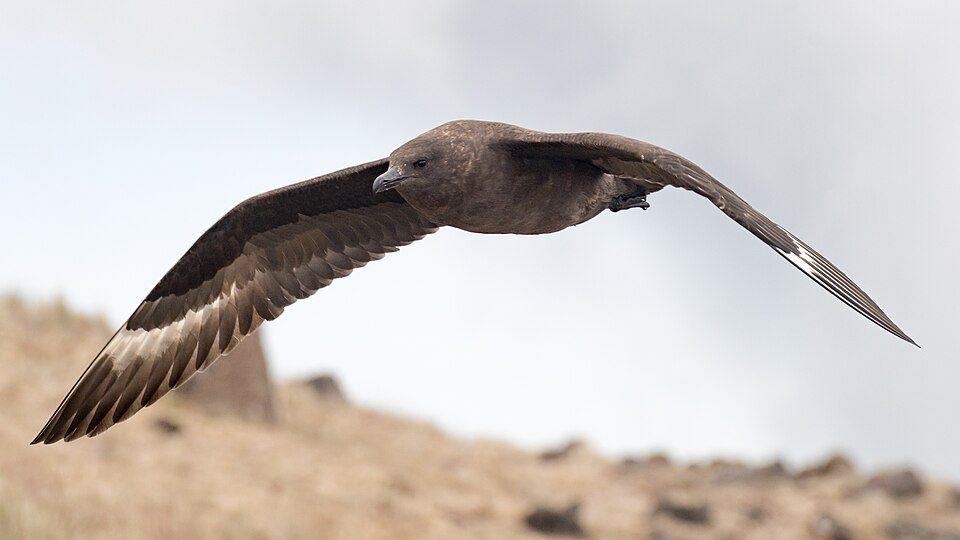
A single ocean-going seabird has tested positive for bird flu, after being found on Petone beach in Wellington.
It’s NZ’s first detected case of the bird flu strain that has killed birds and mammals around the world.
There is no evidence so far that the virus has spread beyond this one brown skua, the Biosecurity Minister says.
However, the public is being asked to report sick or dead birds, and to avoid touching them.
The SMC asked experts to comment.
Professor Jemma Geoghegan, Virologist, University of Otago, comments:
“The first detection of H5N1 in New Zealand is concerning, but it is not unexpected. Given the virus’ recent arrival in Australia and its continued global spread, we have been preparing for the likelihood that it would eventually reach Aotearoa.
Conflict of interest statement: Prof. Geoghegan has declared she has no conflicts of interest.
Professor Dianne Brunton, School of Biological Sciences, University of Auckland, comments:
“It is clearly not a question of if H5N1 will arrive, but when it will establish.
“The detection of avian influenza H5N1 in an ocean-going seabird is evidence that New Zealand’s isolation will not keep out this deadly bird virus. While there is no suggestion of mass mortality in our wildlife or transmission between New Zealand birds, it is just a matter of time before H5N1 does establish.
“The response plans made by MPI, DoC, Ministry of Health and others are now critical. This bird was found in a populated area and we just don’t know how many birds may be out there with the virus in more remote areas, it is unlikely to be zero.”
Conflict of interest statement: “No conflicts of interest.”
Professor Brett Gartrell, Professor in Wildlife Health and Director of the Wildbase Research Centre at Massey University, comments:
“It was always going to be soon for New Zealand’s first case of bird flu. The good news is DOC have already mobilized their plans to protect our most threatened species. The big unknown for us is how vulnerable some of our endemic species will be to the virus.
“We need anyone seeing sick birds to report them to MPI as soon as possible. This will give us our best chance to respond to the virus. Wildlife hospitals and wildlife rehabilitation centers need to start triaging seabirds, waterfowl and raptors before bringing them in with other birds.”
Conflict of interest statement: “Wildbase carries out wildlife pathology services under contract to the Department of Conservation and supplies disease surveillance information to the Ministry of Primary Industries.”
Dr Arnja Dale, SPCA Chief Scientific Officer, comments:
Highly pathogenic avian influenza (HPAI) H5N1, often called bird flu, is a significant animal welfare issue. This virus has caused the deaths of millions of wild birds and poultry around the world, as well as affecting some mammalian species and in some cases people.
For wild birds, HPAI can spread rapidly through colonies of seabirds, waterfowl and other species that naturally gather in large numbers. Scavenging birds can also become infected after feeding on sick or dead animals, allowing the virus to move through ecosystems. HPAI can also spread through faeces, body secretions, and feather dust. Some birds die very quickly, while others may suffer neurological signs such as difficulty standing or flying, tremors, twisting of the neck, or unusual behaviour before they succumb. Respiratory difficulty is common with this strain of H5N1.
Many of New Zealand’s native birds are found nowhere else in the world. If HPAI becomes established here, it has the potential to affect not only individual animals, but entire populations of species that are already under pressure from habitat loss, predation and other threats.
For farmed and backyard poultry, the consequences can be devastating. HPAI is highly contagious and can spread not only through direct contact between birds, but also on contaminated clothing, footwear, equipment, vehicles, feed and water. Good farm and backyard biosecurity and hygiene is therefore one of the most important tools we have to reduce the risk of infection. Simple measures such as preventing contact with wild birds, cleaning and sanitising equipment, limiting visitors and maintaining good hygiene can make a real difference.
Measures taken to protect poultry from infection can also create welfare challenges. Free-range birds may need to be kept indoors, sometimes at higher numbers than sheds would normally accommodate. Birds accustomed to ranging outside may become frustrated when that access is suddenly removed, increasing the risk of adverse behaviours, such as feather pecking, crowding and smothering. Farmers will need to manage this transition carefully by maintaining good litter, ventilation and access to resources, monitoring birds closely, and providing additional enrichment that encourages foraging, pecking, dustbathing and activity. This might include hay or lucerne, pecking blocks, bales, scattered feed and other safe, novel objects.
If HPAI is confirmed in a commercial flock, birds may need to be culled rapidly to prevent further suffering and spread. Containerised gas units can provide a more controlled and humane option than catching and killing birds individually, but protecting the welfare of birds depends on careful planning, appropriate gases and gas concentrations, competent operation and close monitoring to ensure birds do not experience avoidable distress.
While this situation is concerning, MPI, veterinarians, wildlife organisations and the commercial poultry sector have spent years preparing for the arrival of HPAI. For SPCA, our focus is ensuring that animal welfare remains central to the response: supporting our unique wildlife where we can, protecting the birds and other animals in our care, and providing advice about farmed and backyard poultry and companion birds while helping the public understand the practical steps they can take to reduce the risk of further spread.
No conflict of interest statement received.