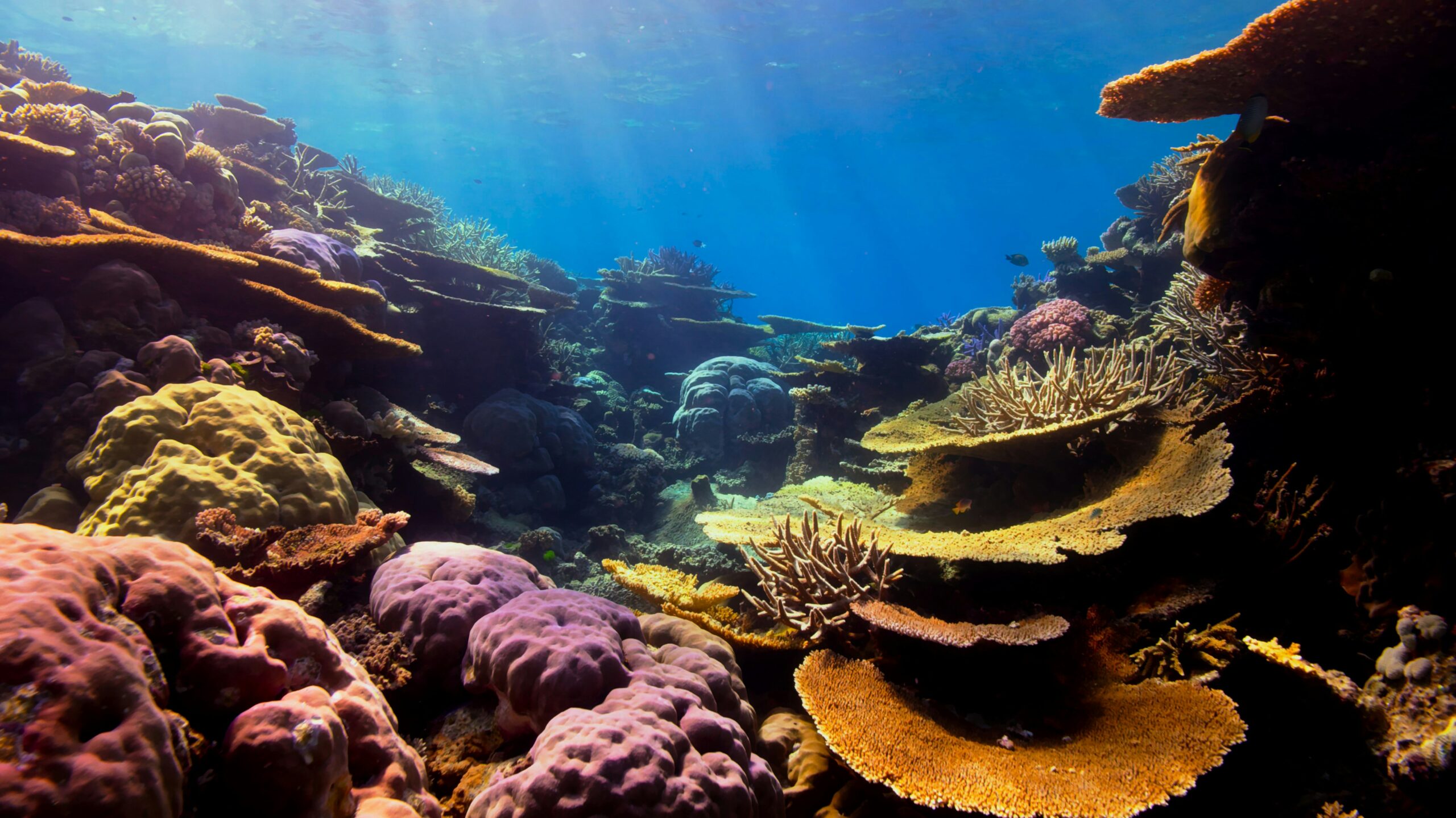
Researchers from around the world will meet in Tāmaki Makaurau Auckland next week to discuss the threats facing coral reefs and how to solve them.
This is the first time the week-long symposium has been held in NZ.
The organisers say this year’s location provides “a truly unique opportunity to feature Pacific Islander knowledge and traditions for reef management.”
The SMC asked researchers to share what they’ll be discussing at the conference.
Associate Professor Dan Hikuroa (Ngāti Maniapoto, Ngaati Whanaunga, Ngāti Mahuta, Pākehā), Te Wānanga o Waipapa, Waipapa Taumata Rau/University of Auckland, comments:
“For thousands of years, Indigenous Pacific peoples voyaged across the Pacific Ocean, home to myriad and diverse coral reefs, using ancestral and innovative technologies of sailing and navigation. As one of the world’s largest Pacific cities, it is highly fitting that Auckland host a meeting on coral reefs, which have always been an integral part of Pacific peoples’ lives and livelihoods.
“In my opening speech I will be discussing a mindset that underpins many Indigenous peoples’ approach – Being a Good Ancestor. It is an expression of what it means to be indigenous – simultaneously thinking about the past, present and future, and making decisions with an inter-generational mindset. As I try and manifest ‘Being a Good Ancestor’ in my work, I seek to weave together indigenous knowledge and science, recognising that many solutions or ways forward can only be realised by drawing from both bodies of knowledge together, and could not be reached from either on its own.
“A focus on the Pacific affords the opportunity to remember ancestral, but largely languishing, connections. In 2022, addressing navigators and researchers attending a meeting in Tahiti, Heremoana Maamaatuaiahutapu, while Minister of Culture, Lands and Environment, reminded those gathered that “before we spoke French and you spoke English – we shared a common language”. Reminding those present of the “ancestral navigation pathways” and declaring them to be “open”. Perhaps this meeting can be considered an expression of that ‘opening’.”
Conflict of interest statement: “I don’t think I have any conflicts. I am UNESCO NZ Commissioner for Culture, and as part of that role serve as an advisor for Te Tini a Tangaroa – NZ Ocean Science Decade.”
Dr Christopher Cornwall, Senior Lecturer in Marine Biology, Victoria University of Wellington, comments:
“This symposium brings together the world’s leaders in coral reef science in one place to discuss ideas and issues of importance. It is timely that it is held in New Zealand. Climate change greatly threatens the world’s coral reef ecosystems with ongoing ocean warming causing marine heatwaves that drive coral bleaching in even otherwise pristine reefs. This coral bleaching causes widespread mortality of corals and will cause long-term degradation of reefs if recovery does not occur.
“New Zealand is positioned to be a leader in the south Pacific. The last iteration of this symposium that was accessible to Pacific Island researchers was Hawaii in 2016, with the one prior to this being in Germany. Therefore, now is the time for New Zealand to take heed of the findings of the symposium and take advantage of the world leaders in this field being present in our country to improve outcomes for the coral reefs of our Pacific neighbours. The forecasted upcoming El Nino event this summer will mean the impacts of coral bleaching will be felt particularly hard in the south Pacific. Governments across the south Pacific should take the opportunity to send delegates to the event to learn more of the pertinent findings.
“I will be discussing the effects of climate change on coral reef growth and persistence of reef structures globally. Ocean warming, acidification, and deoxygenation reduce the calcification of corals and calcified algae, i.e., their ability to make their skeletons. Marine heatwaves like those predicted due to the upcoming El Nino event cause mass coral bleaching that kills coals and reduces their cover. These stressors also increase biological erosion of coral reef framework. I will be discussing the responses of reefs under different possibly scenarios and highlight actions forward for our society.”
Conflict of interest statement: “I am a Co-Director of Te Herenga Waka Victoria University of Wellington’s Centre for Biodiversity and Restoration Ecology. I am also an Associate Director of Coastal People Southern Skies Centre of Research Excellence.”
Professor Paul Kench, Pro Vice-Chancellor of STEM, The University of Waikato, comments:
“Approximately 26% of the world’s coral reefs are located in the Pacific Ocean, where climate change and other human pressures are increasingly threatening reef ecosystems and the communities that depend on them.
“Hosting the International Coral Reef Symposium (ICRS) presents a significant opportunity for New Zealand to demonstrate leadership alongside our Pacific neighbours, drawing global attention to the challenges facing coral reefs and Pacific Island nations while advancing sustainable solutions. The ICRS provides a unique opportunity for researchers from our region to engage with the world’s largest gathering of reef scientists, practitioners and policymakers, to exchange experience and knowledge, strengthen international collaborations, and advance solutions to protect coral reef ecosystems.
“My talk will be examining the state of knowledge of coral reef island formation and change. Reef islands are environmentally and culturally important landscapes that sustain a diverse range of living things including unique global populations of seabirds and marine turtles, and are deeply significant for indigenous and local communities. As physical landforms, reef islands are wave-deposited accumulations of sand and gravel that is derived from the broken down remains of corals and other skeletal organisms that grow and dwell on the surrounding coral reef. In small island nations of the Pacific and Indian Ocean (such as Tuvalu, Kiribati, Marshall Islands and the Maldives) reef islands provide the only habitable land for more than 700,000 people.
“Due to their low elevation and small size, coastal erosion and increased flooding as a consequence of sea-level rise threaten the existence of islands and their communities. However, recent studies have shown that islands are not static landforms that will simply disappear, but have an ability to change their size, shape and location on reef surfaces. Such island dynamics affords island communities a broader set of opportunities to adapt with island change and sustain island populations into the future.
“My talk highlights that reef islands are dynamic components of reef systems that are in continual adjustment to changes in ecological and ocean processes, including sea-level rise. It examines our current understanding of the controls on island evolution, the functional links between islands and reef ecosystems, and the implications of these interactions for conservation and adaptation planning.
“Evidence increasingly shows that many reef islands are dynamic landforms capable of adjusting their size and location in response to environmental change, revealing a wide spectrum of future physical trajectories and adaptation challenges. These adjustments influence both island persistence, habitability, and broader reef-system resilience. The presentation highlights research priorities needed to improve predictions of future island change and support the long-term resilience of these important social-ecological systems.”
Conflict of interest statement: “No conflicts of interest to declare.”