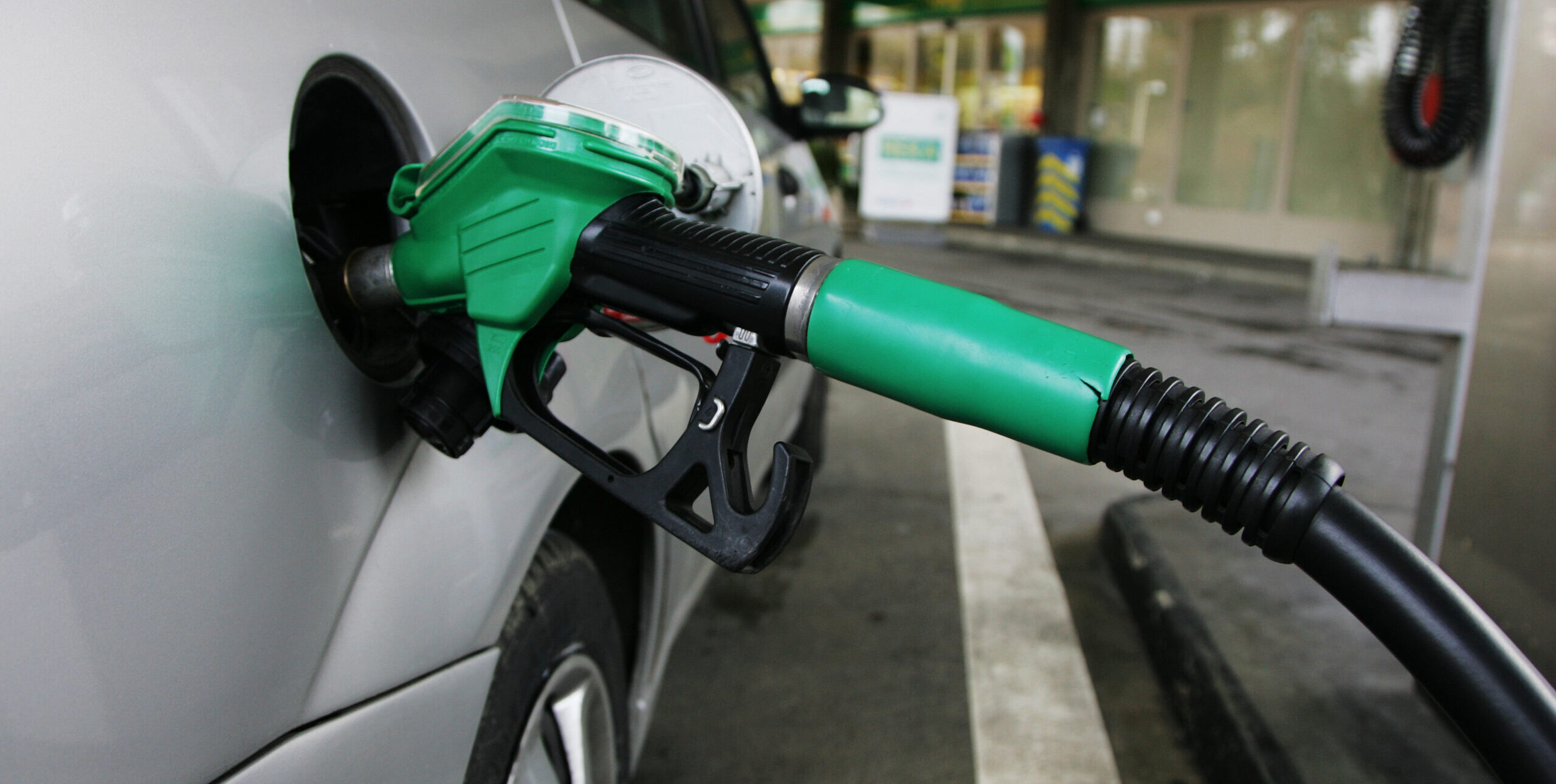
As the price of petrol continues to rise, experts weigh in on fuel saving methods, how to know if the nation still has a 50-day supply, and reducing dependence on fossil fuels overall.
Officials are due to update public information on NZ’s fuel stock levels today.
The SMC gathered comments from experts.
Dr John de Pont, Director, TERNZ Transport Research Ltd, comments:
“With regard to fuel stockpiling, unless people have a specialised fuel storage bunker, they shouldn’t do it. Keeping large quantities of fuel under the house or in a garage is a serious fire risk.
“The question of how many days of fuel supply we still have available in New Zealand will be known to the government and to the fuel companies. The extent to which they inform the public of the details will largely be a policy decision. I don’t think that it will necessarily be obvious from what’s happening in terms of things like rationing.
“Even for light vehicles, the move away from petrol and diesel will take a long time. Currently, battery EVs are 6.6% of new car sales. Previously, when there were incentives, it was over 15%. However, there are approximately 4.7 million light vehicles in New Zealand and their average age is 12.8 years. Annual new vehicle sales are around 125,000 plus about 100,000 new registrations of used cars. Even if these were all not petrol or diesel, it would still take a very long time for the fleet to be converted.”
Note: TERNZ is an independent research organisation that specialises in transport-related issues.
Conflict of interest statement: No declaration received.
Emeritus Professor Ralph Sims, Sustainable Energy and Climate Mitigation, Massey University, comments:
“Nobody has a clue about future petrol, diesel and aviation fuel supplies and their costs.
“In NZ, oil-based transport fuels are consumed to meet around 38% of total national energy demand.
“Electricity meets only around 0.1% of total transport demand when used for electric cars, buses, trains and trucks (and one electric plane and a few tractors). Locally generated renewable energy systems currently meet around 85% of total electricity generation. Total generation will need to be increased in the future to meet growing electricity demands arising from higher population, more EVs, industrial electric heating systems, data centres etc. but this will take time, especially for delivering more electric transport vehicles and charging systems.
“So the sensible option for a driver now is to offset the threats of liquid fuel supply shortages and higher costs by using less of them – but still meeting similar transport objectives.
“Walking, cycling, using public transport all enable a car to be left in the garage and avoid parking charges, but they won’t suit everybody.
“So when choosing to drive a petrol or diesel vehicle, the vast majority of drivers can save 15-20% of fuel (and hence save costs and CO₂ emissions as well).
“This can be achieved by driving smoothly without heavy acceleration and braking; checking tyre pressures; turning air-conditioning off; removing excess weight carried and roof racks not being used; slowing down on highways (typically a car at 110km/h uses 10% more fuel per kilometre than when travelling at 90 km/h due to greater air friction).
“It’s all pretty basic and the science is well understood for cars, trucks, and buses.
“But to change human behaviour is always the challenge.
“So given the current uncertainty, what the Government needs to do urgently is to run a national education campaign (similar to what was accomplished during Covid times using all media opportunities) to inform drivers how they can save both fuel and money.
“Owning and driving a medium size family saloon can cost over $1/km travelled, of which the fuel consumption is a significant share that is likely to increase. Larger vehicles will cost more.
“Learning how to reduce fuel consumption is pretty basic – and will provide benefits not just for now but also into the future.”
Conflict of interest statement: “No conflicts.”
Dr Murat Üngör, Department of Economics, University of Otago, comments:
What would you say to people considering fuel stockpiling?
“My main advice would be to avoid panic stockpiling. Panic stockpile may sound like sensible preparation, but it often makes things worse for everyone.
“New Zealand’s fuel system relies on steady, normal demand. When lots of people suddenly fill up jerry cans, it can temporarily drain local stations, even when there is plenty of fuel in the main storage terminals. In other words, you can end up creating the very shortage you are trying to avoid.
“There is also a safety risk. Petrol is highly flammable, and storing it at home, especially in garages or near living areas, can be dangerous.
“The practical advice is simple: keep your vehicle at least half full if you are concerned and buy fuel as you normally would. Stockpiling does not increase the national supply; it simply moves fuel from the system into private storage and puts pressure on the delivery network.”
What are you looking for around the 50 days of fuel supply that officials say we have?
“To assess whether that buffer is secure, I would watch four key things: whether international supply chains remain open, whether shipping routes to New Zealand stay clear, how much fuel refineries in the Asia-Pacific region are producing, and the rate of domestic fuel consumption. New Zealand imports most of its refined fuel from Asia, and many Asian refineries rely heavily on crude oil from the Middle East. This means disruptions in that region can indirectly affect New Zealand’s fuel supply. If these supply chains continue to function normally and demand does not surge because of panic buying, the system can generally maintain adequate supply.”
How much of New Zealand would continue to rely on petrol and diesel even if we tried to move quickly to renewable energy sources?
“Even if we accelerated the transition to renewable energy tomorrow, the vast majority of New Zealand would still depend on petrol and diesel for many years. Road freight, agriculture, construction, aviation, and most of our vehicles rely on liquid fuels. You cannot replace a tractor on a remote farm or a national fleet of trucks overnight. Electric vehicles are growing, but fleet turnover is slow. Vehicles typically remain on the road for 15 to 20 years.
“The transition to renewable energy is essential and already underway, but it is a marathon rather than a sprint. For at least the next decade, petrol and diesel will remain central to New Zealand’s transport system and broader economy.”
Is there anything else you think is important to note about the current situation?
“People are already feeling this at the pump. We have seen petrol prices jump around 20% in just a few weeks, from about $2.50 a litre at the start of March to over $3.00 now. That is a 50 to 60 cent increase in a very short time, and it shows how sensitive the market is to any whiff of disruption.
“Looking ahead, if crude oil reached around $130-$140 per barrel and stayed there for a month, we would likely see petrol prices move into the $3.50 to $3.70 range. To break $4 per litre, something more extreme would probably be required, such as crude oil sustained at $140-$170 per barrel, similar to the record highs of 2008, combined with a weaker New Zealand dollar and higher shipping costs.
“New Zealand’s fuel supply position is structurally exposed in ways that deserve serious attention. Since the closure of the Marsden Point oil refinery on 31 March 2022, New Zealand has been entirely dependent on imported refined fuels. Five companies currently import fuel for sale in New Zealand: Z Energy, BP, Mobil, Gull, and Tasman Fuels. These companies sell fuel both directly to consumers and to independent fuel resellers. This means New Zealand is more exposed to global supply shocks than before. The current situation is a reminder to ask whether our fuel resilience settings remain fit for purpose.”
What are your thoughts on how this could affect markets?
“The escalating conflict in Iran represents a significant geopolitical shock that is already rippling through global markets. The primary driver is a massive spike in uncertainty.
“Economic research provides strong evidence of these effects. Economists Dario Caldara and Matteo Iacoviello developed a Geopolitical Risk index based on newspaper coverage of geopolitical tensions, tracking adverse events and associated risks since 1900. The index spikes around major events such as World War I, World War II, the Korean War, the Cuban Missile Crisis, and the September 11 attack, all periods associated with major economic and financial disruption. Their research shows that higher geopolitical risk is typically followed by lower investment, declining stock prices, and weaker employment. More concerningly, elevated geopolitical risk is associated with a higher probability of economic crises and larger downside risks for the global economy.
“More recent research published in the Journal of International Economics by Caldara and his colleagues examines whether geopolitical risks raise or lower inflation. Their findings are particularly relevant to the current situation: geopolitical risks tend to foreshadow higher inflation, although the strength of the effect varies across countries and historical periods. This inflationary pressure is often accompanied by weaker economic activity, higher military spending, rising public debt and money growth, supply disruptions, and declining international trade. Geopolitical risks also increase inflation uncertainty and raise the likelihood of significant inflation spikes, developments that policymakers and markets will be watching closely in the months ahead.”
Conflict of interest statement: “No conflict of interest. Murat Ungor does not work for, consult for, own shares in, or receive funding from any company or organisation that would benefit from his views, and has disclosed no relevant affiliations beyond his academic appointment.”
Our colleagues at the Australian Science Media Centre have also gathered expert comments. See below for a selection.
Professor Ben Fahimnia, Professor and Chair of Decision Sciences at the University of Sydney Business School, comments:
“In supply chain science, we often refer to the bullwhip effect to describe how disruptions or sudden changes in demand become amplified as they move through supply chains. The term comes from the motion of a whip: a small movement at the handle can create a much larger crack at the tip. In supply chains, relatively small disruptions at the upstream end (such as a shock to global oil supply) can translate into much larger economic effects by the time they reach consumers.
“What we are seeing now is primarily an upstream supply disruption. The blockage of the Strait of Hormuz and the reduction in regional energy production tighten global oil supply, which can rapidly push prices higher across transport, logistics and production systems.
“Panic buying at the consumer level only worsens this situation. When consumers suddenly increase purchases, retailers interpret that behaviour as a surge in demand and place larger orders upstream. Those signals then travel through distributors and refiners, amplifying the disruption that already exists on the supply side. In effect, a second bullwhip begins at the supply end and can then be reinforced from the demand side if panic buying occurs.
“From a human perspective, panic buying is understandable. When people see uncertainty about supply or rapidly rising prices, the instinct to secure fuel while it is available is a very natural reaction. However, from a supply chain and logistics perspective, it is extremely counterproductive.”
Conflict of interest statement: No declaration received.