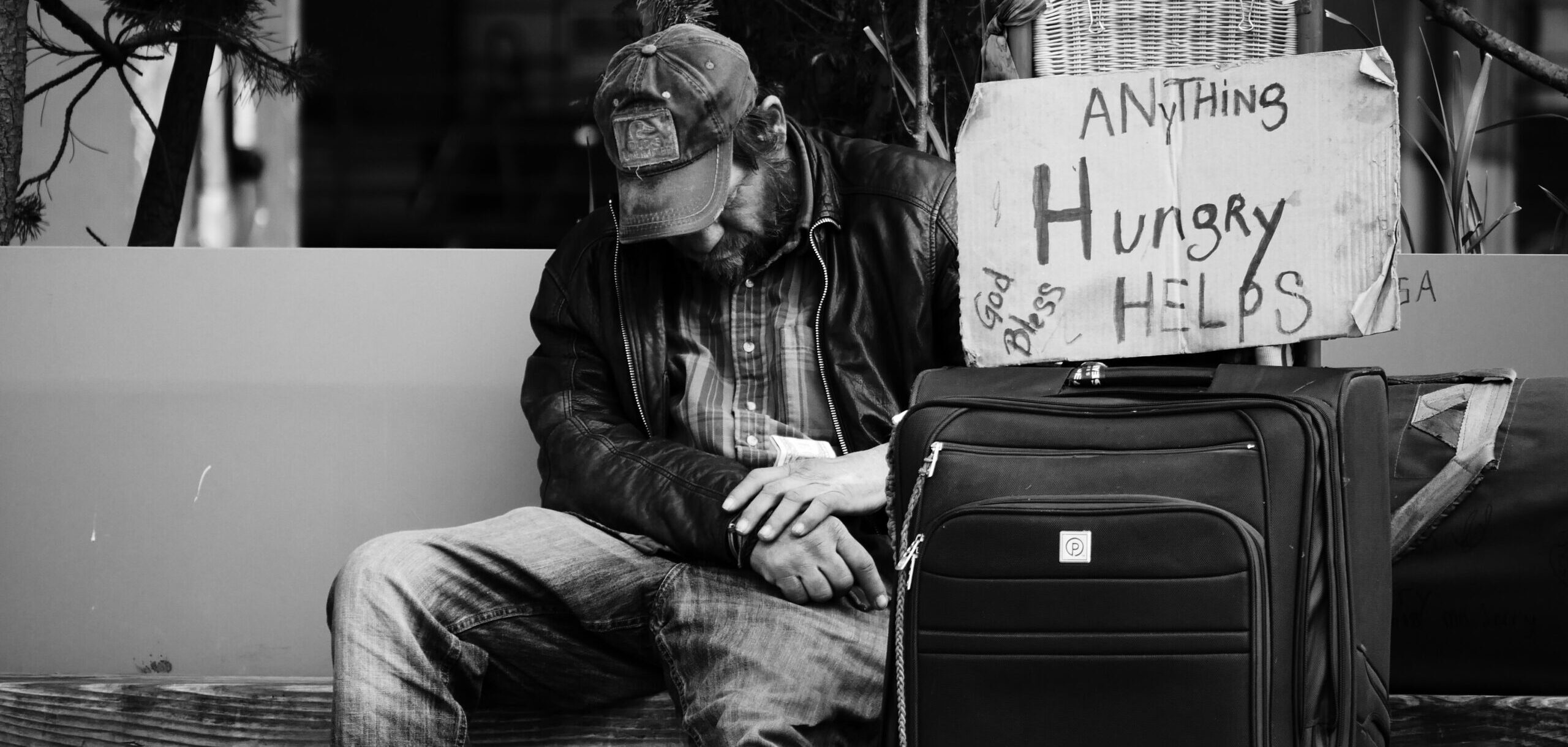
New powers will enable police to require people to leave a public area for up to 24 hours.
In an amendment to the Summary Offences Act, the ‘move-on’ orders can be applied to anyone over the age of 14 who is exhibiting disorderly or threatening behaviour, obstructing a business entryway, rough sleeping, or begging. Those who breach the order risk a fine of up to $2000 or a three month jail term.
The SMC asked experts to comment.
Dr. Emmy Rākete, Professional Teaching Fellow, School of Social Sciences, University of Auckland, comments:
“The Salvation Army reports that in Auckland, there has been a doubling in the number of street homelessness in Auckland between September 2024 and September 2025, alongside a $79 million reduction in budget allocation for homeless support work. This means that street homelessness has worsened under this government, while the support services it claims these expulsion orders will connect people to are underfunded to the point of service failure.
“The government has failed to present any kind of evidence base to support its claim that criminalising public homelessness will somehow help people into stable, long-term housing, because no such evidence exists. Instead, we know from research conducted by Associate Professor Alice Mills that people who serve prison sentences become more likely to experience housing insecurity after they get out, and that housing insecurity is associated with increased likelihood of recidivism and reimprisonment.
“Punishing the poor doesn’t work, but helping them does. ‘Housing first’ is an approach to housing policy which provides chronically homeless people with unconditional housing, on the basis that stable housing is a precondition to sorting out all of the things in a person’s life causing them to experience homelessness. A systematic review of housing first programmes found that it was more effective at reducing homelessness than other models, so we know that this approach works.
“Instead of expanding promising housing first programmes and addressing homelessness, this government is spending billions of dollars on prison expansions to cope with the massive increase in incarceration that its policies are driving. These policies benefit the rich and multinational corporations, but they harm the working class, who have to accept worse infrastructure, worse social services, and worse lives.”
Conflict of interest statement: “I am also press spokesperson for People Against Prisons Aotearoa, a community organisation working for an Aotearoa in which prisons are not necessary and do not exist.”
Associate Professor Armon Tamatea, Psychology, University of Waikato, comments:
“Homelessness is a complex issue and involves social, economic and psychological costs and multiple contributing factors, most conspicuously the shortage of public/affordable housing, poverty, and family breakdown, not to mention mental illness and addiction (indeed, homeless people suffer from these issues disproportionately around the world). Needless to say, people who are unhoused are susceptible to multiple stressors in their day-to-day lives.
“Move-on orders criminalise poverty. According to a recent press release, the ‘move-on orders’ are ostensibly intended to protect businesses, tourists, and shoppers – all groups defined by economic contribution, compared with an outgroup that are not. In addition to aggressive and disorderly behaviour – for which Police already have provisions to deal with this – the orders also include powers to intervene on rough sleeping, begging and inhabiting (or even indicating to inhabit) a public space, which are typically non-violent and non-aggressive behaviours, so it would appear that the orders are also about rendering these persons invisible from civic spaces and not necessarily about safety and order.
“Move-on orders displace risk. The move-on orders risk introducing further stressors to the lives of affected individuals with potential frequent and aversive contact with Police and effectively displace the issue. Even for those who have successfully obtained public housing, this is no guarantee of safety as unmanaged mental illness and violence can occur in these spaces – increasing victimisation to already vulnerable people. In this sense, homelessness becomes a safer option for some.
“Consider trauma-informed responses. In addition to structural solutions, such as increased and improved provision of suitable housing, access to services, and opportunities for wellness, an international review of interventions that recognise and work in trauma-informed ways has shown generally positive results with regard to psychological well-being, substance use, parenting, victimization, health, social stability, and criminal justice outcomes. However, these results do not consider study quality. Conclusions: trauma-informed care approaches for populations experiencing substance use disorder and/or homelessness have promising outcomes.”
Conflict of interest statement: “None to declare.”
Associate Professor Polly Atatoa Carr, Te Ngira Institute for Population Research, Waikato University, comments:
“While the pathways to homelessness in Aotearoa New Zealand are diverse and complex, there are important themes that emerge. One of these themes is financial challenges to securing and sustaining tenancies and our research has demonstrated that high levels of personal debt are common for those who are experiencing homelessness. We have significant concerns that the ‘move-on’ orders, and potential fines involved, will only further exacerbate the situation for individuals and communities, rather than support successful and safe housing and community outcomes.
“Working in partnership with a local Housing First service, we demonstrated that not only were those experiencing homelessness in high levels of debt, but that institutional debt, particularly to government institutions, was both the most common type of debt and made up the largest amount of money owed. Multiple debts were also common. These debts not only make housing difficult, but also impact on the ability to access other resources important for securing work and wellbeing, including health services.
“The ‘move on’ orders also apply to those as young as 14-years-old. Our research has also demonstrated that many young people in Aotearoa New Zealand experiencing homelessness are caught between government services eligibility criteria, are under significant financial (and other) strain, and we know that child poverty is an issue in our country. The potential impact of these orders on the ability of young people to have a normal life (such as without poor credit records) may be life-long.
“Rather than providing more opportunities to criminalise and punish those experiencing homelessness, it is likely that more successful outcomes would result from the government reviewing the need to repay emergency benefits and other costs incurred when navigating complex lives and circumstances.”
Conflict of interest statement: “Nil.”
Professor Darrin Hodgetts, School of Psychology, Massey University, comments:
“I think the announcement is not a new or practical idea. These banishment strategies have been tried before. Punitive approaches to hardship and homelessness don’t work. They just make hard lives even harder. It’s a bit ironic to bring out this initiative when the government’s own housing and employment policies are contributing to poverty and homelessness. You can talk to most community agencies about that, and they’ll tell you the same thing. Look at the recent Salvation Army state of the nation report.
“We are not going to resolve these issues of homelessness if we keep trying to hide or obscure the problem by banishing homeless people from sight. Scholars have written about the concept of ‘Disneyfication’, which is relevant to the government’s initiative. Disneyfication is the idea that that everything is made to look polished, clean and lovely on the outside. Behind the scenes is the hidden exploitation and inequities that drive poverty and homelessness. We hide our dirty laundry as a country and present ourselves as this lovely tourist destination for cruise ships and events at the new convention centre in Auckland, for example. This means we need to expel homeless people from sight.
“Countries often tend to move homeless people on in this way during big events so they can convey a more positive image of themselves, or support the myth of a caring society. So when the Prime Minister is talking about the new convention center and cruise ships to try and justify the move-on orders, he would appear to be more concerned about our image than the welfare of our people. He’s saying we should hide the poverty we have from our visitors. In a sense, we’re giving a false impression of New Zealand when we Disneyfy CBDs. Trying to just exclude homeless people beause the government do not think it is a good look is not going ot help us resolve our growing homelessness problem.
“Now, some of the Government’s comments about the fact that people shouldn’t be harassed when going about their business or enjoying CBDs are important. When I’m out at a restaurant, I don’t want someone behaving inappropriately next to me or badgering me. But, I also accept that such situations are part of life in this country today. It’s part of a price we pay for growing inequalities and poverty. If we don’t want such anti-social behavior we have to be smarter about how we respond as a society.
“Groups like the Auckland or Wellington City Missions, and the other social agencies have done a lot of work with street communities to manage these issues and anti-social behaviour in more humane ways. We have done work with these agencies in the past and they do phenomenal work. A good starting point is for the Government to reinvest in poverty reduction and services to assist homeless people. The resources that would be wasted in this move-on initiative in terms of police time etc. would be better spent on the community services that know how to deal with these situations. So, the research evidence suggests that the government strategy will simply be ineffective.
“I was really impressed with the police association response. It was very professional and raised the realties of police time being used to shunt homeless people on. When we’re tying up police officers doing this work, they’re not doing other work. If the government is willing to spend resources on this issue then why not support such community agencies who respond humanely to homeless people and the situations in which they find themselves.
“Some might argue that the move-on orders are a deeply cynical and constitute a political move in an election year. I have some sympathy with this view having seen these initiatives pop up in election cycles. I’d also note that there are some good people in government. I’d hope they speak up about alternative and more human responses to homelessness. We also need to realise that homelessness is not going away until we start addressing the primary courses, which are structural inequities that grow poverty. Homelessness is the sharp end of a bigger problem in our country. I’d like to see mature conversations about how we address the fundamentals of poverty, rather than having politicians try and motivate their bases by scapegoating homeless people.”
Conflict of interest statement: “No.”
Distinguished Professor Philippa Howden-Chapman, Co-director He Kainga Oranga/Housing & Health Research Programme, University of Otago, comments:
“The National Government has turned its back on modern social democratic welfare. The problem of growing homelessness is solely due to the erratic and inadequate supply of affordable homes for people on low incomes. This Government has predictably manufactured the dire housing shortage by defunding most emergency housing and reducing the building of affordable housing. Moreover, they have reallocated some of the money the previous Labour Government allocated to Kāinga Ora, to building roads, not to Community Housing Providers as promised.
“The distressing sight and disturbing disruption of rapidly increasingly homeless women and men, young and old is seriously upsetting and avoidable. This Government has literally returned to the Medieval Poor Laws, which were modified in England and Wales in the 16th century and not abolished until the 19th century social reforms. The focus of the Poor Laws was to physically punish homeless people, who survived by begging. Their local church was expected to provide a bed in a room in a work-house, pilloried by Dickens, but was not expected to house those who were not known locally. Homeless people, who were not registered in a local area, were forced to return to their birth-place, or the last place they lived, to receive any succour.
“The answer to homelessness is not to amend the Summary Offences Act, which would enable police to punish people as young as 14 of “No Fixed Abode” with substantial fines and possible imprisonment if they don’t “move on.” Instead, governments need to guarantee significant investment in sustainable housing with the support they need. The expansion of Housing First accommodation shows that this kind of support enables homeless people to regain their health. There is robust local evidence of the significant positive impact on the health and wellbeing of homeless people, who are settled in long-term, affordable housing. Evidence shows that people who are housed through Housing First, public or community housing are hospitalised less, have improved mental health, increased income from employment and less contact with the police.
“The Aotearoa New Zealand Government has signed up to the internationally recognised right to decent housing as a fundamental human right. The modern democratic 21st century state has a fundamental responsibility to ensure that everyone has access to secure, healthy, affordable and homes. Homes that are not crowded and have the essential services, such as water, energy, (working) sanitation and support that we all need sometimes.”
Conflict of interest statement: “Previously Kāinga Ora Board director.”
Dr Brodie Fraser, Senior Research Fellow, He Kāinga Oranga, Department of Public Health, University of Otago Wellington, comments:
“Criminalising homelessness does not work. These changes can’t even be considered a ‘band-aid’ solution; there is no benefit to them beyond the Government trying to improve its image in an election year. Forcing rough sleepers to move on, and fining and/or imprisoning them does not solve, or reduce, rough sleeping. The Government should consider evidence-based policy that we know works; increasing benefit rates to reduce poverty, expanding Housing First programmes, and increasing the numbers of public houses. Instead, we have a Government that seems to believe poverty is an individual failure, rather than a structural one.”
Conflict of interest statement: “None.”