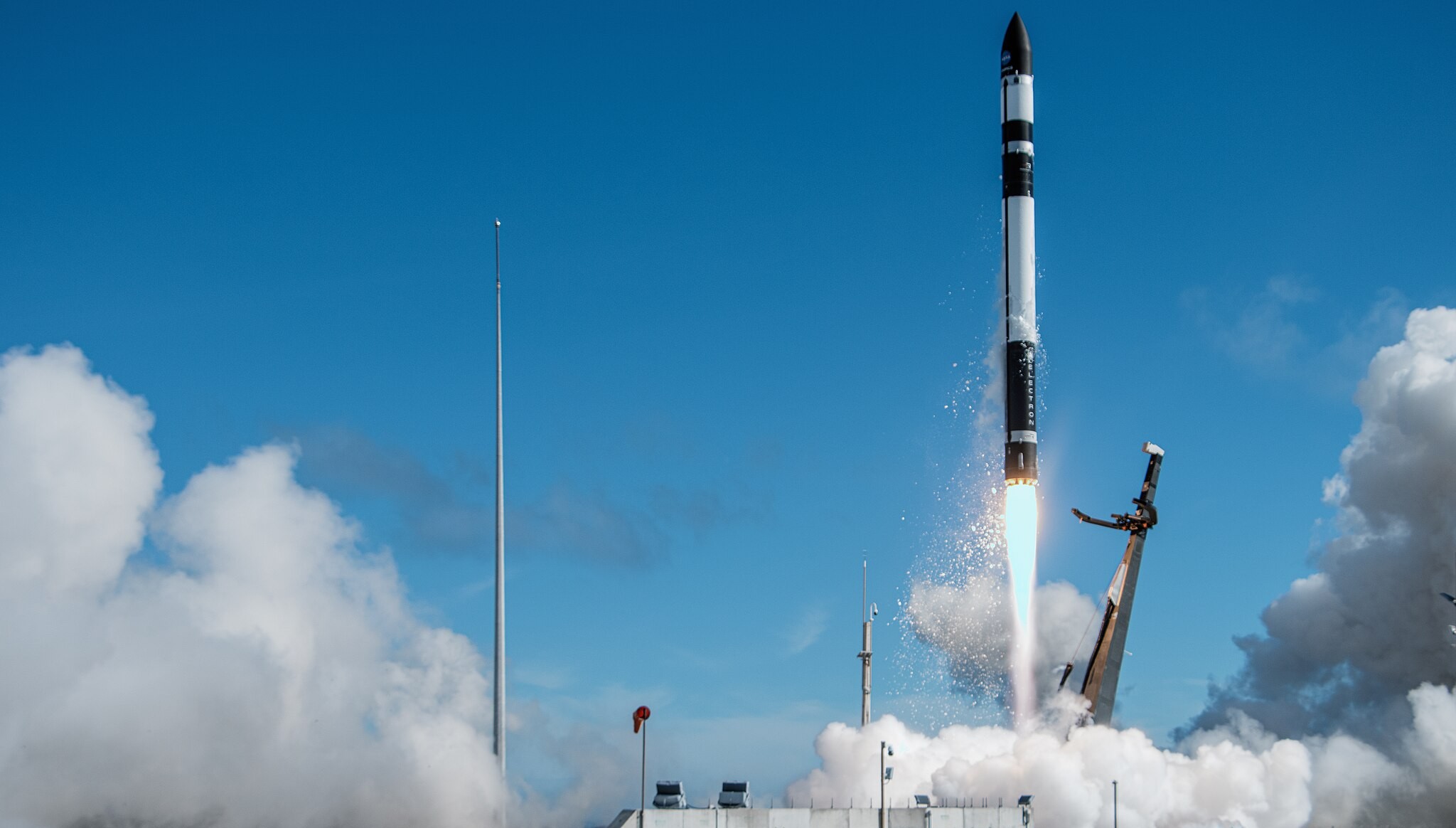
The number of space launches allowed from NZ is set to increase from 100 to 1000.
The government says the current limit was expected to be reached this year, while the new limit would not be reached until 2050.
The decision follows a 2025 review of how space vehicle launch debris could affect our marine environment.
Further information on the space vehicle jettison debris regulation review is available here.
The SMC has gathered comments from seven experts on space sustainability, Maramataka, atmospheric chemistry, marine environment impacts, and space science.
Te Kahuratai Moko-Painting (Ngāpuhi – Ngāti Manu, Te Popoto), Atlantic Fellow for Social Equity, comments:
“Aotearoa has rapidly become a significant space nation. The Government’s 2024–2030 Strategy states New Zealand is third in the world for the number of annual launches to date in 2024, behind only the United States and China. A significant achievement. But lifting the permitted launch limit from 100 to 1000 is also a major intensification decision for our airspace and environment. It demands governance that is just as ambitious as the growth agenda.
“MfE’s ecological risk assessment acknowledges a critical gap: a lack of specific research on impacts to Māori interests, and no direct research assessing impacts for te ao Māori. It also records Māori concerns about aerospace junk, debris and waste pollution, and wider safety issues around unknown, untracked, uncontrolled, and unclaimed debris. Yet there are no visible actions that match the scale of that gap. A “low risk” label is not a social licence when the evidence base is incomplete and Te Tiriti is erased.
“This is sharpened by policy inconsistency. The 2023 National Space Policy centres partnership with Māori under Te Tiriti o Waitangi. Yet the 2024–2030 Space and Advanced Aviation Strategy effectively erases Māori and Te Tiriti from the growth agenda. That signals certainty for capital is being bought with uncertainty for mana whenua, kaitiakitanga, and relational responsibilities to environments.
“Aotearoa’s leadership can genuinely inspire rangatahi Māori and all New Zealanders into space science and engineering right here in Aotearoa, but world-leading cannot just mean launch volume. Before a tenfold increase in the number of launches, the government should act on the gaps it has already identified: fund and require Māori-led research and monitoring, embed Te Tiriti partnership in the Strategy as well as the Policy, and commit to transparent reporting and decision-making with mana whenua hosting launch sites. World-leading means Te Tiriti-led. Anything less extends colonising logics into space.”
Conflict of interest statement: “I have no financial relationships with space launch providers or aerospace companies.”
Dr Priyanka Dhopade, Senior Lecturer in the Department of Mechanical Engineering, University of Auckland, comments:
“The Government’s decision is consistent with signals in the 2024 Space and Advanced Aviation Strategy to grow the sector through increased economic investment. Launch capability, in particular, is a strength for New Zealand, demonstrated by Rocket Lab’s success and Dawn Aerospace’s recent progress toward spaceplane launches.
“At the same time, the global order is shifting, with New Zealand playing an increasingly strategic role in the Pacific. As geopolitical alliances become more contested, access to space and dual-use space technologies is emerging as both a diplomatic tool and a strategic asset. In this short-term geopolitical context, expanding launch capacity is understandable.
“There are, however, risks associated with the economic and environmental consequences of growing launch capacity that have not been addressed in the 2025 review and public consultation related to this decision. The review only considered rocket jettison debris in the EEZ, not impacts to land, territorial sea, or to airspace or outer space. The public consultation period was only 13 days.
“Growing evidence of launch emissions and debris re-entry on the atmosphere indicates this is a growing area of concern that can jeopardise continued access to launch capability, potentially resulting in tighter launch regulations and loss of social license from the public.
“There is no clear commitment from Government to monitor or measure these impacts as launch rates increase, nor is there any current estimation of the environmental footprint of the sector.
“While the decision is unsurprising, consideration of longer-term risks would better serve New Zealand’s space and advanced aviation sector, both in terms of economic and environmental resilience.”
Conflict of interest statement: “My perceived conflict of interest is that I lead the Sustainable Space Initiative (ssi.org.nz) so am actively researching sustainability in the aerospace sector.”
Professor Laura Revell, Professor of Atmospheric Chemistry, University of Canterbury, comments:
“I understand from here that the government review focussed on the deposition of debris into the marine environment; effects on the atmosphere were defined to be out of scope.
“As our 2025 study found, an increase in global rocket launches could slow recovery of the ozone layer. At around 2,040 launches worldwide per year, our modelling found that recovery of the ozone layer slowed, particularly over Southern Hemisphere mid- to high latitudes (this location-specific ozone loss is a result of stratospheric chemistry and unrelated to launch location).
“For context, successful orbital launches worldwide increased approximately 3-fold between 2019-2025 (97 to 317) and a further ~6-7 fold increase on 2025’s launches would get us in the neighborhood of 2,040 launches per year, i.e. it is feasible given industrial aspirations and policy changes such as that announced today.
“The effects from NZ’s launches alone are unlikely to cause widespread damage to the ozone layer. But, launch rates are also increasing overseas and the cumulative effects add up.
“The atmosphere is the classic example of the tragedy of the commons. If launches don’t occur in NZ, they will likely occur in another country, and the damage to the ozone layer would occur just the same. This is the sort of problem that needs international cooperation and coordination.
“Last, effects of rockets on the ozone layer don’t just depend on the number of launches, but also the type of fuel. Oversight on the types of fuels in use (from a global perspective) could be one way to ensure the industry grows in a way that is sustainable for the atmospheric environment but also realises the benefits that space-based technologies might offer.”
Conflict of interest statement: “Lead author on the forthcoming IPCC assessment report, member of the UNEP Environmental Effects Assessment Panel which assesses the effects of ozone depletion and UV radiation on life on Earth, member of the International Ozone Commission. No funding received for research on rocket launches.”
Associate Professor Annika Seppälä, Department of Physics, University of Otago, comments:
“Professor Laura Revell’s team (Canterbury University) published a study where they calculated the atmospheric impact from a GLOBAL growth of launches in a ‘conservative growth’ scenario to ~1000 rocket launches by 2030. This gives us a baseline for potential atmospheric impacts, remembering that we are now talking about 1000 launches from NZ alone by 2050.
“Following their conservative growth scenario, by 2050 likely about a third of all launches would be from NZ, unlike in their calculation where the launches were primarily from the Northern Hemisphere. Why is this important? They found a nearly 2% additional ozone depletion over Antarctica by 2030, warning that this will slow down ozone recovery. I would expect that launching more frequently from NZ will result in a much larger impact on Antarctic ozone.
“People associate ozone primarily with UV radiation levels, but Antarctic ozone has large impacts on weather and climate conditions in NZ. Much more than locations in the Northern Hemisphere.
“While the propellant used will influence the severity of the ozone impact, I worry that we are walking into a territory of unplanned consequences. To my knowledge there has not been a review of the potential atmospheric impacts relevant to NZ; the environmental risks assessed to justify the increase of launches to 1000 were focused on space vehicle jettison debris in the seabed. Europe is way ahead of us with research funding dedicated to assessing impacts which will help guide policy decision. Critically, in terms of the ozone layer, because of our location we are much more susceptible to feel the impacts of this.”
Conflict of interest statement: “Associate Professor Seppälä was not part of the University of Canterbury led research on rocket launch impacts on atmospheric ozone.”
Dr Thomas Dowling, Senior Lecturer in Environment, Faculty of Science, University of Auckland, comments:
“There are very limited studies on space debris into the marine environment. Even just reading the abstract of the report tells you it’s a moderate risk based on not a huge amount of evidence. So I’d flag that up as a first thing, we need to do more work on the impact of rocket debris, particularly for the large marine stuff. Yes, if it’s just metal debris with no toxic stuff, it’s very unlikely to be a problem. But thinking about the impact of the sound, and other effects, it’s a big jump from 100 to 1000 plus launches.
“I’m generally in huge favor of the aerospace industry, but it’s interesting to me that this increase is being sold as: ‘the environmental risk assessment identified that it’s fine’, when the environmental risk assessment is so specific to debris in the launch areas. We’re working on a review at the moment that looks at the whole life-cycle approach, particularly in regards to planetary boundaries. Some of the specific risks that we’ve identified are re-entry, rocket emissions, alumina, all kinds of things, particularly in the southern hemisphere atmosphere, where there hasn’t been a long history of rocket launches.
“So my two points are:
“I agree it is a moderate risk to the marine environment. But what does that actually mean? I don’t think we’ve got good enough science to really understand that fully.
“And what does this increase in launch cadence mean for southern hemisphere atmospheric composition, both from rocket trails and from re entry injection of the troposphere?”
Conflict of interest statement: “I have a startup, Seascape Intelligence Ltd, that works with SAR data from satellites. So I am involved in the aerospace industry.”
Professor Richard Easther, Department of Physics, University of Auckland, comments:
“On the face of it, this is an exciting and positive announcement. New Zealand is the only small country in the world with a commercial orbital launch provider using locally built rockets. This decision will help the tech sector and our science community develop the opportunities this remarkable achievement creates.
“One thousand launches is a large number. However, Rocket Lab currently launches about 20 times a year from New Zealand – even with strong growth this quota will last for decades. That said, Rocket Lab has developed booster recovery techniques. These cannot be used with every mission profile but leaving the booster on the sea floor is often a financial choice rather than a necessity.
“More broadly, the number of orbiting satellites is dramatically increasing. We are at the point where the visual appearance of the night sky and potentially the chemistry of the upper atmosphere can be significantly altered by human activity and the global policy environment has not kept pace. As a country that regulates orbital launch New Zealand should be at the front of these discussions. However, the announcement is silent on this context.
“Finally, these launches will be regulated by the New Zealand Space Agency, a division of MBIE. The NZSA also managed our relationship with MethaneSAT. This mission failed last year but was supposedly a “flagship” for our emerging space programme. There is widespread concern that the NZSA has not been forthcoming about what went wrong and was overly deferential to their high-profile international partner on the mission.
“Consequently, until these issues are addressed, many participants in the space community will be concerned that the NZSA lacks the capacity to make good decisions about these launches, especially as their commercial and sometimes political sensitivity means that there is very limited opportunity for oversight.”
Conflict of interest statement: “None.”
Associate Professor Nicholas Rattenbury, Department of Physics, University of Auckland, comments:
“The environmental impacts of rocket launches have been the subject of sustained scientific research for more than two decades. Peer-reviewed work shows that rocket activity injects gases and particles into the upper atmosphere (including the stratosphere and above), with key species depending on propellant type—commonly including CO₂, H₂O, NOₓ, chlorine compounds from some solid motors, black carbon (soot) from some hydrocarbon engines, and particulate products such as alumina in relevant cases. Unlike surface emissions, these releases occur at altitudes where ozone chemistry and radiative processes are highly sensitive. Modelling indicates that black carbon from rocket launches can warm the stratosphere and perturb ozone. Modelling further indicates that increasing launch rates could slow ozone recovery.
“Increased delivery of material to orbit also increases the mass that later re-enters the atmosphere as satellites and upper stages reach end of life. Emissions inventories and modelling explicitly include re-entry as a source of metals and particulate material to the middle atmosphere. Observations now show that metals from spacecraft re-entry are present in stratospheric aerosol particles, demonstrating that re-entry products can be incorporated into atmospheric aerosols. UCL Professor Eloise Marais has likened this to “a mini geoengineering experiment”. The NASA technical assessment emphasises substantial knowledge gaps in quantifying these impacts under projected growth scenarios.
“Personally, I don’t like performing experiments with the global environment when there are “substantial knowledge gaps” on what might result. As the human race, we have form in this area. The work of Dr Thomas Midgley, feted american engineer who held multiple patents for his clever inventions, changed the Earth’s environment for the worse in two separate such “geoengineering experiments”, conducted without sufficient care or consideration: putting lead into petrol and using chlorofluorocarbons (CFCs) as refrigerants.
“The Ministry for the Environment has assessed marine debris risks associated with launch activity (Lamarche et al., 2017). However,I am not aware of an equivalent publicly available atmospheric risk assessment accompanying the increase in launch limits. Given the documented potential for impacts on stratospheric chemistry and climate, that absence is concerning, particularly as New Zealand researchers are active in sustainable space research. Revell, L. and Bannister, M. 2025 note that “[t]he economic benefits of industry growth can be realised, but it will take a collaborative effort.” I would like to see how the New Zealand Government came to its conclusions that the raising of the number of launches takes into account these concerns.”