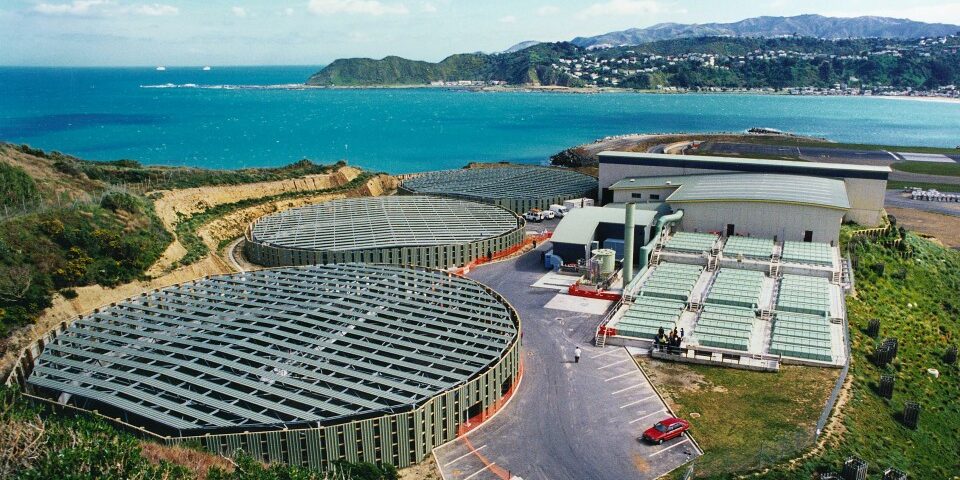
Health officials are warning people to stay off Wellington’s south coast beaches, due to the infection risks from the Moa Point wastewater plant failure.
With untreated wastewater still being pumped into the Cook Strait, people are also being warned not to eat kaimoana from the area, and to avoid contact with sea spray.
Meanwhile crews trying to clear and repair the plant may have to wear breathing gear to avoid inhaling dangerous gases.
The SMC asked health experts to comment. Previous comments from wastewater and environment experts are available on our website.
Dr Louise Weaver, Senior Scientist – Water, Waste and Social Systems Group, PHF Science, comments:
“The most direct and immediate risk to public health from the event are in the area around the short outfall. Visible signs of sewage were seen on the beaches surrounding the short outfall. Risks include gastrointestinal
“Once discharge to the short outfall ceases the risk will fall but will depend on tidal flow and range. Continued water quality monitoring and beach assessments should continue. Beaches should remain closed until the water quality achieves acceptable levels of indicator organisms, enterococci.
“Risks to public health from direct contact with sewage
“For both the short and long outfalls, there is a risk to public health that will persist for several weeks from pathogenic organisms due to their prolonged survival both in seawater and in sands or sediments. Beach sands and subtidal sediments act as reservoirs for microbial contamination over periods of weeks or longer.
“The short outfall presents a potential risk from spray or aerosolised contaminated seawater, which may affect a larger population compared to the risks posed by direct contact activities such as swimming or surfing. This pathway is still not fully understood in terms of actual risk, but evidence is suggesting a risk may be present, and caution is advised.
“Evidence is available on the risk from consuming contaminated shellfish or kai moana, as bivalves are known to bio-accumulate human enteric viruses (as well as other pathogens). In NZ, closure of impacted areas is mandated for over 28 days post-sewage contamination events.”
Public health risks
Direct risks – Short-term (days/weeks)
“Gastrointestinal illnesses are at an elevated risk due to the presence of enteric virus and bacteria. Indications of this risk are determined by enterococci feacal indicator (in marine receiving environments) levels.
“Respiratory and ear, nose, and throat infections are more likely for people swimming or surfing in areas affected by sewage, and studies have shown higher rates of these illnesses near sewage outfalls. Exposure occurs
Direct risks – Long-term (weeks/months)
“Persistence of pathogens in sediments/beaches/water. This is an especially important risk for viruses that have been shown to survive for weeks and months in estuarine and marine sediments. Wave action and storms can resuspend pathogens, even after visible water clarity indicators used to indicate risk return to acceptable levels.”
Indirect risks – Short to medium term
“Increased nutrients, chemical and microbial loads into an environment can drive localised hypoxia, stress marine life, and promote algal blooms.
“There is an indirect risk from re-suspension of sediments causing intermittent spikes in nearshore faecal indicators and reduction in water quality even after discharge has ceased.”
Moa Point risk characterisation
“The highest short-term risk is to Tarakena Bay and the exposed south coast beach, hence the closure notices. There will be an increased risk in these locations, even after discharge ceases following high winds, swells, and rain events that may transport contaminated water, resuspended sediments and aerosols inshore.
“There is a lower risk (current information) to inner harbour sites as they were not seen as affected in the sampling undertaken thus far. This should, however, continue to be monitored as it will depend on local conditions.
“The prolonged closures are justified and pertinent due to the risk of pathogen persistence in seawater and sediments.”
Conflict of interest statement: None received.
Dr Eva Neely, Senior Lecturer in Health Promotion, Victoria University of Wellington, comments:
“As a health promotion researcher, and a South Coast resident, the Moa Point wastewater spill is devastating. It is a reminder of how closely our wellbeing is tied to the wellbeing of our environment. Many people in Wellington rely on the coast for physical activity, recreation, stress relief and connection with others. When the ocean is polluted, those everyday practices that support our health are disrupted.
“But this isn’t only about the impact on humans. Health is fundamentally relational: our wellbeing depends on the health of the ecosystems we live within. The ocean supports us in countless ways; clean air, climate regulation, food, and a sense of identity and belonging. In return, it needs us to care for it and its wildlife. The spill has impacted our local marine reserve that had seen flourishing wildlife over the past years. Further, as tangata tiriti I can’t even begin to comprehend the impact this event has had on tangata whenua; we have a responsibility as kaitiaki to uphold the mauri, or life force, of our environment. When infrastructure fails, it highlights our human neglect.
“From a ‘caring cities’ perspective, this spill shows why urban planning and public services must be designed with care at the centre, for people and the environment. Reliable wastewater infrastructure, transparent communication, and a commitment to preventing future spills are all part of building a city where people and ecosystems can thrive together. I have seen people comment on the cycleways being at fault. Building climate ready and caring cities requires a multi-pronged approach, it is not an either-or perspective, it is an and-and approach. Years of neglect and prioritisation of growth over solid infrastructures are much more the cause of this failure, than enabling healthier urban centres through good cycling infrastructure.
“These events are stressful and frustrating, we need to take this as a wake-up call to realise our human impact on the environments that sustain our wellbeing every day, and care for them in the same way.”
Conflict of interest statement: “Not that I can think of, besides being an avid ocean swimmer.”
Dr Nick Kim, Senior Lecturer in Applied Environmental Chemistry, School of Health Sciences, Massey University, comments:
“I’ve heard this referred to as an ‘environmental disaster’, and that’s about correct.
“From my understanding, there is a priority on trying to clear the flooded treatment station before things ‘go anaerobic’. At the plant there will be microbes eating up the readily available organic matter, and they, much like us, use oxygen up and produce carbon dioxide. Once there’s not enough oxygen, they die off, so the anaerobic microbes take over. These are the bacteria that can live in the absence of oxygen, and they can produce toxic gases – in particular hydrogen sulfide and other volatile organic sulfur compounds. Most of these sulfur gases have strong odours.
“If that happens, you’ll have similar problems as at the wastewater treatment plant in Bromley, Christchurch. Elevated hydrogen sulfide inside the plant would be directly hazardous to workers. The significance of possible exposures of nearby residents would also need to be considered and – depending on specifics – there may be a need for air quality monitoring. So ideally, we won’t go there.
“Offshore, in the seawater, there’s no question that recreational limits for total coliform bacteria, and E.coli, will be being exceeded, across wide areas and at various times. These tests are mostly used as indicators that other pathogens could be present – with total coliforms as the preferred indicator for marine waters. If you were to swim in a plume or a diluted plume, you’d have a pretty high chance of picking something up. I would not be swimming there.”
Conflict of interest statement: “None.”
Associate Professor Barry Palmer, School of Health Sciences, Massey University, comments:
“One of the problems here is that a large number of microbes are entering the marine water. Many of them will die once they hit that environment, but some, including some human pathogens, can survive for quite a number of days, up to weeks. In general there will be a risk to human health until the discharge stops.
“In standard water quality testing, marine waters are tested for a group of bacteria called enterococci. In some circumstances tests for total coliforms and E.coli are also performed. The principle here is you’re testing for an indicator organism, which are found in the human gut and survive in wastewater for days or weeks. They’re not necessarily pathogens in and of themselves, but they’re indicators of pathogens, because to find the disease-causing organisms in that environment is like looking for a needle in a haystack, so you might well miss them. Generally, the standard test is to take 100 millilitres of water and then through some microbial growth testing which takes around 24 hours, you’re able to see what numbers are present there.
“For swimming, probably the Kapiti Coast, at least, is where I’d be heading, not in any of the harbor beaches. They may be perfectly safe, but tidal flows are going to bring some of that contaminated water into the harbor, and then suck it out again. The LAWA site shows which beaches in the area are safe to swim in.
“Changes to wastewater regulations in December mean that wastewater treatment plants in some circumstances now have higher limits – so there they can discharge more wastewater, in some instances than they were able to before. The bottom line is, there might well be more wastewater going into water body environments in future than there has been.”
Note: “I coordinate a Massey University course called Epidemiology and Communicable Diseases and teach in another course called Environmental Monitoring. One of the things we cover in both is water quality testing – the type of testing that Wellington Water is doing from the beach to get an idea of how bad water quality is.”
Conflict of interest statement: “I am a part owner of the company Liquid Systems (2009) Ltd, that consults to the NZ waste industry.”