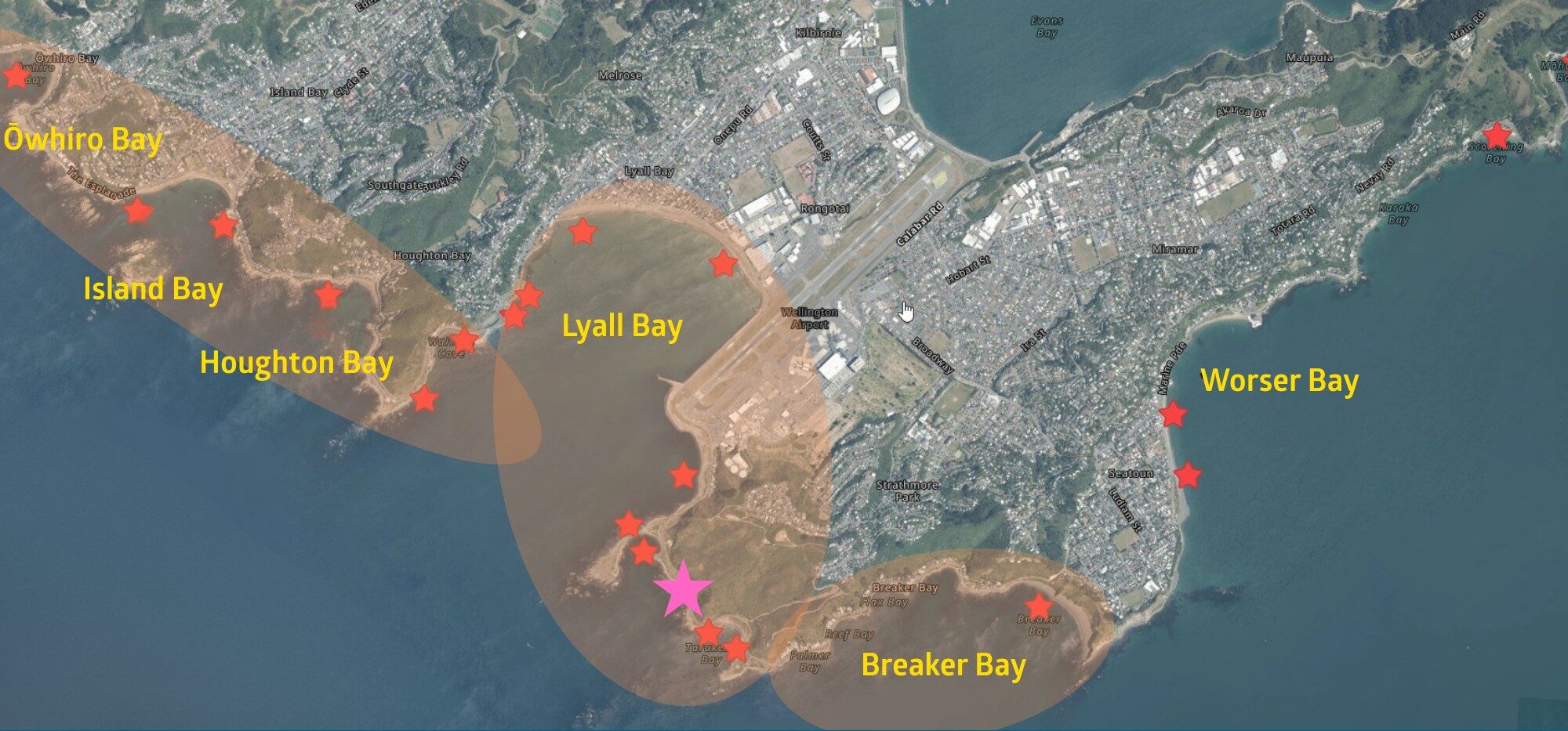
It could take months before the Moa Point wastewater treatment plant is repaired, with raw sewage continuing to flow into the Cook Strait.
Wellington Water is advising that people stay away from local beaches and not collect kai moana. A rāhui is in place over the affected area.
The SMC asked environmental experts to comment. Previous expert reaction to the Moa Point spill can be found here.
Dr Christopher Cornwall, Senior Lecturer in Marine Biology, School of Biological Sciences, Victoria University of Wellington, comments:
“Increased bacteria and other compounds (metals, plastics, etc) entering seawater after a spill can lead to diseases and stress responses in marine life. Reduced oxygen content in seawater—due to bacterial respiration as bacteria break down the waste—can also have extreme effects on marine organisms, making it difficult for them to breathe and causing death.
“In addition, increased nitrogen levels in the water can radically upset population dynamics and lead to phytoplankton blooms or harmful algal blooms that can change ecosystem composition—as well as harm human health. Reduced light can also inhibit photosynthesis and growth of species such as seaweed.
“Work by my research group investigating the effects of wastewater outfalls on the Porirua coastline indicates pāua and seaweed are particularly vulnerable; outfall impacts change these kelp forest ecosystems over longer periods of time.
“Additionally, research overseas indicates kelp forests can become desolate after sewage spills and can undergo a phase shift from one ecosystem state to another. This overseas work also highlights the sensitivity of abalone (pāua) to spills.
“Most previous events that have been studied involved treated sewage and many impacts were from lowered concentrations of seawater relative to freshwater. The severity of the Wellington spill will depend on the time it takes for it to be halted, as well as the concentration of sewage relative to seawater in the various ecosystems. It is somewhat reassuring to hear the long pipe is now in action, but concerns remain over whether further untreated spills will occur during periods of heavy rain, and how effective this long pipe actually is with removing sewage from the kelp forest ecosystems nearby.”
Conflict of interest statement: “Dr Cornwall is a co-director of Te Herenga Waka Victoria University of Wellington’s Centre for Biodiversity and Restoration Ecology as well as an Associate Director of the Tertiary Education Commission funded Centre of Research Excellence Coastal People Southern Skies.”
Shane Geange, Principal Science Advisor Marine, Department of Conservation, comments:
“Wellington Water has released results of its latest water sampling. Results remain consistent across the weekend with localised evidence of contamination at south coast beaches, except for the area immediately surrounding the short outfall pipe. There is no evidence to suggest the discharge from Moa Point Treatment Plant is reaching the inner harbour. The discharge has been diverted to the long outfall pipe, which is screened so that inorganic large waste like wet wipes is not getting into the ocean. Dilution should also be faster, which will be better for nearshore species and habitats.
“We are aware of reports of dolphins in the area over the weekend and this morning, which is not unexpected for this time of year. At this stage, there is no sign that the dolphins are in distress due to the discharge. DOC encourages anyone who sees a dolphin in distress to call 0800 DOC HOT immediately so our teams can coordinate a response.”
“DOC is continuing to monitor the situation at Moa Point, and remains informed and involved.
“Given the location of the discharge, the marine teams have identified several species and habitats that may be at risk in and around Taputeranga marine reserve, including mussels, kina, pāua, sponges, fish, and penguins.
“More species may be at risk, but that will depend on how long the discharge continues, the volume of effluent, and ocean activity (current, wind and swell).
“We may see potential environmental impacts like algal blooms and deoxygenated water, as well as bacteria, viruses, and parasites.
“Due to the risk to human health, we do not intend to visit the site at this time. We will update when we know more.”
Conflict of interest statement: No declaration received.