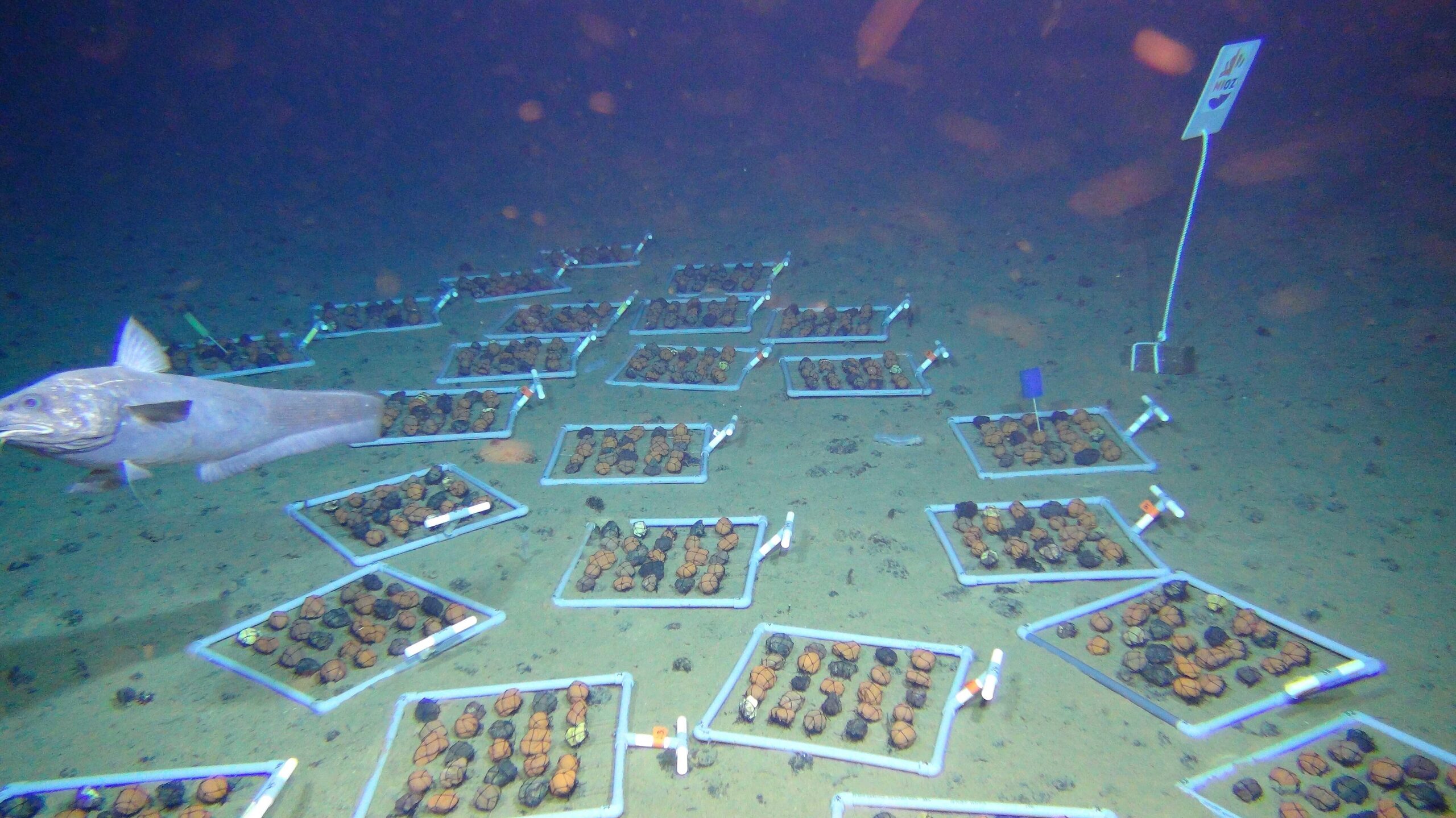
The first comprehensive review of research into deep sea mining shows the impacts it can have on ocean ecosystems.
Drawing on 50 years of experimental studies, the international research group concluded that polymetallic nodule mining – the type that is being suggested in the Pacific – can have ecological impacts that last for multiple decades, although some dominant species will return to the area. The authors also conclude that geothermal vents in particular should be protected, as there’s clear evidence that mining them would likely result in biodiversity loss.
The SMC asked experts to comment.
Associate Professor Kat Bolstad, Department of Environmental Science, AUT, comments:
“The deep sea is full of life. These habitats seem extreme to us, but life has survived, thrived, and diversified here for billions of years. Many of these lives are conducted across time scales that we have trouble imagining—some microbes may divide only once every thousand years. Some fish live for centuries. Abrupt disturbances are rare, and deep-sea life has evolved within these stable conditions.
“Enter deep-sea mining (DSM): catastrophically destructive to the immediate seafloor, and producing noise, vibrations, clouds of sediment, and other impacts that we cannot yet fully predict. The effects of large-scale DSM are likely to be substantial, longer lasting, and more complex than we can anticipate.
“This study summarises our current state of knowledge on the known and likely impacts of DSM on the communities of animals living in habitats where DSM is being considered or explored. It also considers the risk of extinctions and biodiversity loss (key considerations for international agreements on managing Earth’s biodiversity) that DSM may carry for different targeted habitats including abyssal plains, hydrothermal vents, and seamounts. There is widespread scientific agreement: We need a far greater understanding of some of these deep-sea ecosystems before we can make responsible decisions; for the ones we have been studying the most, it is clear that the effects of DSM will be dire and long lasting. Other recent studies have revealed important, surprising discoveries such as the fact that the polymetallic nodules being targeted are producing oxygen, which may be a critical factor in supporting the biodiversity of these sites.
“Many countries (including Aotearoa) and Indigenous groups are calling for a moratorium or outright ban on commercial-scale DSM. Authorities are under great pressure to determine the future of this proposed industry, but I hope we will not rush into this, and that future generations can look back at this moment and see that we acted in their—and our planet’s—best interests.”
Conflict of interest statement: No declaration received.
Jonathan Gardner, Professor of Marine Biology (Adjunct), Te Herenga Waka – Victoria University of Wellington, comments:
“Adrian Glover and colleagues have today published a large and comprehensive paper in the journal Current Biology addressing the potential environmental impacts of deep-sea mining. It is important to appreciate that commercial deep-sea mining has not yet commenced anywhere in the world but that the technology and business developments are now at a state where some mining could commence. Perhaps the greatest obstacle to the start of mining is the global paucity of environmental data about the state of the deep-sea ecosystems (e.g., baseline datasets of biodiversity before mining starts). This is a gap that the mining companies are aware of and are trying to address.
“Glover and colleagues provide a history of the discovery of deep-sea mineral resources and more importantly they review the history of disturbance/recolonisation experiments in different deep-sea ecosystems that have been carried out by exploration or the testing of mining activity. The paper covers the three main areas of the deep sea that are likely to experience mining activities directly – the abyssal seafloor, hydrothermal vents and seamounts, as well as a fourth – the water column – which will experience indirect effects. The review includes information on the different size classes (types) of organisms, where such classes have been studied.
“The major findings of the paper come as no great surprise. The authors point out that the three separate systems (abyssal seafloor, vents, seamounts) are very different systems with their own suites of species, and as such must be treated independently. The same can be said for the pelagic (water column) environment. The authors highlight a paucity of environmental data and also the spatial differences that exist within a given zone. The authors note that we are still waiting for a ‘Mining Code’ to be developed by the International Seabed Authority. In addition, the authors point out the need for protected regions to be established alongside mined areas.
“Perhaps the single most important contribution of the Glover et al. paper is to state that ‘If vents and seamounts were to be classified as Ecologically or Biologically Significant Areas under the Convention on Biological Diversity, deep-sea mining at these sites would not be scientifically compatible with the Kunming-Montreal Global Biodiversity Framework.’ This may not be the first time that this point has been made openly but it is important because it does provide governments with the opportunity to protect some regions of the deep sea from the activities of mining, if they and their citizens so wish.
“The review paper is well written and illustrated, and is easy to read. It is up to date and comprehensive, and will serve as a useful resource for numerous different groups – policy makers, students, researchers, NGOs, concerned citizens, etc. Deep-sea mining may seem like a distant activity but it should be a matter of interest and concern for everyone in New Zealand given our current ‘fast track’ legislation, the possibility of iron sands mining commencing in the near future off the coast of southern Taranaki (technically not deep-sea mining but still mining of the seafloor) and the possible development of other forms of deep-sea mining in our region (e.g., nodule mining on the Chatham Rise). Deep-sea mining is a key issue for everyone with an interest in environmental issues and with a General Election in November of this year it is, or at least could be, a defining issue. I can recommend this paper as an excellent read to anyone interested in environmental issues.”
Conflict of interest statement: “No conflicts of interest to declare.”