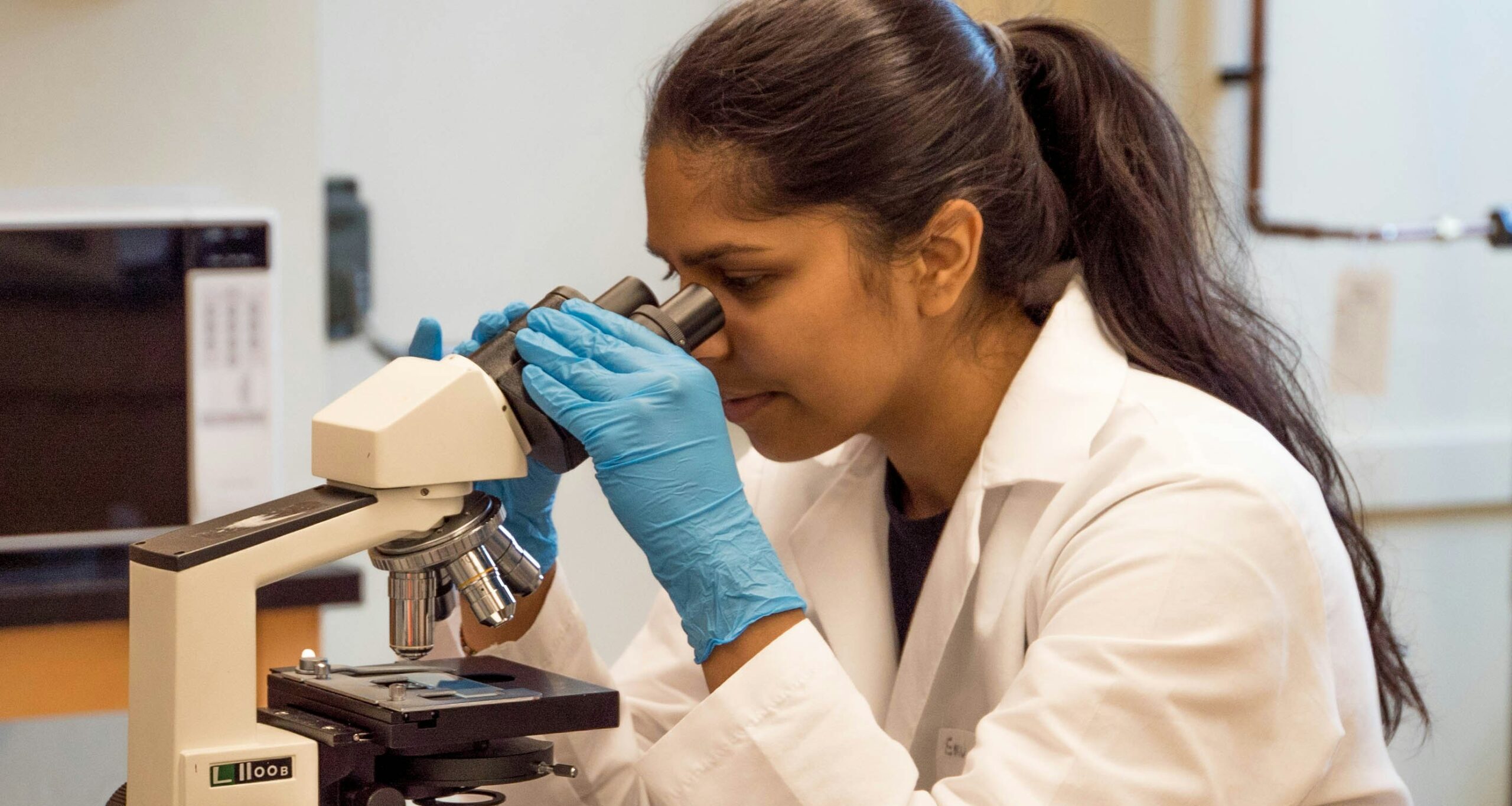
Kiwi scientists share how funding cuts have impacted their research and careers, in a new report from the Save Science Coalition.
Many of the profiled researchers have been made redundant or have moved overseas to find work.
The report’s foreword says that these examples “speak of a weakening of our science system that we can ill afford in a time of increasing global competition and change.”
The Science Media Centre asked experts to comment.
Professor Nicola Gaston, Director of the MacDiarmid Institute for Advanced Materials and Nanotechnology, comments:
“It is both heartening and distressing to see the impact of the recent and ongoing science cuts being highlighted in this new report from the NZAS. Heartening because of the concern shown for people, and the range of stories that have been profiled; incredibly distressing at the same time.
“This is a slow-burning crisis that started a couple of years ago with massive cuts across our university sector as well as in our public science institutions. We all understand that the science sector reforms have a cost; I have frequently worried about us throwing the baby out with the bathwater, but increasingly feel that the baby was first drawn and quartered, before being discarded.
“On the one hand, we invest significantly in training New Zealanders in scientific skills in order to fill necessary roles that deliver for all New Zealanders, across health, environment, and areas of economic importance. But they can only deliver the anticipated benefit to us all if we keep them working in Aotearoa.
“On the other hand, there is often a utilitarian argument that it is skills that are needed, and those skills can be found overseas and imported, to suit the funding priorities — or one might say whims — of any particular government. To that I say: the attractiveness of New Zealand as a destination for skilled scientists depends entirely on its reputation for looking after those people. The health of the ecosystem matters, to anyone who is serious about their own scientific career, and that will govern what skills and expertise we have access to.
“There is one more thing that I think needs noting, from the point of view of concern for how well New Zealand looks after its own people, in this era of unprecedented brain-drain. The complete lack of perspectives shared by Māori scientists seems a glaring omission, but it will not at all be for a lack of negative impact from funding cuts. Both on account of the overall contraction of the sector, which ensures a lack of opportunity, and on account of the increased concern that Māori scientists are likely to have with regard to being profiled publicly in an increasingly politicised conversation, their points of view are completely missing.
“That is both distressing, and something we should all be willing to reflect on.”
Conflict of interest statement: “Nicola Gaston receives funding from the Tertiary Education Commission as the Director of the MacDiarmid Institute for Advanced Materials and Nanotechnology. She also receives funding from the Marsden Fund. All research funding goes to the University of Auckland to pay the costs of the research she is employed to do.”
Dr Sereana Naepi, Associate Professor Sociology, University of Auckland, and Rutherford Discovery Fellow, comments:
“I study our research sector. I study how it works and what happens when the foundations that hold it together are pulled away. So when I read the Save Science Coalition’s Underfunding Our Future report, I read it both as somebody who studies our sector but also as someone who has sat with colleagues the morning after learning a funding stream has been cancelled overnight, watching people absorb what that means for them, for their families, for work they have spent years building. I also work on understanding how these single stories build up to have sector-wide impacts that go on to affect all New Zealanders.
“This report documents that pain in the natural and physical sciences. But what I want New Zealanders to understand is that this story is repeating itself across the entire system. In the social sciences. In the humanities. In Mātauranga Māori. The researchers we are losing are not just names on a redundancy list. They are the people who help us understand how our society works, who gets left behind when systems fail, and how we recover. When the people who carry this knowledge leave, the knowledge goes with them. This report documents just how much we have already lost.
“The decisions we make now are not just budget lines. They are choices that will shape our ability to answer the questions that matter most: how do we survive an increasingly volatile climate, deepening inequality, resource pressures, and a fracturing social fabric? We need every part of our research system to help us answer those questions and this report shows that we are losing the expertise we need.”
Conflict of interest statement: “No COIs.”
Dr Tara McAllister (Te Aitanga a Māhaki), Māori researcher, comments:
“I have a lot of empathy for the scientists who have chosen to share their stories in this report.
“Whilst understanding individual stories and experiences can be helpful, we must also maintain a focus on how the present government has destroyed any hope for positive reform in our research sector and the wider systems which enable this.
“It is important to note that this impact is not felt only by scientists alone and we should not be concerned only with saving science in Aotearoa. We should be concerned that there is now very little funding nationally for humanities and social science scholars. The defunding of humanities, social science and ultimately Māori research disadvantages all New Zealanders.
“The present government continues a legacy from previous governments to undermine, underfund and contribute to the continued marginalisation of Māori knowledge and people within our research sector.”
Conflict of interest statement: “No COIs.”
Dr Richard Templer FEngNZ , Chief Executive of Engineering New Zealand te ao Rangahau, comments:
“Science research in Aotearoa faces uncertainty and funding challenges. Engineering New Zealand acknowledges those who have been personally affected by this and supports the report’s focus on putting a human face to recent system overhauls.
“I have seen firsthand the positive difference long-term funding makes. The National Hazards Research platform is
“There are many engineers involved in research across all parts of the science sector, both public and private research and development work. This mahi is important for innovation and economic growth. Engineering New Zealand recognises the Government’s desire to reform the science system to deliver improved strategic outcomes. However, it is essential that we continue to invest sufficiently in research and development to retain the talent we need to deliver those outcomes.
“New Zealand’s ability to compete globally depends on a strong science and innovation ecosystem. Yet, at 1.45% of GDP, our recent research and development investment lags behind the OECD average of 3%.
“Current uncertainty will result in skilled researchers leaving
Conflict of interest statement: “No conflicts of interest.”