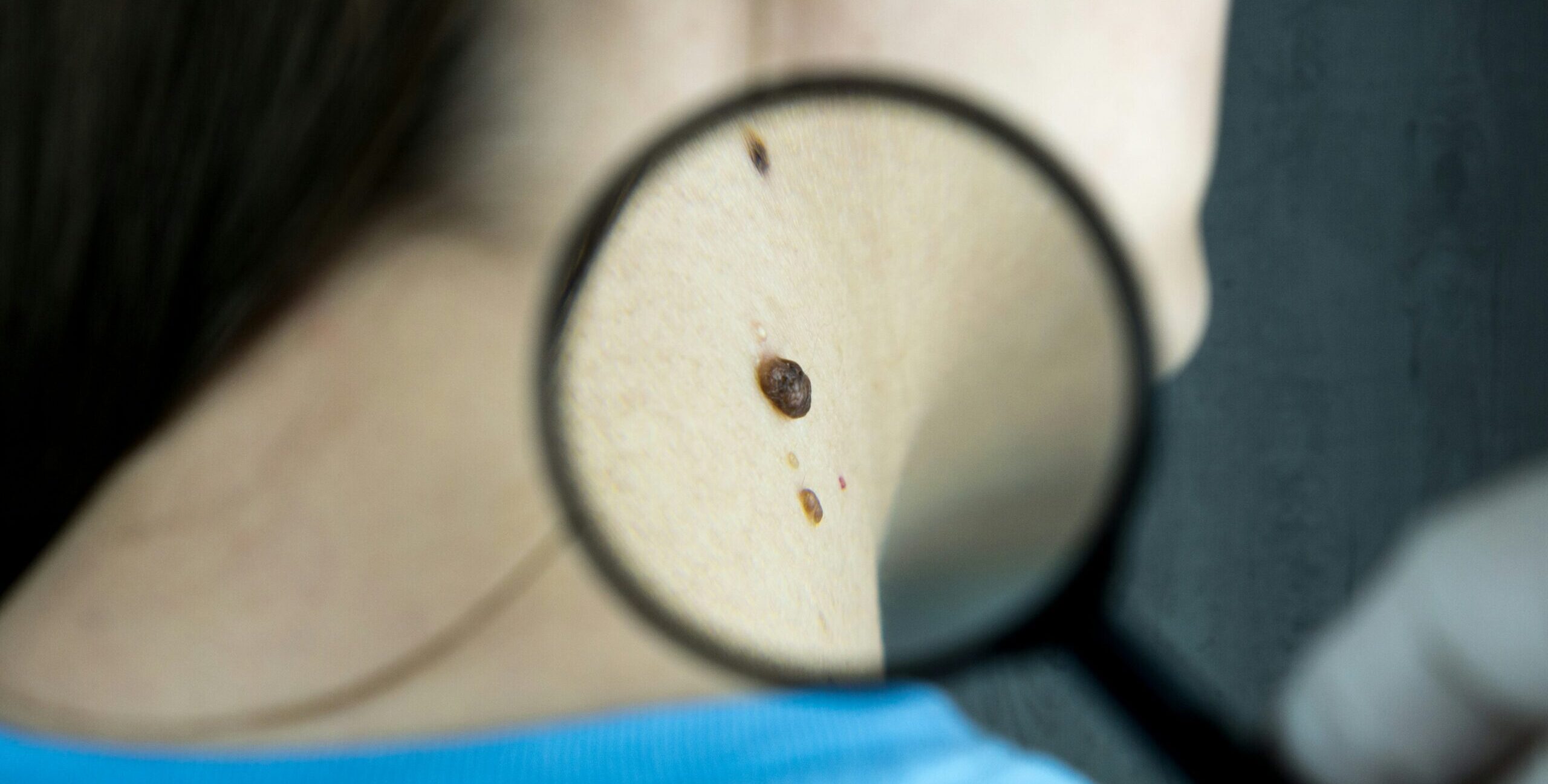
An mRNA-based melanoma vaccine has been shown to reduce the risk of death or cancer coming back by 42%.
The trial tested the personalised vaccine on patients, including some from NZ, whose melanoma had been surgically removed but were at very high risk of it returning.
New Zealand has the world’s highest death rate for melanoma.
The SMC asked experts to comment.
Associate Professor George Laking, Department of Cancer Sciences, University of Auckland, comments:
“I’ve been fortunate in my career to see large improvements in survival with melanoma, due to progress with treatments that activate the immune system. In these cases the person’s own immune system is enabled to control melanoma that could otherwise be fatal.
“Early development of mRNA vaccines was for cancers. We learnt a lot more about them during the Covid pandemic when they became the basis of Covid vaccines. Now they are coming into their own for treatment of cancers.
“Immune therapies bring a new set of immune toxicities that we are having to learn to treat. Some of these can be long term. But if you are seeing long term toxicity, it also means you are seeing long term survival.
“Well done my colleague Dr Gareth Rivalland who led the New Zealand part of this research. We may hope that these treatments that have been researched in New Zealand are soon publicly funded in New Zealand.”
SMC note: The SMC has reached out to Dr Gareth Rivalland and are awaiting a response.
Conflict of interest statement: “None for this kaupapa.”
Associate Professor Helen Petousis-Harris, vaccinologist at the Faculty of Medical and Health Sciences, University of Auckland, comments:
“These are exciting results and a significant milestone in the development of cancer vaccines. It has taken a long time to get here.
“The technology is closely related to that used in the mRNA COVID-19 vaccines, but its roots go back much further. Researchers were exploring mRNA vaccines for cancer in the 1990s, with the first human trials beginning around the turn of the century. Cancer immunotherapy was a major focus of mRNA vaccine research long before COVID-19 came along.
“Both approaches use temporary genetic instructions, packaged in tiny fat particles, to tell our cells to produce proteins that the immune system can recognise. The difference is that instead of targeting a virus, this vaccine targets distinctive features of an individual’s cancer.
“The COVID-19 pandemic accelerated the development, manufacturing and widespread use of mRNA vaccines, demonstrating what the technology could achieve at enormous scale. Now, almost poetically, the technology is coming full circle. After decades of research, we have convincing evidence from a large clinical trial that a personalised mRNA cancer vaccine can improve the effectiveness of an established cancer treatment. This is a major achievement for a field that has been working towards this goal for more than 30 years.
“But we also need to put the results into perspective. The patients in this study had high-risk melanoma that had been surgically removed. They received pembrolizumab, an immunotherapy drug that is already very effective. After two years, around 7 out of 10 patients receiving pembrolizumab alone were alive without their cancer returning. Adding the personalised vaccine increased this to just over 8 out of 10. That means approximately 12 additional patients in every 100 were alive without recurrence at two years. This is a meaningful improvement, particularly for people at high risk of their cancer returning, but it is not a cure.
“Cancer is not a single disease, and even cancers of the same type can differ considerably from one person to another. As cancer cells develop, they accumulate genetic mutations, some of which produce abnormal proteins that distinguish them from healthy cells. Scientists analyse a sample of each patient’s tumour to identify these distinctive markers. They then manufacture a personalised mRNA vaccine containing instructions for producing selected markers. Once injected, the vaccine enables cells to temporarily produce these markers, helping train the immune system to recognise and attack cancer cells carrying them.
“In simple terms, the vaccine helps show immune cells what to look for, while pembrolizumab releases some of the brakes that cancer puts on the immune system. Together, they appear to work better than immunotherapy alone.
“The vaccine also comes with side effects. Fever, fatigue and injection-site reactions are common, much as we see with other relatively reactogenic vaccines. More severe adverse events were slightly more frequent with the combination treatment, and longer-term monitoring remains important.
“There is the question of cost and access, which we cannot ignore. New cancer treatments (as with many new medicines) can be extraordinarily expensive, and personalised vaccines bring additional challenges. Each vaccine must be designed and manufactured for an individual patient, requiring sophisticated genetic sequencing, specialised facilities and a reliable system for getting the treatment to patients in time. We are increasingly able to develop remarkable new medicines, but our ability to fund them and deliver them equitably is struggling to keep pace. That is a challenge for governments and health systems, including ours.
“We also cannot tell from this trial how effective the vaccine would be on its own, because both groups received pembrolizumab. Given that pembrolizumab is already an effective treatment, withholding it simply to test the vaccine alone would be difficult to justify and I cannot imagine there would be many takers!
“There are a couple of common misconceptions worth heading off. The vaccine cannot give someone cancer. It contains no cancer cells, just temporary instructions for producing selected cancer markers. And despite persistent claims about mRNA technology, it does not alter our DNA. The mRNA works outside the cell nucleus and does not contain the machinery needed to integrate into our genetic material.
“Why has this taken so long? Cancer is particularly difficult for the immune system to recognise because it develops from our own cells. Tumours can also evolve and find ways to evade immune responses. Researchers have spent decades trying to identify the right targets and generate sufficiently effective immune responses. Advances in genetic sequencing, mRNA technology and immunotherapy have now brought these approaches together.
“For New Zealand, with one of the highest melanoma rates in the world, this is particularly welcome news. However, the treatment is not yet available, and we still need longer follow-up to know whether the reduction in recurrence translates into longer survival.
“This is not a universal cancer vaccine or a panacea, but step by step more and more cancers are becoming treatable. What makes this so important is that we now have strong evidence that a vaccine tailored to an individual’s cancer can improve an already effective treatment. That opens up some genuinely exciting possibilities, not just for melanoma, but potentially for other cancers as well. Whether those possibilities become reality will depend on further research and on making sure that patients can actually access the treatments that science makes possible.”
Conflict of interest statement: “HPH has received research funding from industry for investigator led and collaborative projects, served on expert advisory boards for industry, WHO, NZ government, and on clinical trial DSMBs. She is co-founder of the Global Vaccine Data network who conducted safety studies on COVID-19 vaccines across over 30 countries.”
Dr Sharad Paul, Skin Cancer Doctor and Director, Skin Surgery Clinic, comments:
“This INTerpath-001 trial showed that using a personalised mRNA vaccine further improved the body’s immune response and opens a new avenue for future cancer treatments.
“While the results are significant, the financial markets perhaps expected a bigger benefit because shares of Moderna fell 25% when these results were leaked.
“The study tested a type of personalised cancer vaccine made from each patient’s own melanoma alongside pembrolizumab (Keytruda) immunotherapy after surgery for high-risk melanoma and concluded that in a specific group of patients, the risk of recurrence or death was reduced by over 40%.
“The study included 1137 patients from Australia, New Zealand, Europe and America. These were people who had had their melanoma surgically removed but still had a high risk of melanoma recurrence due to the melanoma being at an advanced stage IIB to IV. Participants were divided into two study groups. 2/3 received pembrolizumab + Intismeran (a personalised vaccine mRNA vaccine made from the patient’s tumour cells by Moderna, the company that pioneered the mRNA vaccine; New Zealand had used a different mRNA Pfizer-BioNTech vaccine during the COVID pandemic) and 1/3 received pembrolizumab alone.
“At 24 months, 82% of the patients who received the medication + vaccine were alive without the cancer returning compared to 70% in the group that received the immunotherapy medication alone. When distant metastases-free (without distant spread of the tumour) survival was compared, the difference was 88% v 80%.
“Keytruda is also used for other cancers so this will lead to other trials.
“Sun protection and early detection remain the mainstays in preventing late-stage melanomas in patients.”
Conflict of interest statement: No statement received.
Dr Amy Stanway, President, New Zealand Dermatological Society, comments:
“The study results of this vaccine are very positive news for melanoma patients.
“Assuming the official release confirms these figures, it would appear that the addition of this vaccine offers a meaningful survival advantage over our current treatment options alone.
“The response of the share prices may reflect concerns regarding the potential delay in processing an individual vaccine for each patient in an affordable and timely fashion, but do not detract from what appears to be a very promising advancement in cancer treatment.”
Conflict of interest statement: “I am involved in clinical trials but not this one.”
Professor Ian Hermans, Programme Leader, Malaghan Institute of Medical Research, comments:
“The difficulty in developing a vaccine to treat cancer is that there is a lot of variation in what a tumour cell can look like to the immune system – they look different in every patient.
“Moderna has solved this problem by developing patient-specific vaccines. They take biopsies from each patient to assess what genetic mutations have occurred in their cancer cells and use algorithms to design a patient-specific mRNA vaccine that targets the unique mutations.
“It’s a huge positive for all global cancer vaccine research to see these positive results; we have been watching this study with a lot of interest. These results show the potential of RNA technology to boost the effectiveness of immunotherapies in targeting tumours – something we’re working on here at the Malaghan Institute.”
Conflict of interest statement: “No conflicts.”
Dr Akshata Anchan, Research Fellow, Molecular Medicine and Pathology, University of Auckland, comments:
“The new mRNA vaccine with Keytruda looks to be a promising combination. The Phase 3 results are impressive and suggest that the drug reduces capacity of the cancer to further travel to distant parts of the body.
“There is great interest to discover if this also limits the worst cases of melanoma, for example its travel and metastasis to the brain.
“This is of importance particularly in NZ, which like Australia has the worst incidence rates for melanoma.”
Conflict of interest statement: “No conflicts of interest at the moment.”