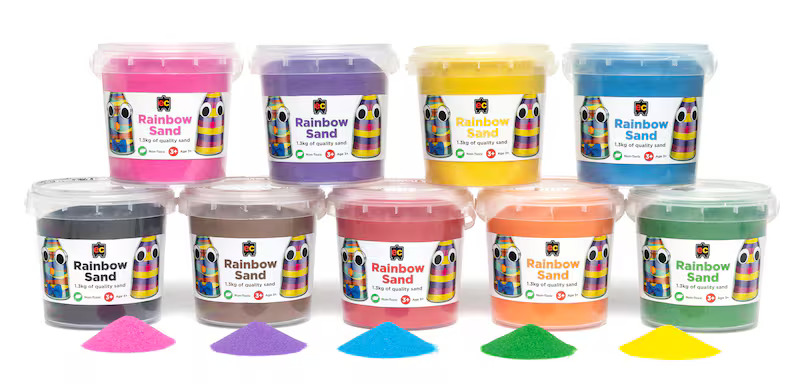
Six children’s coloured sand products are being recalled after they were found to be contaminated with asbestos.
The government is urging anyone who has bought the sand products to stop using them immediately and to seek advice on how to dispose of them safely. More than 200 schools and childcare centres have already contacted the Ministry of Education for advice and some have closed as a precaution.
The SMC asked experts to comment.
Dr Terri-Ann Berry, Associate Professor, School of Future Environments, AUT, and Trustee and Board Chair of Mesothelioma Support & Asbestos Awareness (MSAA) Trust, comments:
“Asbestos is a naturally occurring mineral which was mined extensively because the microscopic fibres added strength as well as high resistance to heat and acid. It has been estimated to have been used in over 3000 different types of product – many of which were used in buildings.
“There are six different types of asbestos fibre and all can cause cancers, including lung cancer and malignant mesothelioma (cancer of the lining of the body organs). They can also cause other diseases such as asbestosis, which is due to lung scarring and linked to continual long-term exposure.
“There is a time period between when you are exposed to asbestos and the development of any related disease (called the latency period) which is usually between 15 and 40 years. This means that the impact of exposure is highly unlikely to be detected in the short term.
“This is an incredibly distressing situation and I can totally understand why parents would be very concerned. Asbestos (like tobacco smoke or radiation) has no safe level and therefore we try to avoid exposure. However, it is important to know that not every exposure episode will lead to the development of cancer.
“If anyone would like to talk further – the Mesothelioma Support and Asbestos Awareness Trust (MSAA Trust) (of which I am current Chair) is there to help.”
No conflicts of interest. “The MSAA Trust is a registered charity from which I don’t draw a salary or any benefits. Occasionally my consultancy, Environmental Innovation Centre, are asked to do small, commissioned projects about asbestos education or testing methodologies.”
Professor Alex Sims, Department of Commercial Law, Faculty of Business and Economics, University of Auckland, comments:
“Under New Zealand’s Law, the Imports and Exports (Asbestos-containing Products) Prohibition Order 2016 and the Imports and Exports (Restrictions) Act 1988 (the Act) products containing asbestos cannot be imported into New Zealand. Indeed, under section 4 of the Act it is an offence to import a product containing asbestos, such as coloured sand, into New Zealand. The maximum fine is $5,000 for an individual or for a body corporate (including a company) $25,000 or an amount equal to three times the value of the goods, whichever is the greater.
“Due to the large number of products being imported into New Zealand, most products are not inspected, therefore it is not surprising that banned products, such as this type of coloured sand, have been imported. People should not think that laws are being followed and that products are tested before they are sold.
“Given that this sand has been imported and also small high-power magnets designed as toys, which are also banned, have been imported into New Zealand, it is likely that other contaminated products are also being imported and sold. For example, talcum powder can contain asbestos. That’s not to say that all talcum powder contains asbestos; however, the consumer cannot tell which ones do not contain asbestos, so it is best to avoid products containing talcum power.
“Another interesting legal point concerns the recommendation of the Ministry of Business Innovation and Employment (MBIE), that schools, child care centres, kindergartens and people using the coloured sand get areas where it has been used professionally tested and cleaned, which will be costly. Under the Consumer Guarantees Act 1993 (CGA), goods must be safe, which the contaminated sand is not. In addition to recovering the cost of the unsafe product, consumers are entitled to reimbursement of the cost of the testing and cleaning from the supplier (the retail store that sold them the coloured sand).
“It might be argued that schools, child care centres and kindergartens are not consumers. Yet, the CGA test for a consumer is not who purchased the product, but what the product is ordinarily acquired for. As the coloured sand was commonly sold in shops, such as Kmart, and purchased for household and domestic use, a school etc purchasing the coloured sand will be treated as a consumer.
“While it is potentially possible for the supplier selling to a school etc not to be liable under the CGA; this would require a written agreement and that it was fair and reasonable for the supplier to contract out of the CGA. It is difficult for a supplier to meet the fair and reasonable standard as the school etc would have had to negotiate the terms of the agreement and also received advice from or were represented by a lawyer in negotiating the contract for the purchase of the sand. Therefore, it is not sufficient to state in a contract or terms of service that if products are being purchased in trade that the CGA does not apply or similar wording. Alternatively, a contract that states the supplier is not liable for any loss or damage arising out of the use of their products will also not be effective as the CGA cannot be contracted out of in that way.
“In addition, if cleaning is insufficient, for example, the sand is in carpet and cannot be safely removed, the CGA would also require the supplier to pay for replacement carpet along with the cost of removing and disposing of the contaminated carpet.”
No conflicts of interest.
Professor of Toxicology Ian Shaw, School of Physical & Chemical Sciences, University of Canterbury, comments:
“Asbestos causes a rare form of lung cancer (mesothelioma) following inhalation. The risk of contracting cancer is high when exposed to airborne asbestos. The longer the exposure the greater the risk.
“There is usually a very long period (often decades) between exposure to cancer causing materials and the development of cancer: this ‘incubation’ period is unusually short for asbestos. Asbestos is a sharp fibre that works its way through the lungs following inhalation. It sets up a biochemical response in cells leading to cancer in the membrane (mesothelium) covering the lungs.
“The children’s sand product asbestos contaminations are serious because the products are dry and played with which would cause asbestos fibres to become airborne and thus readily inhaled. The question is: how long have children been exposed to the asbestos contaminated product? This will significantly affect the cancer risk.
“The rapid response when the contamination was found is good, since it has prevented further exposure and thus continued risk.”
No conflicts of interest.
Our colleagues at the Australian SMC have also gathered comments:
Dr Ian Musgrave is a Senior Lecturer in the Faculty of Medicine, School of Medicine Sciences, within the Discipline of Pharmacology at the University of Adelaide:
“The types of asbestos found in the play sand are chrysotile and tremolite. While less hazardous than blue asbestos, the infamous asbestos at Wittenoom, all types of asbestos can cause mesothelioma (a rare lung cancer) and asbestosis (interstitial pulmonary fibrosis).
“Tremorite, the predominant form found in these play sands, in particular, is rarely used industrially, but can be found in minerals like talc or vermiculite.
“Asbestos typically causes lung issues and lung cancer from inhalation of the crystalline fibres that asbestos forms. Tremorite is typically non-fibrous, unlike the fibrous blue asbestos, but exposure to any asbestos type will increase the likelihood of lung cancer, mesothelioma and asbestosis.
“The risk of asbestos-induced disease depends on the duration of exposure and the amount of inhaled fibres. Typically, years of industrial exposure to fibres are associated with health risks. Light, short-term exposure rarely causes disease and one-off exposure is not a major risk.
“We do not have any indication of actual levels of these asbestos forms in the play sand. However, both Worksafe and the ACCC say these are trace levels (and/or present only in some samples).
“In the case of Temorite, the ACCC says, “Importantly, respiratory asbestos has not been detected in any of the tested samples. The release of respiratory asbestos fibres from the sand is unlikely to occur in its current state, unless the sand is processed by mechanical means such as crushing or pulverising.”
“What they presumably mean is that the fibrous form has not been detected. While the risk is low, precautions should be taken anyway. The ACCC has disposal recommendations on its website.”
Ian has declared that he has no conflicts of interest.
Professor Dino Pisaniello is from the School of Public Health at The University of Adelaide and Past President of the Australian Institute of Occupational Hygienists, as well as Chair of the College of Fellows of the Australian Institute of Health and Safety:
“The actions taken by the authorities are appropriate. i.e. a precautionary approach, given the uncertainties around the amount of asbestos contamination of the sand and its distribution. There were reports of both chrysotile and tremolite asbestos, but I think the origin of these would be different sources in the production process. (Tremolite has been associated with talcum powder – which is no longer present in baby powder products sold).
“Due to particle size, asbestos in the sand is unlikely to be inhaled deeply into the lungs, and the airborne concentrations in actual use would be extremely low – below the limit of detection by normal means. This undetectable airborne concentration has been mentioned in media reports.
“All of this gives considerable confidence in the risk being extremely low. Actions to close the entire school would be predicated on an assumption of widespread contamination. Each School would or should have a good understanding of its use/distribution, and so complete school closure doesn’t seem to be justified. Health risks do not seem to warrant any sort of clinical follow-up, even in the long term.
“Australia is regarded as an international leader in the control of asbestos, and to some extent, a compromise on reasonable (or best practice) actions would be seen negatively by the international community.”
Dino has not declared any conflicts of interest.
Professor Fraser Brims is Director of the Sir Charles Gairdner Hospital Occupational Lung Disease clinic at Curtin University, and has been caring for more than 2000 individuals exposed to asbestos in Western Australia for over 14 years
“Any exposure to asbestos is best avoided, as there is no known safe level. However, in this situation, the amount of asbestos people may have been exposed to is extremely low—so low that it is not possible to measure or estimate any health risk.
“While all forms of asbestos can be harmful, the type involved here (tremolite) is generally considered less hazardous than other types, such as blue or brown asbestos.
“When asbestos dust is inhaled, the lungs will usually clear it out naturally. But smoking or vaping can interfere with this process, making it harder for the lungs to protect themselves. It’s important to avoid smoking and vaping, especially around children, to protect everyone’s lung health.”
Fraser has not declared any conflicts of interest.