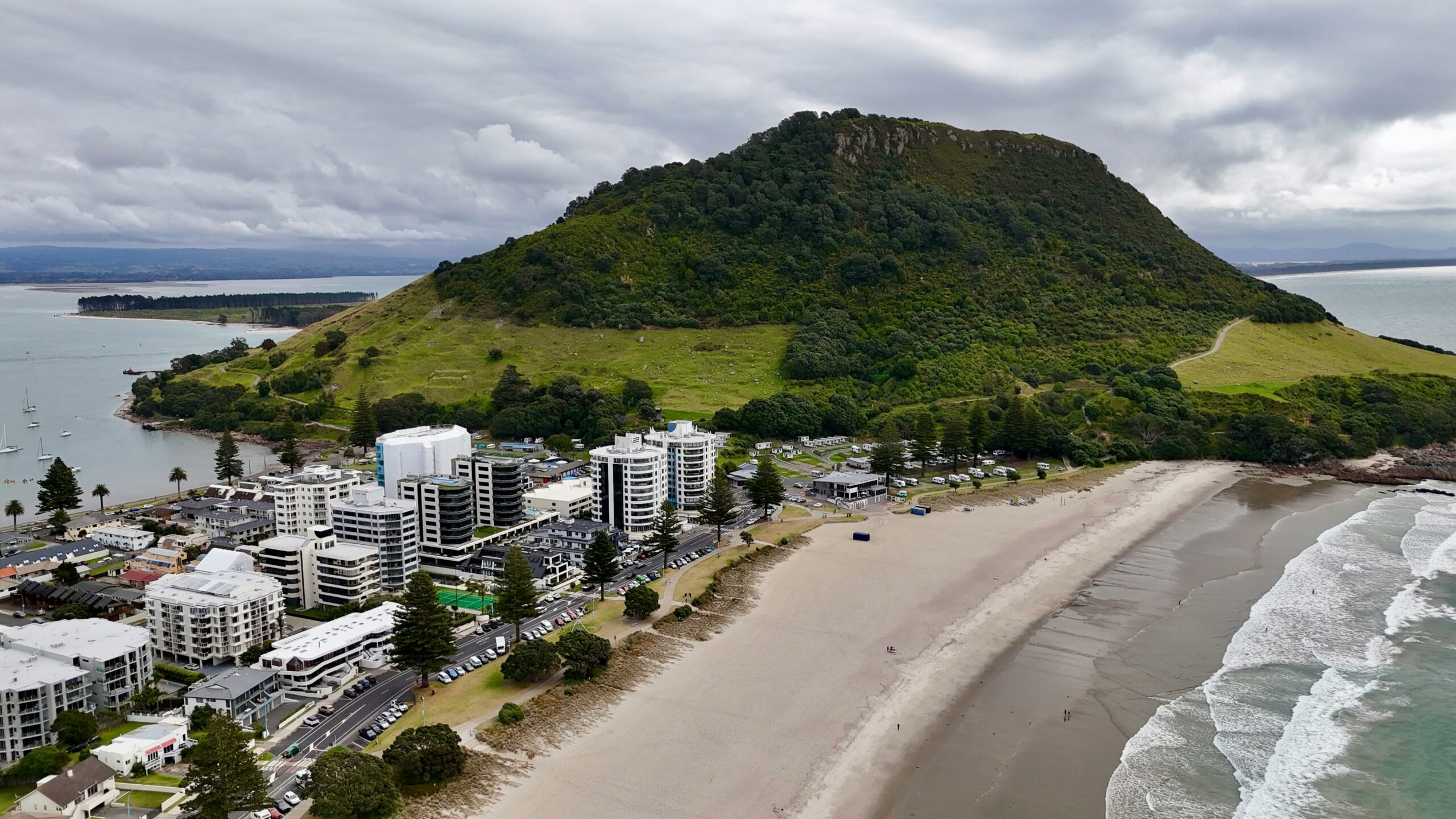
Mount Maunganui

Mt Maunganui landslide review finds system failure – Expert Reaction

Tauranga City Council has released its external review into the Mount Maunganui landslide, finding that the hazard was known but never addressed.

It says the failure was not the fault of one person, but of a system that allowed an identified risk to life to remain unmanaged.

The SMC asked experts for their availability and comments. Please feel free to follow up with the contact details provided. You can also call the SMC if you need to hear from an expert who is not listed here.


Dr Tom Robinson, Senior Lecturer in Disaster Risk and Resilience, University of Canterbury, comments:

“The review into the deadly landslide on Mauao has clearly shown that this event was entirely foreseeable and potentially preventable. Since 1999, numerous reports had highlighted not just the potential for a landslide during heavy rain, but also the potential for a mass fatality event. Options to manage and mitigate the risk were also clearly identified, but never actioned.

“Part of the problem appears to be the level of understanding of which teams or organisations were ultimately responsible for making decisions about this risk. This finding is not new – time and again after major disasters in New Zealand, independent reports have identified similar failings, including the most recent reviews into Cyclone Gabrielle in 2023.

“The problem is, the systems we have are so heavily focused on responding to and recovering from disasters once they have happened, rather than reducing the chance of them happening in the first place. Since 2010, out of the costs central government has incurred associated with natural hazards, just 3% has been spent on risk reduction.

“In this context, it’s easy to see how the need to act on a known risk fell between the cracks. Once again, it has been tragically highlighted to us that we need to better invest in risk reduction and systems that clearly set out how best to manage the risks we face, when to act on those risks, and importantly, who is responsible for taking – and paying for – that action.”

Conflict of interest: The expert has declared they have no conflict of interest.


Dr Lauren Vinnell, Senior Lecturer, Doctoral Co-Supervisor, School of Psychology, Massey University, comments:

“It’s good to see the review released today into the deadly Mauao landslide earlier this year, although as always I extend my sympathies to those still grieving their loved ones.

“The lessons and recommendations are going to be useful for New Zealand more broadly. In particular, we have two main challenges to grapple with. The first is how we view “risk” – we know this word means different things to different people (including different experts) and that the approach we take to deciding whether a risk is okay or not could be improved.

“Second, we need a much more deliberate, transparent, and coordinated approach to land-use planning. Much of the country is exposed to some kind of natural hazard and often the decisions around how to manage these sit across multiple parts of the system. While we can’t change what happened at the Mount, it is vital that the lessons identified from this tragedy are put into practice.”

Conflict of interest: “No conflicts of interest to declare.”


 Dr Sally Potter, social scientist and warnings consultant, Director of Canary Innovation Ltd., comments:

“The review highlights that several members of the public recognised the natural warning signs of landslides – and acted on them to move away from the dangerous area and help save others. Everyone should be familiar with these warning signs, which include muddy water flowing from within a slope, small slips, and cracks and bulging in slopes.  When these warning signs are noticed, act immediately to move away from the slope – there will not be any other warning before a larger slip happens.

“People who are responsible for others, whether it is at a campground, a council asset, a school or day care centre, health centre, sports venue, business, or on private property, should take immediate actions to keep people safe who are near the slope and run out area below by moving them away, when those warning signs are noticed. I hope that the recommendations from the review are thoroughly read and acted on by every council in New Zealand, not just Tauranga City Council.”

Conflict of interest statement: Not yet received. 


Dr Paul Jaquin, Structural and Geotechnical Engineer, Director, eZED Ltd, comments:

“The question is around who owns risk in New Zealand, and this report highlights the geotechnical risk ownership, and the threshold for that ownership.

“Specifically, the regulatory gap between TCC teams is identified, and in my experience would be present across most councils in New Zealand. The issue of geotechnical hazards for existing sites is particularly problematic, as Resource or Building Consent teams do have the power to identify and mitigate geotechnical risks during new construction, but little appetite to intervene to existing situations.

“As the report points out, it is not that the hazards were unknown, rather it is that there does not appear to be the mechanisms in place to force action which would improve life safety.

“The report recommends measures which would develop and maintain a centralised register of geotechnical hazards, which would be well maintained and accurate with regard to life safety, passed between team members and external consultants. A good system of sharing geotechnical data was developed following the Canterbury earthquakes, which could be extended nationally, and the Natural Hazards Portal has been developed, but this does not currently cover landslides. Development of a TCC, or even a national database would allow for a better understanding of the hazards, but would not necessarily reduce them, without the teeth to force on-the-ground changes.

“The provision for ‘Dangerous Building Notices’ exists which can address geotechnical hazards relating to sites, but does not appear to have been actioned in this case. Similarly, a Building Warrant of Fitness (BWOF) system exists for commercial buildings, but this focusses more generally on fire. Something similar could be developed for Geohazards, before it becomes a Civil Defence issue.

“However one issue with geohazards is that approximately 50% of the issues are well known and understood, and 50% of the issues come out of the blue, more investigation and brain power would improve these statistics, but this is very costly to manage at a regional or national scale.

“The development of TARPs at specific sites is a good proposal, and could be taken up nationally, but really development at any site with a TARP should be discouraged, or appropriate mitigation measures put in place.

“I would draw a parallel with the Earthquake Prone Building issues, here the engineering industry came together with councils to identify the highest risk buildings following the Canterbury Earthquakes, and worked to either strengthen or demolish them, therefore significantly reducing life safety risk at a national scale. Nationally such measures could be implemented to identify the highest risk sites and action them, followed by more detailed site-specific assessment.

“There is always a balance to be struck between administrative burden, complexity and life safety, but life safety must always win out. “

Conflict of interest: None declared.


David Buxton, Principal Geotechnical Engineer, Director at Northland Geotechnical Specialists, comments:

“What jumps out a me most in this situation is the fundamental aspects of human nature. It is both hard to change the status quo and not fun/difficult to say “No”. We like to please others. We don’t like to take enjoyment away from others. It is hard to believe that the unexpected will occur until it actually does.

“I’ve never been to the Mount or this campsite. However from what I understand it was a well loved, well used and unique/irreplaceable facility. It is really hard to restrict or limit the use of a facility like this – no one wants to or enjoys doing this. It takes a very mature organisation, or a very well informed, humble but self-confident leader to make and hold to decisions when land use needs to change in situations like this.

“That said the report does not seem to suggest the campsite should have been closed because of the hazard, but that a system should have been put in place to manage the hazard (a TARP). In this aspect the report does seem well balanced.”

Conflict of interest: None declared.