Of the many geo-engineering schemes gaining attention at the moment, mirrors in space and fertilisation of the oceans with iron among them, the biochar production would appear to seem one of the less wacky solutions to climate change.
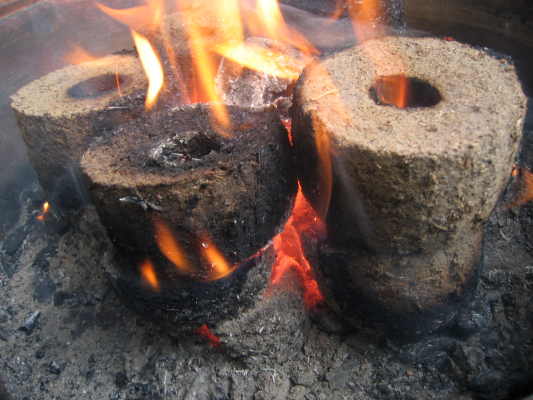 The idea is that this charcoal-like material could be intensively used as a carbon sink, aid in the production of biofuel and enrich soil on a global scale.
New Zealand has numerous researchers investigating biochar, many of them grouped in the Australia and New Zealand Biochar Network and based at Massey University. One of the leading proponents of biochar, and in fact the man who coined the term, in Dr Peter Read, an English scientist who is also an honorary research fellow at the Centre for Energy Research at Massey University.
However Read has recently locked horns on the issue of biochar with Guardian columnist George Monbiot in an argument on what the impacts of changing land use dramatically to accomodate biochar production might be.
Writes Monbiot: “Just burying carbon bears little relation to the farming techniques that created terras pretas. Nor is there any guarantee that most of the buried carbon will stay in the soil. In some cases charcoal stimulates bacterial growth, causing carbon emissions from soils to rise. As for reducing deforestation, a stove that burns only part of the fuel is likely to increase, not decrease, demand for wood. There are plenty of other ways of eliminating household smoke which don’t involve turning the world’s forests to cinders.
“None of this is to suggest that the idea has no virtues, simply that they are outweighed by hazards, which the promoters have overlooked or obscured. Nor does this mean that charcoal can’t be made on a small scale, from material that would otherwise go to waste. But the idea that biochar is a universal solution that can be safely deployed on a vast scale is as misguided as Mao Zedong’s Great Leap Backwards. We clutch at straws (and other biomass) in our desperation to believe there is an easy way out.”
Peter Read responded in the Guardian a week later: “Monbiot misses the point that the need for land-use improvements comes from the threat of climatic catastrophe. With too much carbon in the atmosphere and oceans, some of it has to be removed and put somewhere safer. Using the gift of nature – photosynthesis which enables green plants to use the sun’s energy to absorb atmospheric carbon – is the only economic way.
“The remedy is not “an easy way out” but needs hard work and good policy resulting in, to quote last year’s Sustainable Biofuels Consensus, “a landscape that provides food, fodder, fibre, and energy; that offers opportunities for rural development; that diversifies energy supply, restores ecosystems, protects biodiversity, and sequesters carbon.”
Read is interviewed on biochar and on Monbiot’s criticisms here (Real player required).
Monbiot wasn’t willing to leave it there – he responded ot Read on his Guardian blog.
[youtube]http://www.youtube.com/watch?v=nzmpWR6JUZQ[/youtube]
In his blog monbiot.com, 27th March, Monbiot singles me out for special vilification. Monbiot seems to favour debate with a headline The debate over biochar hots up but only in a blog which provides no opportunity for response or debate. I have more than once invited George to join in a forum for fair and open debate on the issues surrounding the need for managing carbon stocks rather than just reducing emissions, but he fights shy.
Monbiot accuses me of “the kind of development rhetoric that I” [i.e. he] “thought had died out with the Indonesian transmigration programme”. If he took the trouble to read my work, rather than engage in polemics about what he assumes I have said, he would find that I have consistently called for community based country-driven projects. Some time ago I published what I believe is the only quantified assessment of the capacity building programme that is needed to train tens, possibly hundreds, of thousands of grassroots entrepreneurs, over the decades ahead, in order to translate the incentives that good policy can provide into community based action on the ground. In academic life one cannot republish an article just because one thinks it’s important, unlike Monbiot’s ongoing freedom to repeat himself time after time on a topic which he is unwilling to debate fairly
Monbiot claims that I would cover the Cambrian mountains with sitka spruce.
However, earlier Friday, and before I saw Monbiot’s latest piece, I had posted a response to a comment from one of the participants in the biochar-climatechange blog. “Yes indeed Bob, we need to grow a great many trees fast. A billion Hectares does not mean a thousand 1 million Ha plantations, each 100km x 100km but 100,000 plantations averaging 10000 hectares (10Km x 10Km), or maybe 10 million each 1Km x 1Km, and each adapted in size and in style of operation to the needs of the communities where they are located. As I said before, making that happen needs good policy and hard work, including, training the grass roots entrepreneurs needed for a community oriented programme.”
Monbiot’s blog carries the by-line “Tell people something they know already and they will thank you for it. Tell them something new and they will hate you for it”. Is that your problem George?